



Confused about which organic crib mattress to buy, and which certifications really matter? We’re breaking down exactly what to look for and look out for when buying an organic crib mattress, including how to avoid being ripped off by greenwashed brands and find the best fit for your values, family, and budget.
Buying an organic crib mattress is one of the best things you can do to protect your baby from some of the most insidious household toxins.
But not all organic crib mattresses are created equal.
Unfortunately, greenwashing (inflating a brand’s environmental or safety standards) has become commonplace in the organic mattress space, including crib mattresses.
This can make the entire shopping and baby registry experience confusing for parents and loved ones…and we’re here to change that!
As America’s leading certified organic mattress brand, we know what it takes to make an authentically safe, non-toxic, and ecologically sound mattress, and we prove it through transparent sourcing, quality standards, and third-party testing and verification.
Here, we’ll share how to avoid greenwashing when buying an organic crib mattress, including greenwashing terms to watch out for, which certifications and verifications actually matter, and other helpful tips to ensure you get the safest mattress for your baby.
Is Buying An Organic Crib Mattress Worth It?
Having a baby can get expensive fast, especially for health- and toxin-conscious families. This leaves many people wondering if buying an organic crib mattress is worth it.
The short answer is, yes. Given the amount of time babies spend sleeping in their first year of life, sleeping on safe, organic materials makes sense.
The longer answer explains that the average mattress, including crib mattresses, may contain dozens of harmful chemical pollutants that linger in the air and can harm your developing baby.
Some of these chemicals include:
- Carcinogenic flame retardants, such as Polybrominated diphenyl ethers (PBDEs), are commonly used in polyurethane foam and soy foam due to their high flammability. They are linked to hormonal disruption, cancer, reproductive toxicity, and more.
- Phthalates and other plasticizer chemicals disrupt endocrine (hormonal) function, and are linked to cancer, behavioral issues, heart problems, obesity, metabolic issues, hormonal imbalances, infertility, developmental toxicity, and more.
- Fiberglass, sometimes listed as “glass wool”, “silica”, or “glass fiber”, is a health hazard that can cause dermatitis, lung irritation or disease, and other health issues due to chemicals involved in its manufacture, including styrene and acetone, a nervous system toxin.
- Dimethylformamide, a chemical used in textile manufacturing, may cause liver damage.
- Synthetic latex is made from petroleum products and chemicals, including carcinogenic styrene and butadiene, and may be deceptively marketed as or mistaken for natural latex
- VOCs, or volatile organic compounds, are what you smell when you buy a new mattress or sniff a fresh flower. They can be toxic or non-toxic depending on the source and concentration. Toxic VOCs in mattresses come from various chemicals and materials used in the manufacturing process, including phthalates, formaldehyde, and flame retardants.
- Toluene diisocyanate (TDI), used in petroleum-based foams, is linked to respiratory issues, allergic reactions, asthma, and potentially certain forms of cancer.
- Benzene is used in the making of petroleum-based foams, including memory foam. It is a carcinogen linked to gastrointestinal issues, drowsiness, dizziness, headaches, eye and skin irritation, respiratory irritation, and long-term neurological, immune, and blood health issues.
- Styrene is used to make synthetic latex and in memory foam. It is considered a probable carcinogen linked to irritation of the eyes, skin, and respiratory tract, gastrointestinal issues, and central nervous system effects.
- Heavy metals are used in the production of vinyl and other mattress materials and are neurotoxins linked to various neurological, immunological, developmental, and other health issues, including organ damage.
- Formaldehyde is used in adhesives and preservatives used in mattress manufacturing. It is a probable human carcinogen linked to irritation of the skin, eyes, nose, throat, and respiratory system.
These represent only a fraction of the chemicals present in the average commercial crib mattress!
This is a big deal, especially for babies who spend most of their first precious weeks of life sleeping on their crib mattresses.
So, how do you avoid these toxins? You opt for an authentic, third-party tested and verified organic crib mattress.
Here’s how to find the best one for your needs and budget, while avoiding inferior greenwashed brands.
Read more: Why Fiberglass Doesn’t Belong In Your Mattress
Greenwashing Terms To Watch Out For When Buying An Organic Crib Mattress
A quick online search for “organic crib mattress” will yield dozens of options. So, how do you know which ones are truly safe, organic, and free from harmful chemicals?
The first step in weeding out the inferior brands is to know your greenwashing terms.
Some of which include:
- Eco-friendly
- Natural
- All-natural
- Chemical-free
- Non-GMO
- Green
- Environmentally-friendly
- Environmentally-responsible
- Made with natural soy foam
- Some crib mattresses boast a soy foam core. However, soy foam mattresses are typically made with only a small percentage of genetically modified soy and lots of polyurethane foam, which contains many of the harmful chemicals listed previously, as well as flame-retardant chemicals.
- Made with food-grade polymer
- Although this is better than other materials, it’s still a form of plastic made with plasticizer chemicals.
- Made with “natural”, “plant-based”, or “plant-derived” materials
- Badges created by the company to tout its own brand
- Celebrity, industry, influencer, or magazine endorsements (although these may indicate certain levels of quality, they do not guarantee whether a mattress is made with safe, organic materials)
Although sometimes honest and well-meaning, these terms don’t mean anything unless they’re backed up by legitimate third-party testing, certifications, and verifications, which we’ll cover next.
The big takeaway: The mattress industry’s marketing claims are not as tightly regulated as the food industry, for example, which means you can’t always take a company’s claims at face value.
What To Look For When Buying An Organic Crib Mattress
Now that you know the greenwashing jargon to watch out for, let’s look at the terms, certifications, and verifications that matter when buying an organic crib mattress.
Firstly, you want to know what your organic crib mattress is made of.
Ideally, it’s made with certified organic GOTS cotton, latex, coco fiber, and/or wool, all of which are the safest and healthiest mattress materials.
It may also be made with recycled stainless steel springs, specially designed for developing spines.
Secondly, you want as many legitimate third-party certifications and verifications as possible.
Here are some of the industry’s best and most respected, indicating healthy, non-toxic, organic materials:
- Certified Organic: This means the mattress is made with organic materials, like cotton, latex, and wool, that have been third-party certified as free of harmful pesticides, herbicides, GMOs, fungicides, and other industrial agricultural chemicals.
- GOTS: One of the highest standards verifies the finished product is certified organic from the farm through manufacturing. This acts as a check-and-balance to the “certified organic” label.
- OEKO-TEX® Standard 100 Class I: This independent verification requires testing of every component against the strictest human-ecological criteria — the same tier used for baby products.
- MADE SAFE®: One of the most stringent certification tests for thousands of chemicals known to be harmful to humans and the environment.
- EWG Verified®: A well-known standard that requires full ingredient transparency and bans thousands of harmful substances.
- GREENGUARD Gold: One of the best-known certifications for mattresses tests for airborne chemical emissions in the room where you sleep.
- UL® Formaldehyde-Free independently verifies that our products contain no added formaldehyde or formaldehyde precursors.
Additional certifications verifying ecological and social responsibility include:
- Certified B Corp
- Climate Label Certified
- 1% for the Planet
Read more: Why What’s Inside Your Mattress Matters
Smart Shopper Tip: One Verification Or Certification Is Not A Catch-All For Organic Crib Mattresses
Although more isn’t always better, third-party verifications are the exception.
For example, let’s say a mattress is made with certified organic cotton—that’s great! However, this one certification doesn’t mean it may not also contain formaldehyde in adhesives, flame retardants in the mattress cover, or synthetic latex as part of the fill.
This is why it’s essential to shop for brands that hold multiple third-party certifications and verifications to ensure maximum product safety and authenticity.
At Avocado Green, we’re proud to be the only mattress company to hold all six simultaneous finished-product verifications (GOTS, OEKO-TEX® Standard 100 Class I, MADE SAFE®, EWG Verified®, GREENGUARD Gold, and UL® Formaldehyde-Free) across all our mattresses and crib mattresses.
This is more than just a set of badges. It’s a compounding system of verification designed so that fewer gaps go unchecked, allowing us to make authentically healthy, organic mattresses from start to finish.
Read more: Farm To Mattress: Radically Honest, Transparent, & Fair
Organic Crib Mattress FAQs
Now that you’re an expert on how to avoid greenwashing when buying an organic crib mattress, let’s answer some FAQs.
Q: Is the most expensive organic crib mattress the safest?
A: Not necessarily. At Avocado Green, for example, we offer three types of crib mattresses for every budget, including the original Organic Crib Mattress (mid-price), the Luxury (high-price), and the Eco Organic Crib Mattress (budget), all of which are made with verified safe materials and hold the six verifications listed previously.
Click the links to compare and make your selection.
Q: Are organic crib mattresses waterproof?
A: Some are, and some require a waterproof topper, like our Organic Crib Waterproof Protector.
This plastic-free protector is soft, flexible, and MADE SAFE® certified, ensuring it contains no harmful chemicals.
We recommend avoiding crib mattresses (organic or not) with plastic waterproofing, as they contain plasticizers.
Q: Are organic crib mattresses harder to care for?
A: No. So long as you use a crib protector, change sheets regularly, and maintain your crib mattress using our How To Clean An Organic Crib Mattress guidelines, your organic crib mattress will last for years to come.
Q: What’s the best affordable organic crib mattress?
A: From our line, we recommend The Eco Organic Crib Mattress. This option rings up at about $200 less than our original Organic Crib Mattress, and a little more if you want to add a dual-sided design.
For other brands, look for those made with only natural materials (organic cotton, natural latex, wool, and coco fiber) and the most verifications and certifications possible for the best possible price.
Q: What’s the next best option if I can’t afford an organic crib mattress?
A: If budget is a concern, do your best to avoid crib mattresses made with polyurethane foam, flame retardants, phthalates, plastic coverings, formaldehyde, vinyl/PVC, and soy foam.
In this case, even one or two of those certifications listed above make a difference, so do your best!
From there, make sure you buy the mattress in plenty of time for it to offgas in the sun to remove harmful VOCs, and cover it with 100% cotton sheets laundered with natural, fragrance-free laundry soap.
Then rest easy, knowing you’ve protected your baby from a significant number of harmful chemicals.
Q: What are organic crib mattresses made of?
A: As mentioned previously, organic crib mattresses may be made of several different materials, ideally:
- Organic cotton
- Natural organic latex
- Coco fiber
- Organic wool
To avoid greenwashing, check labels and company information carefully to ensure these natural materials are not mixed with harmful synthetics, such as polyurethane foam, soy foam, fiberglass, or synthetic latex, nor are they covered with a plastic protector.
Looking For The Best Organic Crib Mattress? Shop Our Collection
In 2016, Avocado Green began disrupting the mattress industry by making the safest, most sustainable organic non-toxic adult, child, and crib mattresses available.
Our organic crib mattress collection has something for everyone, and includes:
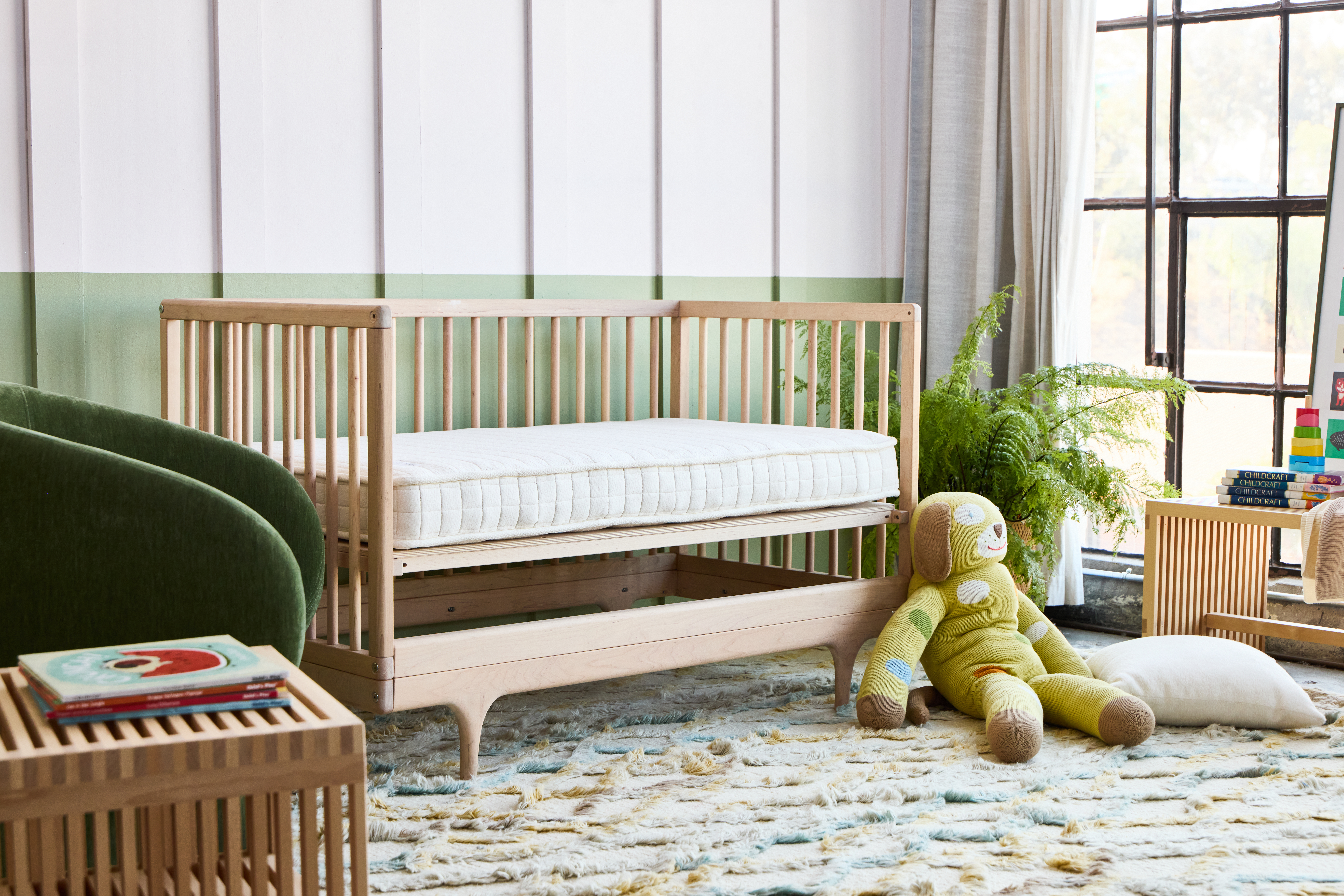
- Organic Crib Mattress: Our original organic crib mattress is made from certified organic cotton, wool, and latex.
- Eco Organic Crib Mattress: Our most affordable option is made from certified organic cotton, wool, and coconut fiber over a core of 242 individually wrapped innerspring coils made from upcycled steel.
- Luxury Organic Crib Mattress: Our top-of-the-line crib mattress is made only of the finest organic materials and certified components available: cotton-wrapped innersprings encased in unbleached cotton, which are top-and-bottom tied and nested and hand-sewn without glues, plus certified organic wool; organic certified hemp pads; resilient organic certified latex foam; and the finest quality, organic certified cotton ticking.
Every crib mattress boasts our six simultaneous safety certifications, comes with a 25-year limited warranty, and is made in the U.S.A. at our GOTS-certified Los Angeles factory with sustainably sourced materials, honoring our industry-first farm-to-mattress model.
Shop our entire Baby and Kids collection here.
Looking For More Advice On Creating A Healthy, Non-Toxic Nursery?
Check out the following articles:
- Our Favorite Non-Toxic Nursery Essentials
- How To Keep PFAS And Forever Chemicals Out Of The Bedroom
- How To Design An Eco-Friendly Kids Room
Read more: How to Practice Sustainability as a New Parent
Have feedback on our story? Email [email protected] to let us know what you think!
Shop Pillows
The Essential Organic Pillow Collection
Gentle, breathable, non-toxic support.