



For years, the bathroom has been treated as a purely functional space. A place to rush through a morning routine. A stop between meetings. Somewhere to get ready quickly and move on with the day.
But something is shifting.
In 2026, wellness is no longer confined to yoga studios, cold plunges, or carefully curated meditation retreats. It’s becoming more intimate and more embedded in daily life. Increasingly, it’s showing up in one of the most overlooked spaces in the home: the bathroom.
We sat down with the interior design duo behind SMITH & DRAKE, Kieu Nguyen-Smith and Kristin Drake. A Colorado-based studio known for creating deeply livable, thoughtfully composed homes rooted in natural materials, quiet luxury, and intentional design.
Their work centers on the belief that a home is a composition of materials, light, and space in conversation, making them a natural voice to help unpack why bathrooms are evolving into spaces of recovery, ritual, and restoration, and how anyone can begin creating that sense of refuge, no remodel required.
Read More: 8 Sustainable Bathroom Products For a Spa-Inspired Oasis
Lighting as a Nervous System Tool
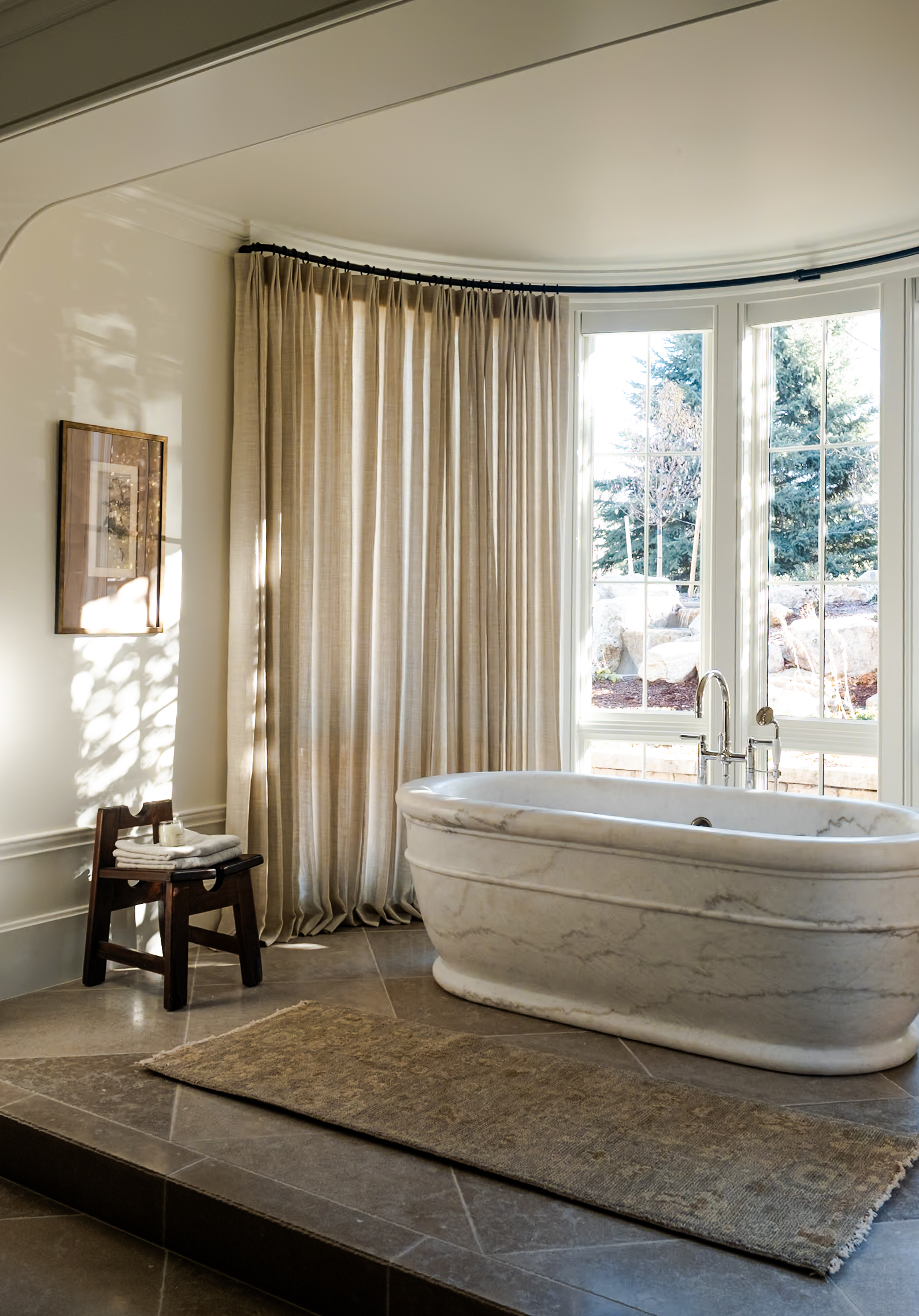
Light plays a surprisingly powerful role in how a bathroom feels, and it’s one of the most overlooked wellness upgrades.
“Natural light is always good to have,” SMITH & DRAKE say, “but one can get away with using artificial light to generate a calming effect since we now have control over color temperature and dimming.”
Harsh overhead lighting can keep the body in a state of alertness, especially early in the morning or late at night. Softer, warmer light cues the nervous system to slow down.
Dimmers, layered lighting, and warmer bulbs allow the bathroom to shift with the time of day. Brighter when you need clarity, gentler when you’re winding down. It’s less about illumination and more about intention. In spaces where we begin and end our days, that flexibility really matters.
The Role of Color: Muted, Not Muted Out
Color has an emotional weight, especially in small spaces.
While bright, high-contrast palettes can feel energizing elsewhere in the home, bathrooms benefit from a little bit of restraint.
“Natural and neutral tones tend to be more calming than bright, saturated colors,” SMITH & DRAKE explain. “We love color, but we love color with a purpose.”
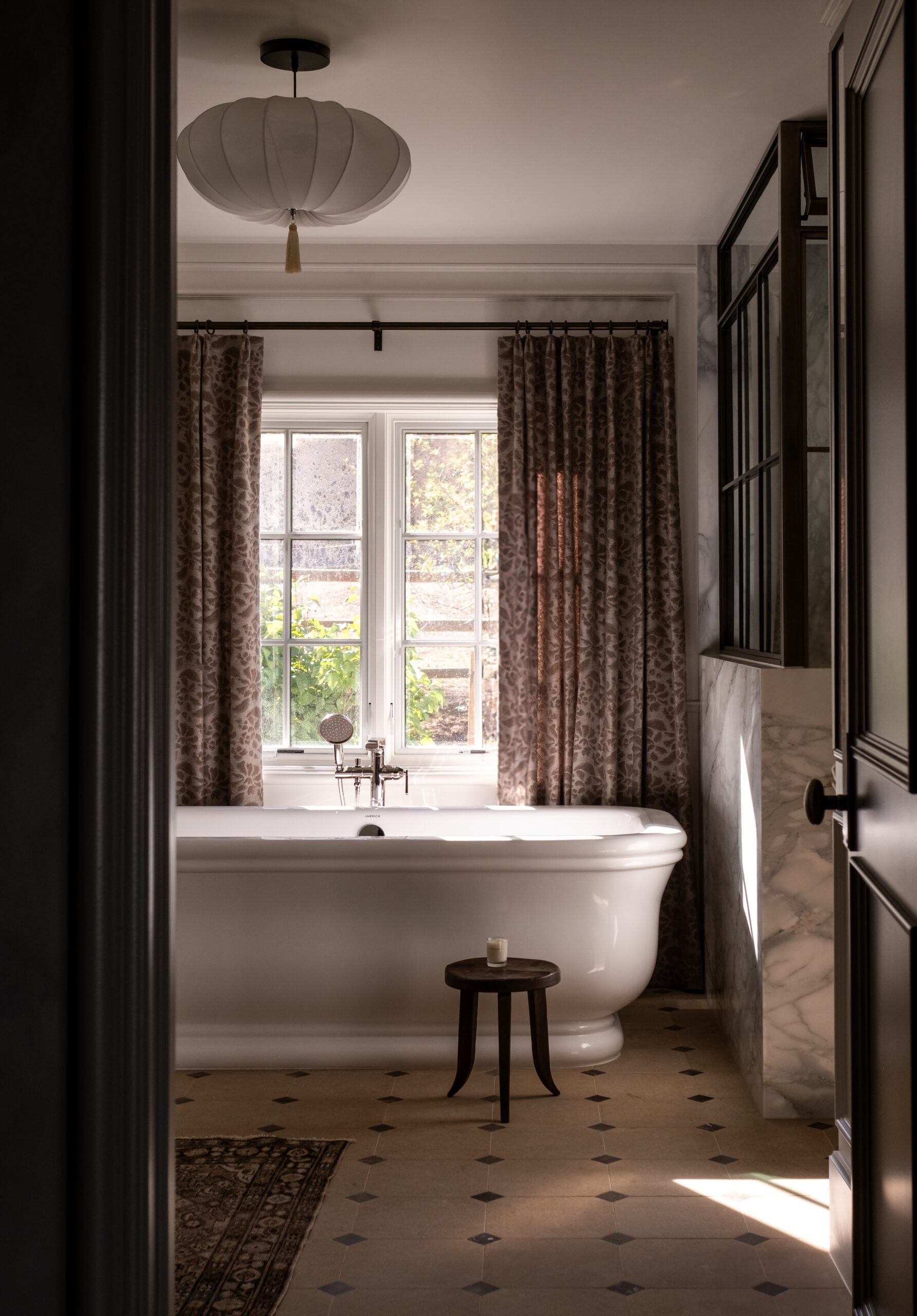
Their go-to shades? Browns, plums, deep reds, and greens; often softened and muted rather than fully saturated. These tones feel earthy and enveloping, rather than stimulating.
There’s still room for personality. A hint of cinnamon. A touch of mustard. But only when the room asks for it.
In restorative spaces, the intensity of color palettes matters more than you might think. Too much contrast can keep the nervous system in work-mode, while more muted shades invite it to settle.
No Renovation Required: Small Changes, Big Impact
When designing a bathroom through a wellness lens, SMITH & DRAKE are clear: before finishes or fixtures, start with flow and storage.
If you’re thinking about refreshing your own bathroom, or even just wondering where to start, SMITH & DRAKE suggests beginning with an intake of what already exists. Before buying anything or making changes, take a moment to notice how you actually use the space day to day.
“Research tells us that disorganization and clutter affect our mental state, so, to us, a well-designed floor plan with good flow and sightline is always step one.”
But just as important as the layout is what supports daily life behind the scenes.
“There’s a delicate balance,” they note, “because we’re always looking for that end photo, the magazine shot, but we understand people will be living there and managing their daily lives in these spaces.”
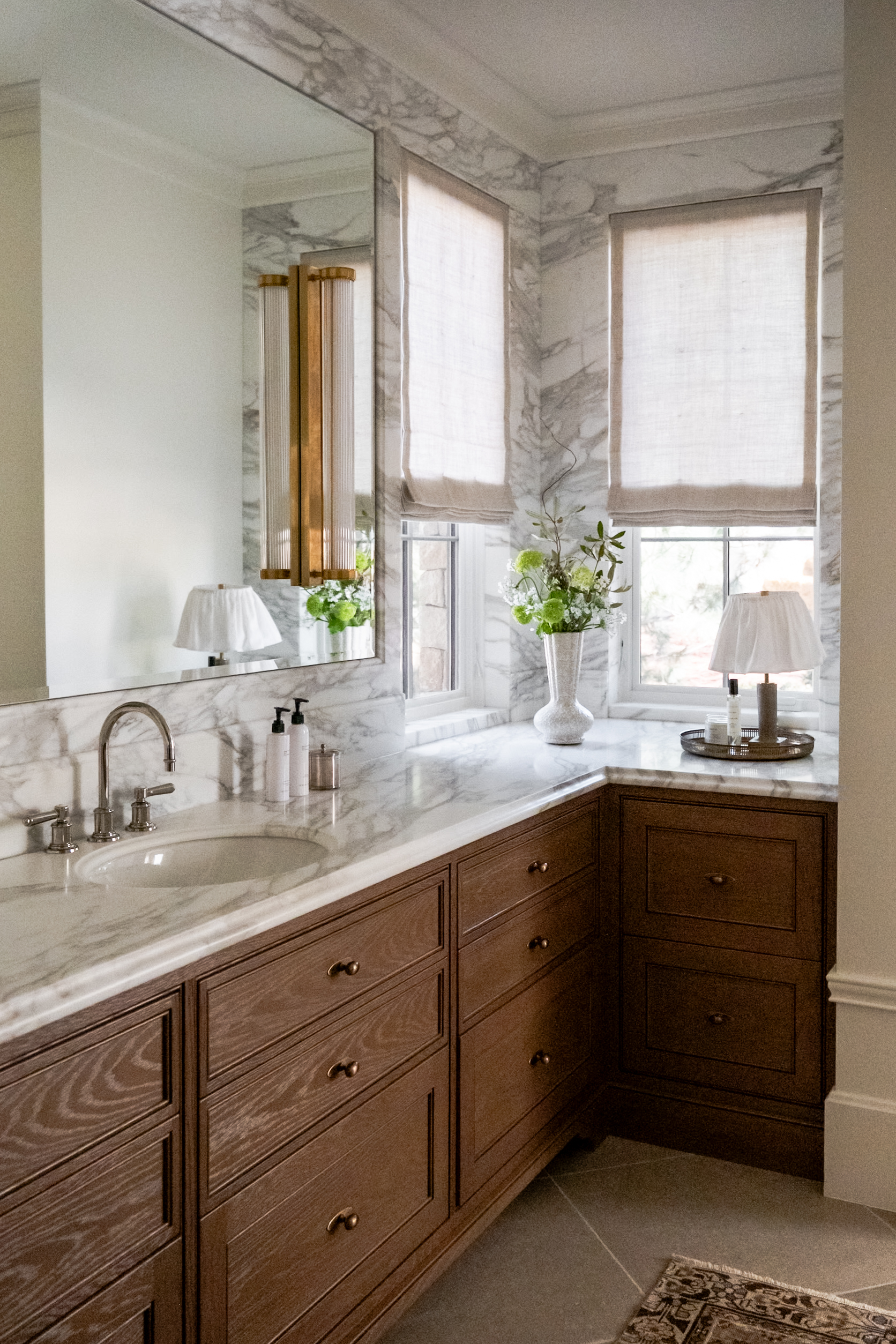
Their approach begins with organization: creating room to corral, hide, and contain the realities of everyday use. Closed storage. Drawers that actually make sense. Cabinets that give you room to put things away rather than leaving them out.
“We do a lot of intake with our clients,” they explain. “We ask how they live, then we go into their existing spaces to see how they’re actually living. We can tell a lot about a person by seeing their kitchen, bathroom, and closet.”
The goal isn’t perfection, it’s ease. When storage works intuitively, new habits can easily follow.
“We believe anyone can retrain themselves to open a door or drawer to retrieve something,” they add. “It’s not hard. You just have to be willing to do it.”
Even without a renovation, this mindset still applies. Clearing countertops. Moving daily-use items into drawers or bins. As SMITH & DRAKE put it: “No matter how ‘design-forward’ your toothbrush is, no one really wants to see it.”
Visual calm is often just one organizational decision away. And, once the foundation is in place, small, intentional touches can transform how the space feels and gets used.
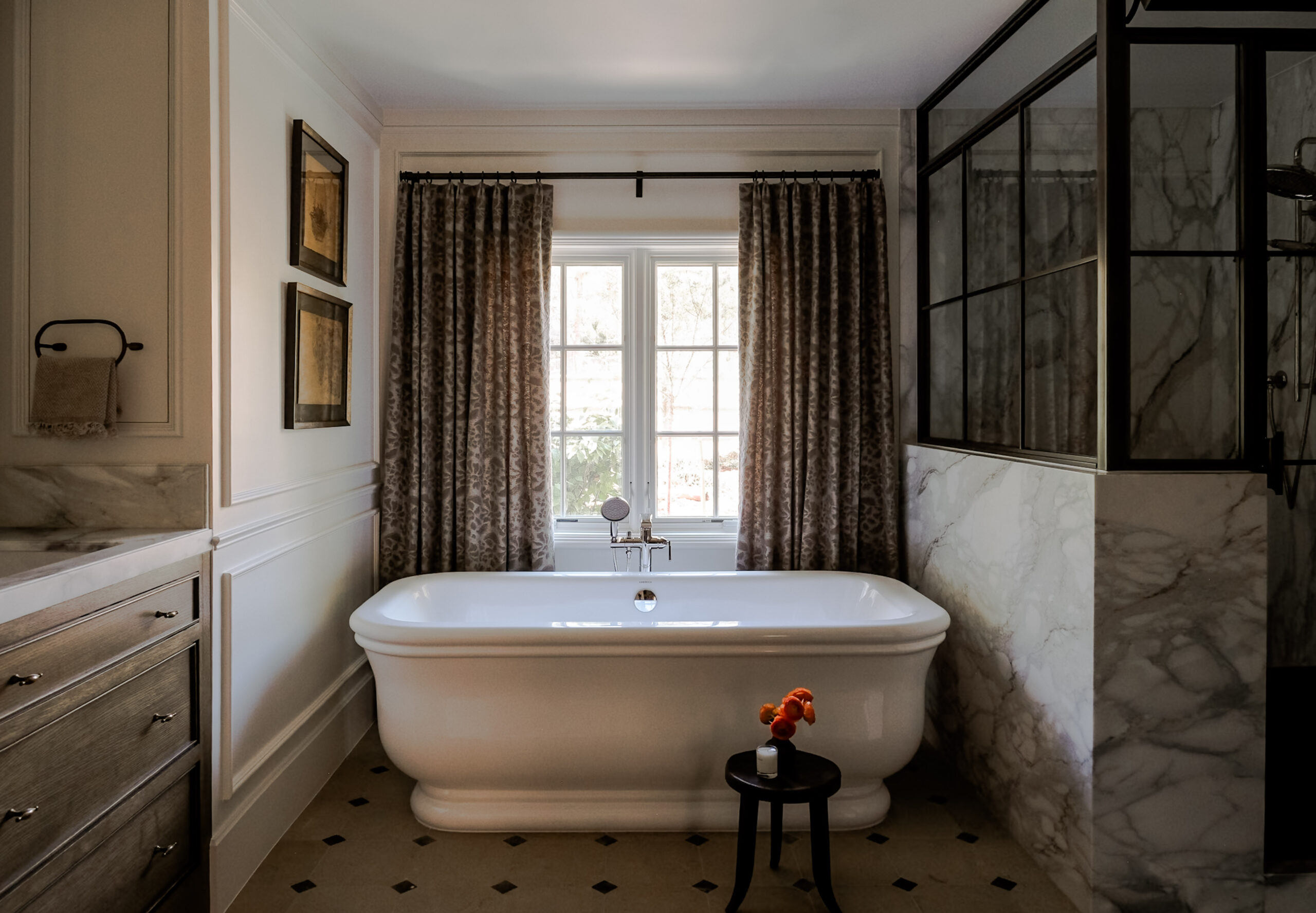
Once your storage systems are in place, you can start layering in personal touches like a decorative tray with a hand soap you love. A body oil that feels indulgent, or a perfume bottle that sparks a sensory moment. Plus, intentionally adding in soft goods such as a plush robe hanging in a corner, a warm rug underfoot, or a bath mat that feels like a landing pad rather than an afterthought, adds comfort without any of the unnecessary clutter.
“Art is always a key element, too. And, we never finish a space without fresh flowers,” Kristin shares. “I make a run to Trader Joe’s every one to two weeks and spend $20 on flowers that I sprinkle around my home. It makes it feel fresh and adds life, especially in the winter months.”
Kieu adds another layer: “I love to light a candle on top of the fresh flowers to make the space feel like a true spa.”
These aren’t just decorative flourishes; they’re signals to slow down. Quiet cues that tell the body this space is meant to restore, not rush.
Read More: Declutter Your House Using the Norwegian Life-Cleaning Method
Beautiful vs. Restorative
Not all beautiful bathrooms feel good in use.
“Design can be tricky,” SMITH & DRAKE note. “It may appear one way, but feel another.”
A restorative bathroom must be approachable. Not sterile, and never so perfect that we’re afraid to actually live in the space.
“We’ve all been in spaces where you’re afraid to swing your arms or put a drink down,” they say. “If you want it to be usable, it can’t be too precious.”
True wellness lives in livability. In spaces that invite use, not admiration from afar.
Intentional bathroom design is also responding to how relationships and routines are changing.
“We’re seeing people want to use these spaces differently, or on their own accord,” SMITH & DRAKE note, pointing to the rise of separate vanities, dressing areas, and even water closets.
Wellness today is personal. And the bathroom is becoming a place where individuality, boundaries, and restoration can coexist.
Rethinking Ritual
Perhaps the biggest shift happening in bathroom design isn’t physical at all…it’s mental.
“We can shift our mindset about our bathrooms,” SMITH & DRAKE suggest, “and make them less of a utilitarian space, and more of a retreat.”
That shift shows up in how we use the space.
A shower becomes more than a necessity; it’s a reset. Washing your face isn’t just a step in a routine; it’s a transition point. Water, in all its forms, plays a grounding role in daily life–especially when we give it the time and attention it deserves.
Life moves fast. The bathroom offers one of the few moments where we can pause without distraction.
“Find a candle you love, turn the lights down, and put on some music. Take a moment for yourself,” they suggest.
These rituals don’t require more time, just more presence. And when the space supports that pause through thoughtful lighting, uncluttered surfaces, and calming materials, slowing down feels natural rather than forced.
“Making it a sacred space doesn’t take much,” they remind us.
A Space That Supports How We Live Now
In 2026, wellness isn’t about adding more. It’s about removing what gets in the way.
The bathroom, once an afterthought, is now a sanctuary in waiting. Not because of trends or luxury finishes, but because it offers something increasingly rare: privacy, pause, and presence.
With intention, even the smallest bathroom can become a space for recovery and ritual.
And sometimes, all it takes is clearing the counter, lighting a candle, and letting yourself linger a little longer.
Read More: How to Spring Clean Your Bathroom Sustainably
Have feedback on our story? Email [email protected] to let us know what you think!

Shop Pillows
The Essential Organic Pillow Collection
Gentle, breathable, non-toxic support.