
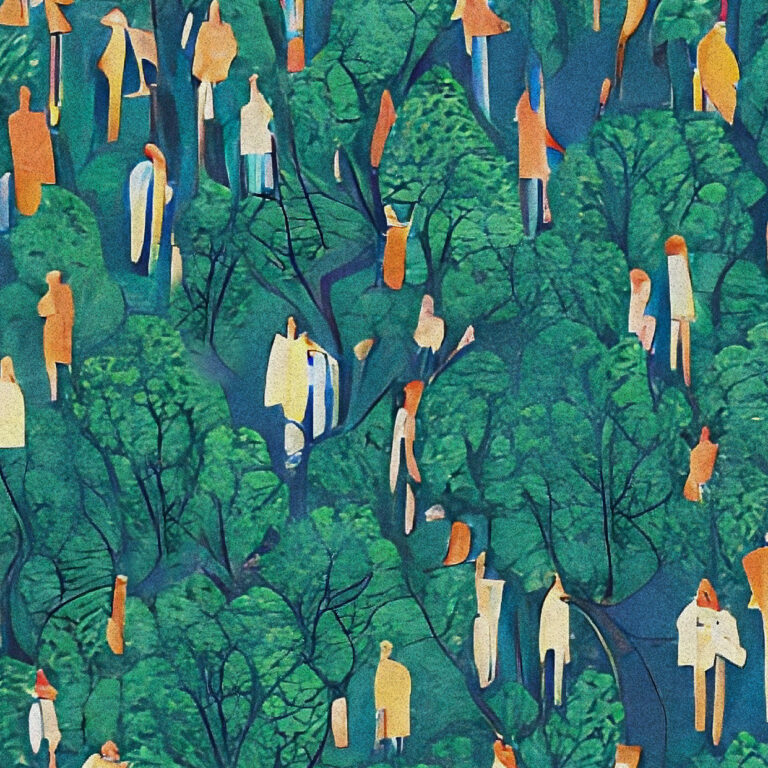






“Sleeping through the night” is often treated as the gold standard.
It’s something we aim for, measure ourselves against, and quietly worry about when it doesn’t happen.
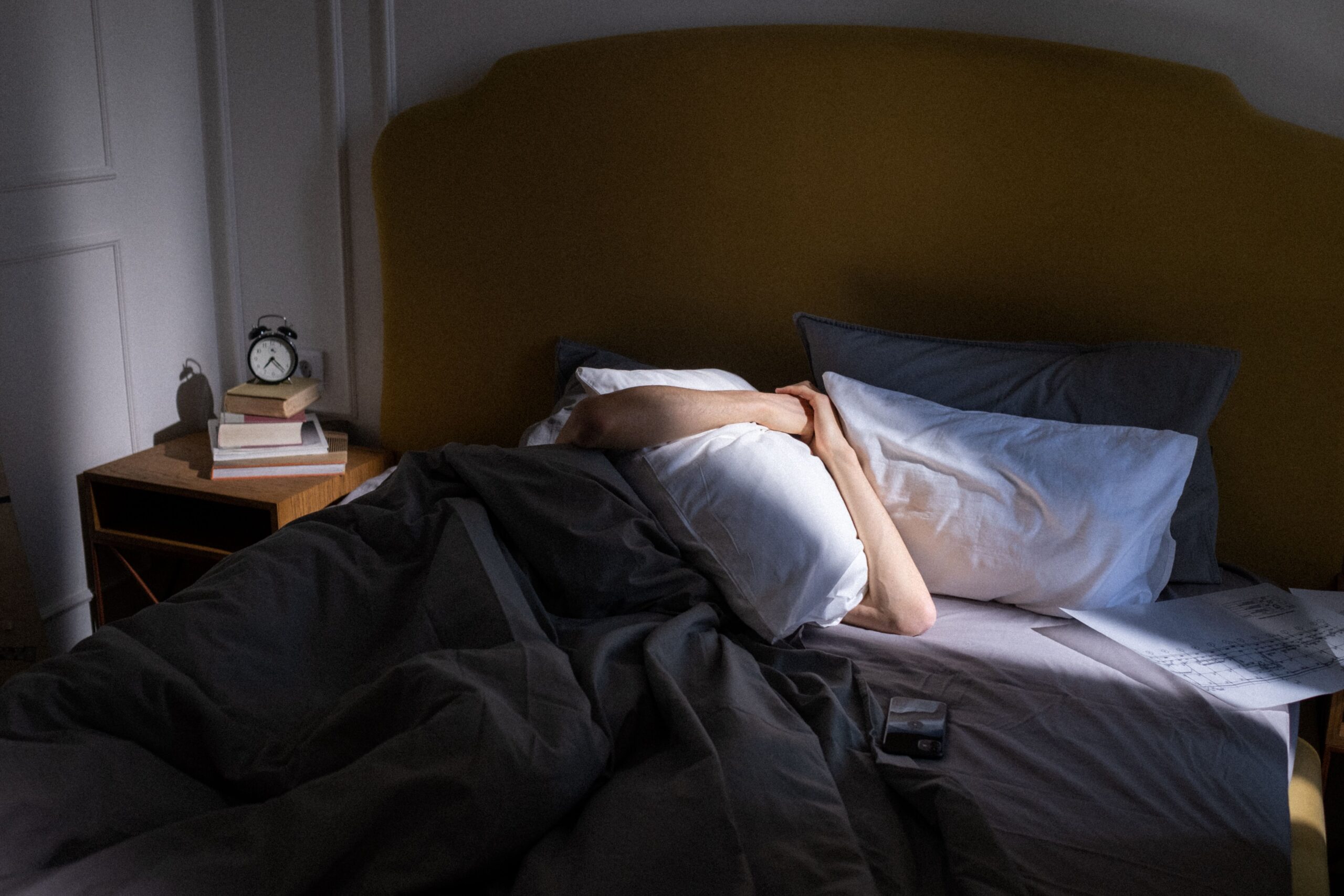
I’ve always had a very specific kind of relationship with the middle of the night. The kind where you wake up, check the clock, and immediately start doing math. If I fall asleep right now, I’ll get five hours. If I fall asleep in the next twenty minutes, maybe four and a half.
It’s rarely a calm experience. It feels like something has gone wrong.
But the more I’ve paid attention to it, the more I’ve started to wonder if the problem isn’t the waking itself, but the meaning we attach to it.
Somewhere along the way, uninterrupted sleep became the definition of “good” sleep.
But historically, that may not have been the case at all.
When Waking Up Was Normal
Today, waking up in the middle of the night is often framed as a disruption—a particularly annoying one at that.
But before the widespread use of artificial lighting, many humans didn’t sleep in a single continuous stretch. Instead, sleep was often split into two distinct periods.
People would fall asleep for a few hours, wake naturally in the middle of the night, and then return to sleep again. That waking period wasn’t necessarily stressful. In fact, historical accounts suggest it was often used for quiet, low-stimulation activities—reading, praying, or simply lying awake in a calm, restful state.
This pattern, sometimes referred to as biphasic or segmented sleep, appears across different cultures and time periods.
Which raises an interesting possibility:
What if waking up at night isn’t a flaw in the system, but something the system already expects?
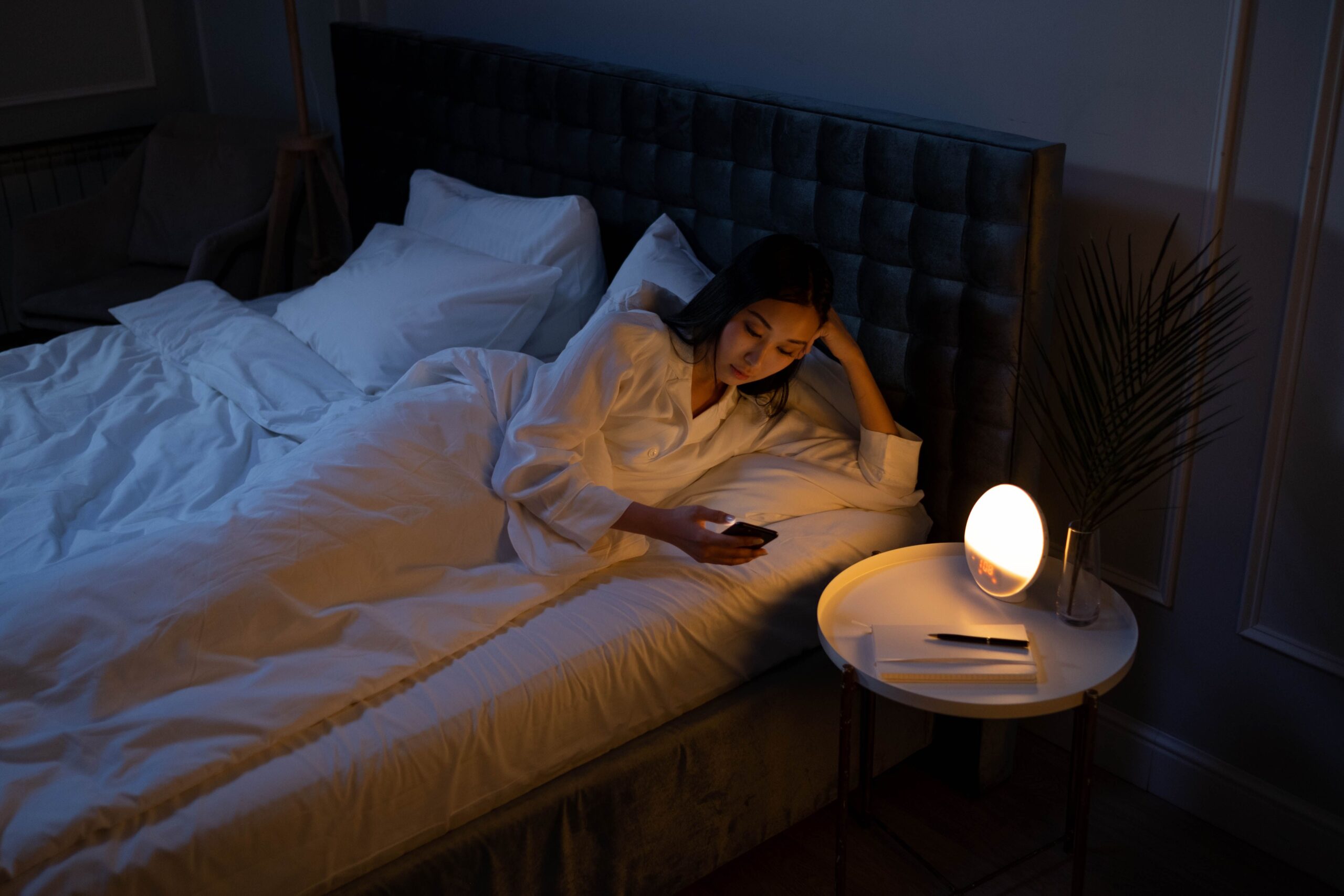
Read more: Sleep Paralysis: The Spookiest Sleep Phenomenon Explained
The Shift to “One Perfect Night”
So how did we get here?
The shift toward consolidated, uninterrupted sleep didn’t happen overnight (ironically). It emerged gradually alongside industrialization, the development of artificial lighting, and more structured work schedules.
As evenings became brighter and more productive, the window for sleep narrowed, and expectations around it became more rigid.
Instead of sleep adapting to the rhythms of the environment, the environment began adapting to the demands of daily life.
Over time, the idea of a “full night’s sleep” became standardized:seven to nine hours, uninterrupted, ideally beginning at a socially acceptable bedtime.
Anything outside of that started to feel like a problem.
What the Body Actually Does
Biologically, sleep is made up of cycles.
Throughout the night, the body moves through stages of light sleep, deep sleep, and REM sleep in roughly 90-minute intervals. Even within a “normal” night of sleep, it’s common to briefly wake between cycles. Most people just don’t remember it.
But when those awakenings last longer (or when we become aware of them) they can feel disruptive.–especially if we’ve been told they shouldn’t be happening at all.
This is where expectation starts to shape experience.
If waking up at night is framed as a failure, it’s more likely to trigger stress. And that stress(checking the time, worrying about tomorrow, trying to force sleep)can make it harder to fall back asleep.
What might once have been a neutral pause becomes charged.
The Middle of the Night, Reconsidered
There’s a particular vibe to being awake in the middle of the night.
Everything feels slightly off. The world is quieter, but not silent. The air feels different. Time stretches in a way it doesn’t during the day.
Thoughts tend to take on a different tone here, too. Less filtered, a little more intense. Things that felt manageable at 2 p.m. can feel oddly urgent at 3 a.m.
It’s the hour of quiet spirals. Of overthinking. Of suddenly remembering something from five years ago that absolutely does not need revisiting.
But historically, this period wasn’t treated as a problem.
In accounts of segmented sleep, the time between “first sleep” and “second sleep” was often calm, even meditative. People stayed in low light, moved slowly, and allowed themselves to exist in that in-between state without trying to rush out of it.
And there’s something almost unfamiliar about that now.
The idea that you could be awake in the middle of the night and not try to fix it immediately.
That you could just…be there.
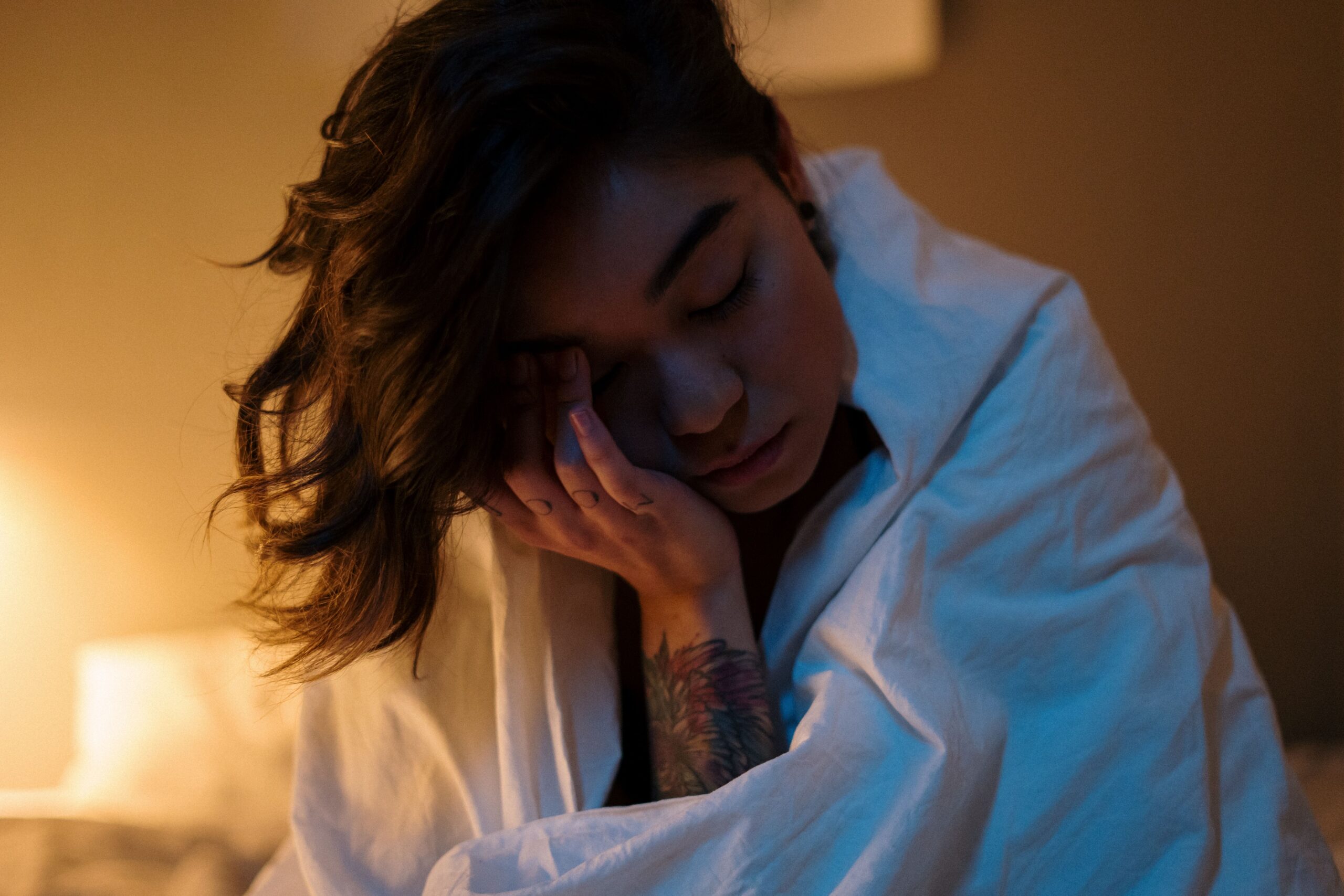
Read more: The Witching Hour Is Real: What Happens in Your Body Between 3–4 a.m.
When Wakefulness Becomes the Problem
So, the issue may not be about waking up.
It may be what happens next.
Modern sleep culture tends to emphasize control. We love routines. We adjust the lighting. We track sleep quality down to the minute.
And while some of these tools can be helpful, they can also create a sense that sleep is something we need to get exactly right.
So when we wake up unexpectedly, it feels like something has gone wrong.
But in reality, occasional nighttime waking is not uncommon and not necessarily harmful.
In fact, some research suggests that biphasic or flexible sleep patterns can still support overall rest, as long as total sleep time is sufficient.
The body, it turns out, is often more adaptable than we give it credit for.
The Role of Environment
While sleep patterns may be flexible, the environment still plays a powerful role in how easily we move through them.
Before artificial lighting, nighttime darkness was consistent. Temperatures dropped naturally. Activity slowed.
Today, those cues are less predictable.
Artificial light can delay melatonin production. Screens introduce stimulation late into the evening. Indoor environments often remain at a constant temperature, rather than following the body’s natural cooling cycle.
All of this can make it harder for the body to settle into (and return to) sleep. Especially if the environment traps heat, disrupts airflow, or feels overly stimulating.
Which means that when we do wake up, the conditions aren’t always there to make it easy to fall back asleep.
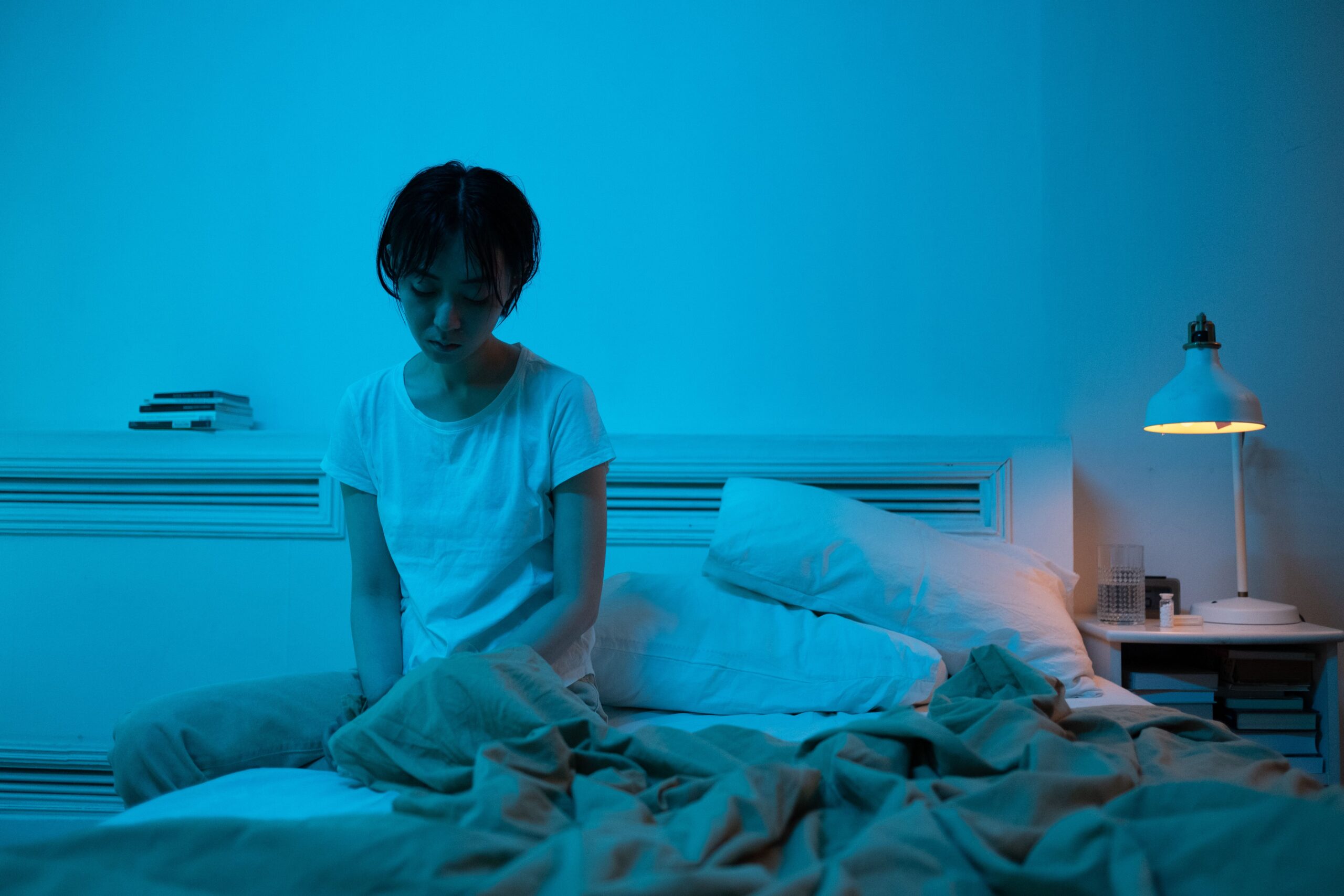
Read more: The End of Perfect Homes: Designing Spaces That Actually Support You
Rethinking What “Good Sleep” Means
If uninterrupted sleep is more of a modern expectation than a biological rule, it may be worth reconsidering how we define “good” sleep in the first place.
Instead of focusing solely on whether we wake up, we might ask:
- How rested do I feel overall?
- How easily can I get back to sleep?
- What conditions help my body relax?
This shift doesn’t mean ignoring persistent sleep issues or underlying health concerns. But it does mean allowing for a little more flexibility in how sleep is understood.
Not every wake-up is a problem.Not every restless night is a failure.
Sometimes, it’s just part of the rhythm.
A More Flexible View of Rest
Sleep doesn’t always unfold in a straight line.
And maybe it was never meant to.
The idea that we should fall asleep quickly, stay asleep all night, and wake up feeling perfectly restored is appealing, but it’s also a relatively narrow definition of what rest can look like.
Historically, sleep had more texture. More variation. More space.
And while modern life has changed many of those conditions, the underlying biology hasn’t disappeared.
Which means that sometimes, better sleep isn’t about forcing the body into a single pattern.
Sometimes it’s about loosening the expectation that there’s only one way it should look. And cultivating environments that support rest in ways that actually feel natural.
And recognizing that waking up in the middle of the night isn’t always something to fix. Sometimes, it’s just part of being human.
Read more: Summer Sleep
Have feedback on our story? Email [email protected] to let us know what you think!

Shop Pillows
The Essential Organic Pillow Collection
Gentle, breathable, non-toxic support.