







You know that moment when the sky turns slate-gray, the wind picks up, and all you want is something warm and delicious in a bowl? That, my friend, is the sound of your comfort food cravings calling. But what if we could lean into those cravings without tipping into overindulgence, wrecking our sleep, spiking our guilt, or sending our inner critics into overdrive?
That’s the sweet spot I want to explore. Where science meets soul, and comfort meets consciousness.
In cooler weather, our appetite for rich, satisfying dishes goes up. Comfort food cravings are real; they’re anchored in nostalgia, emotion, and brain chemistry. But the beauty is that you can still honor that pull while making seasonal, sustainable, thoughtful choices—and sleep like a baby.
Here’s how.
The Pull of Comfort Food: Why We Crave It
As always, let’s begin by taking a look at what’s happening in your brain chemistry every time you dream of mashed potatoes, creamy pastas, or tins of cookies.
Comfort foods are often those we grew up with or associate with safety, warmth, and belonging, and they carry emotional memory. Psychologists define comfort food as those foods people reach for in certain circumstances to feel psychologically at ease.
But there’s also a biochemical side: when you consume something high in fat, sugar, or salt, your brain lights up reward centers and dopamine gets involved. In essence, the act of eating something delicious triggers some of the same circuits as any other pleasurable behavior.
Emotional eating is the flip side of this: using food (not out of physical hunger) to soothe, distract, or manage emotional states. It’s human. It’s ubiquitous. But the catch is that while it may offer a short-lived lift, if it becomes habitual or unchecked, it often backfires…leaving you sluggish, bloated, or guilt-laden.
So, yes. Cravings are real. They’re layered. But they don’t have to control whether you feel comfortable or at ease. The key is learning to honor them in ways that feed both body and mind. Not just in the moment, but for the long run.

Read More: 6 Cookbooks That Will Inspire More Cooking at Home
How to Ground Your Comfort Food Choices
If you lean into seasonal produce and sustainable ingredients, it’s a good start at stripping away guilt. Plus, it boosts flavor and ecological awareness. Here’s how to make comfort food kind to your body and the planet.
1. Lean into what’s local and seasonal
When the weather cools, our bodies crave warmth, but also grounding. That’s nature doing her thing. Eating what’s in season helps your body stay in rhythm with its environment. Root vegetables, squashes, greens, and hearty herbs all grow this time of year for a reason: they’re nutrient-dense, naturally comforting, and exactly what your system needs to balance the colder months.
Buying local also means your food has traveled fewer miles to reach your plate, which reduces carbon impact and often keeps more money in your community. Plus, it just tastes better—it’s fresher, fuller in flavor, and hasn’t been sitting in cold storage for weeks.
If you’re not sure what’s in season near you, check your local farmers market or search for a seasonal produce guide by region. You’ll start to notice patterns like the vegetables that show up when the weather changes, and cooking with them will begin to feel intuitive, almost like clockwork.
2. Use whole-food swaps to minimize processing
“Whole food” is just a fancy way of saying food that looks like itself. Things that come from the ground, a tree, or an animal—not a factory. When you choose ingredients close to their natural form, you get more nutrients, more flavor, and fewer additives that mess with how your body processes and digests. Trade canned soup for a quick pot of your own…chopped veggies, broth, herbs, and salt. Choose roasted potatoes over frozen fries, oatmeal over sugary cereal, fruit over packaged snacks. These tiny swaps turn comfort into nourishment without losing any of the satisfaction.
And once you’ve stocked up on fresh, seasonal ingredients, the next step is learning how you can use them. Season them well, roast them until they caramelize, or blend them into something creamy instead of opening a packet. You’ll feel fuller, steadier, and a little more connected to what’s on your plate.
3. Mind your portions
Portion control doesn’t have to mean counting, tracking, or scolding yourself. It’s really about slowing down enough to notice when your body says, that’s enough for now. You’re learning to trust your body’s natural signals, one cozy, conscious bite at a time.
Start by cooking for the number of people actually eating (so, if it’s just you, cook for one and not a dinner party for six). Then load up what feels like a generous plate. When you’ve finished one portion, pause for a few minutes. Rest. Take a sip of water or a breath before deciding whether you really want seconds. You might, and that’s okay. But giving your body that short buffer helps your fullness cues catch up to your appetite.
Eating slowly helps, too. Not performatively slow, just aware. Pay attention to the warmth, the texture, the subtle shift in your body as you take each bite. When you eat with all your senses, you naturally stop when you’re satisfied instead of stuffed.

Read More: 5 Recipes Bringing Us Comfort and Joy Right Now
4. Layer in Movement or a Rest Buffer
After dinner, resist the urge to melt straight into the couch. Give your body a gentle transition. Take a short glucose walk around the block, stretch on the floor, or just put on a favorite song and move a little while you clean up the dishes. That small bit of motion helps your body metabolize slowly and signals that the meal is complete.
If movement’s not in the cards, even sitting upright with tea or chatting at the table for a few minutes helps. It’s about giving your body time to settle, and that small pause can set the tone for better rest later.
5. Make it slow, communal, comforting
Comfort food isn’t just about ingredients, it’s about the energy around the meal. How it’s cooked. How it’s shared. When you take time to simmer, sauté, or bake slowly, your kitchen fills with the kind of warmth no store-bought meal can match.
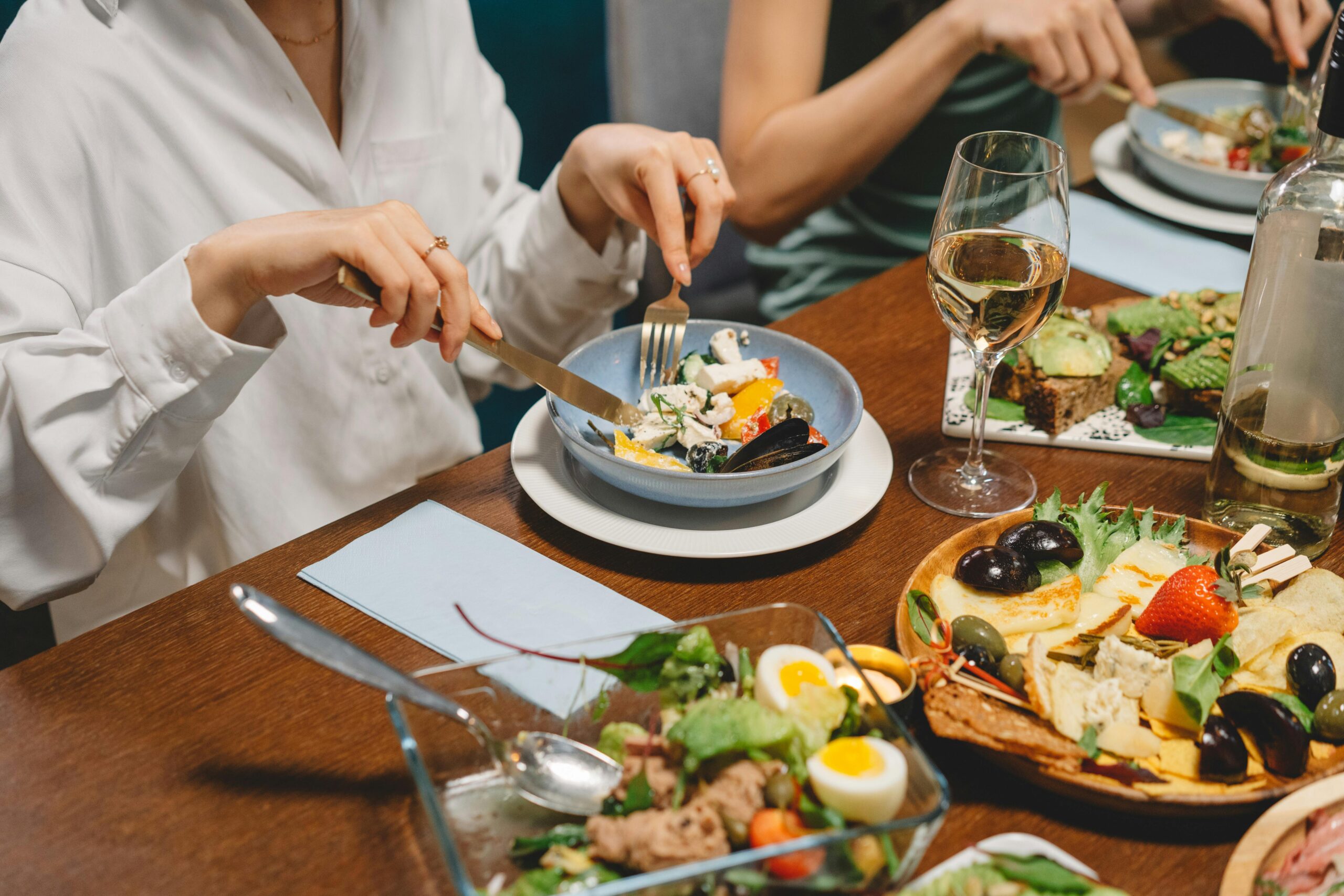
Invite someone to chop vegetables beside you, or put on a playlist and turn dinner into a wind-down ritual. Eat at the table instead of on your laptop. Light a candle. Pass the bread. Laugh.
Slowing down turns an ordinary dinner into an act of care. For yourself, the people you love, and even the planet. When food becomes ritual, you get the same emotional payoff comfort food promises, but with far more meaning and far less crash.
6. Set a Cutoff Time
As fun as late-night snacks can be, your digestion needs downtime, too. Choose a “last bite” time that gives your body a buffer before bed. The experts recommend cutting food off about two to three hours before lights out.
Let those final bites be something small and mindful, like a square of dark chocolate, a spoonful of yogurt or nut butter, or some fruit, rather than a second dessert. It’s a way of closing the kitchen with kindness, not discipline. You’ll sleep better, digest easier, and wake up lighter, both physically and mentally. By leaning into seasonality and cooking thoughtfully, you make the indulgence a gift, not a crash.
When Overindulgence Throws Off Your Sleep
Another complication of overindulging is that it can come back to bite you by wrecking your rest.
After heavy, high-fat, high-sugar, or overly large meals, your body works overtime to digest. And, the more energy that’s spent in your digestive tract, the less there is available for restful, restorative processes like deep sleep. You may wake up groggy, bloated, or even have a night full of wild dreams.
Moreover, blood sugar spikes and crashes can rattle your nervous system. The oscillation between high and low glucose can interfere with sleep architecture (especially REM and deep sleep cycles).
Some studies correlate late-night overeating with poorer sleep quality, a harder time falling asleep, and more nighttime awakenings. So the goal isn’t to avoid comfort foods and treats altogether, it’s to enjoy with awareness, especially in the evening window before bed.
Why This Matters: Beyond the Belly
When you align comfort cravings with nourishment and rest, you rewire your relationship to indulgence. You don’t have to cancel it—you just upgrade your choices.
You’ll likely find you feel better the next morning, your digestion becomes gentler, your mind quieter, and your sleep deeper. And bonus: if you care about sustainability, you’re reducing waste, carbon, and overprocessed load.
At its heart, comfort food shouldn’t be synonymous with guilt…it’s okay to enjoy yourself and cook up some rich and delicious meals. The goal here is just to nourish yourself, your soul, your loved ones, and reclaim pleasure on your terms.
Read More: Rest Starts in the Gut: How Your Microbiome Affects Your Sleep
Have feedback on our story? Email [email protected] to let us know what you think!

Shop Pillows
The Essential Organic Pillow Collection
Gentle, breathable, non-toxic support.