





As a city kid (and adult), I’ve spent very little time thinking about lawns.
Trees? Sure. Parks? Absolutely. Pigeons? Always.
But lawns always felt like something that belonged to other people. The kind of thing homeowners discussed while standing around in sensible footwear, comparing fertilizer recommendations.
But recently, my best friend, who happens to be a homeowner, discussed rewilding her backyard. Which initially had me very confused. Are backyards not inherently wild?
I quickly learned this meant people were replacing sections of grass with native plants. Leaving space for wildflowers and creating habitats for pollinators, birds, and local wildlife.
For decades, the ideal yard was tidy, uniform, and carefully controlled. But now, a growing number of people are moving in the opposite direction.
They’re embracing a movement known as rewilding. And, in the process, rethinking what a healthy landscape should look like.
So why has this become such a hot topic in the eco-conscious? And…
What exactly is Rewilding?
The term kinda sounds like it should involve wolves, or maybe a ritual or two.
In reality, the idea is a lot simpler.
At its core, rewilding is about restoring natural ecosystems and allowing nature to play a larger role in shaping the landscape around us.
According to the conservation organization Re: wild, rewilding focuses on rebuilding biodiversity, restoring habitats, and creating conditions in which plants and wildlife can thrive with less human intervention.
Historically, rewilding has often been associated with large-scale conservation efforts. Like restoring wetlands. Reconnecting wildlife corridors. Reintroducing species that had disappeared from an area.
But the underlying philosophy can also be applied much closer to home. Instead of asking “How can I make this yard look more pristine?” rewilding asks a different question:
How can I make this space more alive?
That shift may sound subtle, but it changes the goal entirely.
A traditional lawn (trad lawn) is often designed with appearance in mind. Rewilding spaces are designed around relationships: between plants and pollinators, birds and insects, soil and water.
The objective isn’t to abandon a space. It’s to create conditions where the local ecosystems can do more of what they’ve evolved to do.
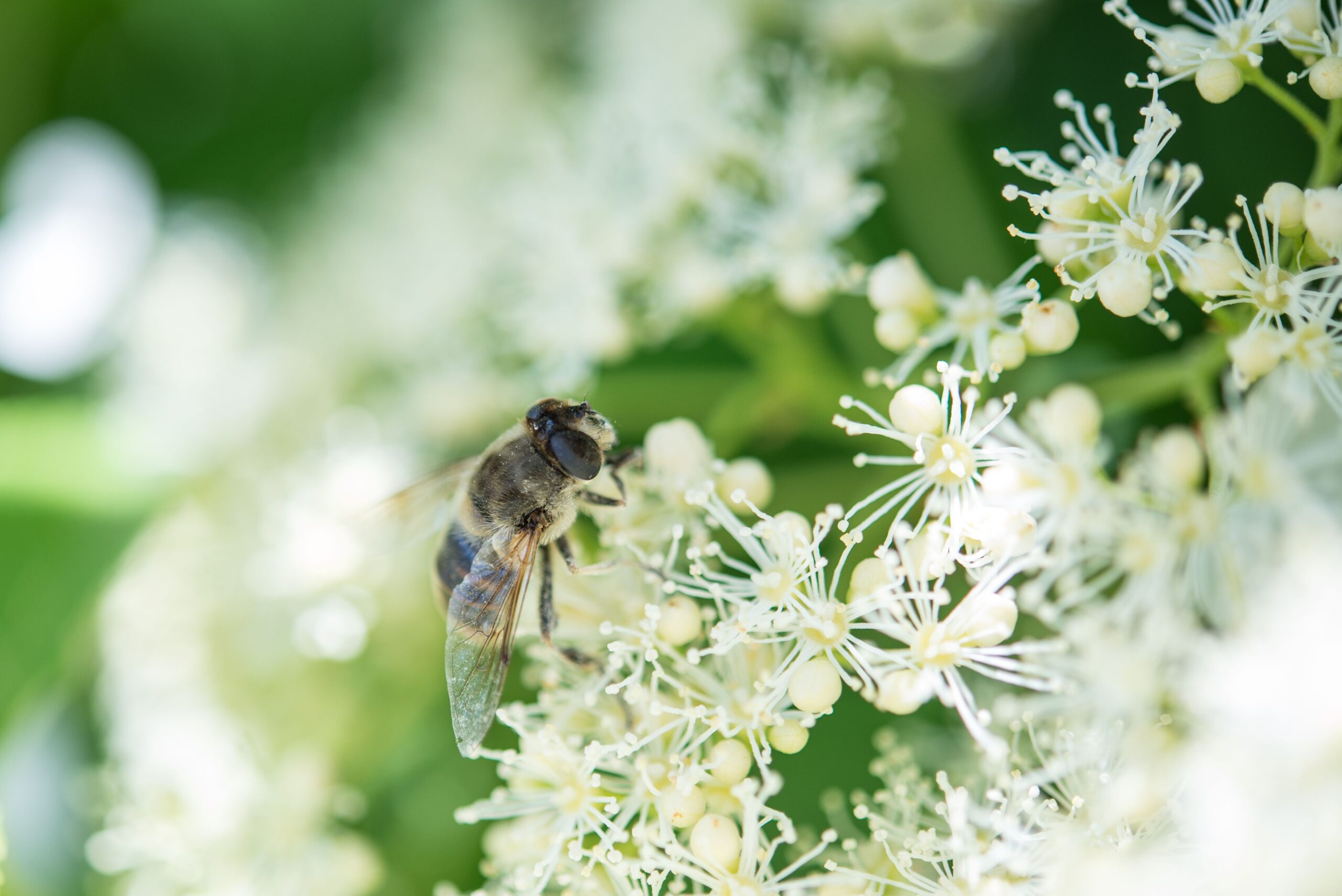
Read more: Why We Need to Protect Pollinators
The Problem With the Perfect Lawn
What I find fascinating about lawns is how normal they seem. They’re so commonplace that we rarely stop to ask why they exist in the first place.
A perfectly manicured lawn has long been treated as a symbol of care, responsibility, and even success. Short green grass, clean edges, nothing out of place.
But ecologically speaking, lawns are a bit…strange.
Most traditional lawns function as monocultures, meaning they’re dominated by a single type of grass and maintained in a way that discourages other plants from growing.
Research suggests that highly managed landscapes often support fewer species than more diverse, naturalized habitats.
In other words, what makes a lawn look tidy often makes it less hospitable to wildlife. But don’t lose your hat just yet; this doesn’t mean every lawn is inherently bad.
But it does raise an interesting question: What if our definition of a healthy landscape has been shaped more by aesthetics or cultural norms than ecology?
Because nature rarely organizes itself into neat rows. A healthy forest doesn’t look manicured, and a thriving meadow isn’t perfectly symmetrical.
And some of the most ecologically rich environments are the ones that appear a little unruly, from a human perspective.
The same tension shows up indoors, too.
For years, we’ve been taught that “better” often means more processed, more engineered, or more controlled.
Increasingly, though, people are gravitating toward natural materials, organic textiles, and spaces that feel connected to the natural world, rather than separate from it.
Maybe that’s part of what’s making rewilding resonate with so many people today.
It’s not just about plants. It’s about restoring natural processes and creating conditions where ecosystems can become more self-sustaining with less human intervention.
Instead of asking how much control we can exert over a landscape, rewilding asks what might happen if we worked with natural systems instead. And sometimes the answer is surprisingly beautiful.
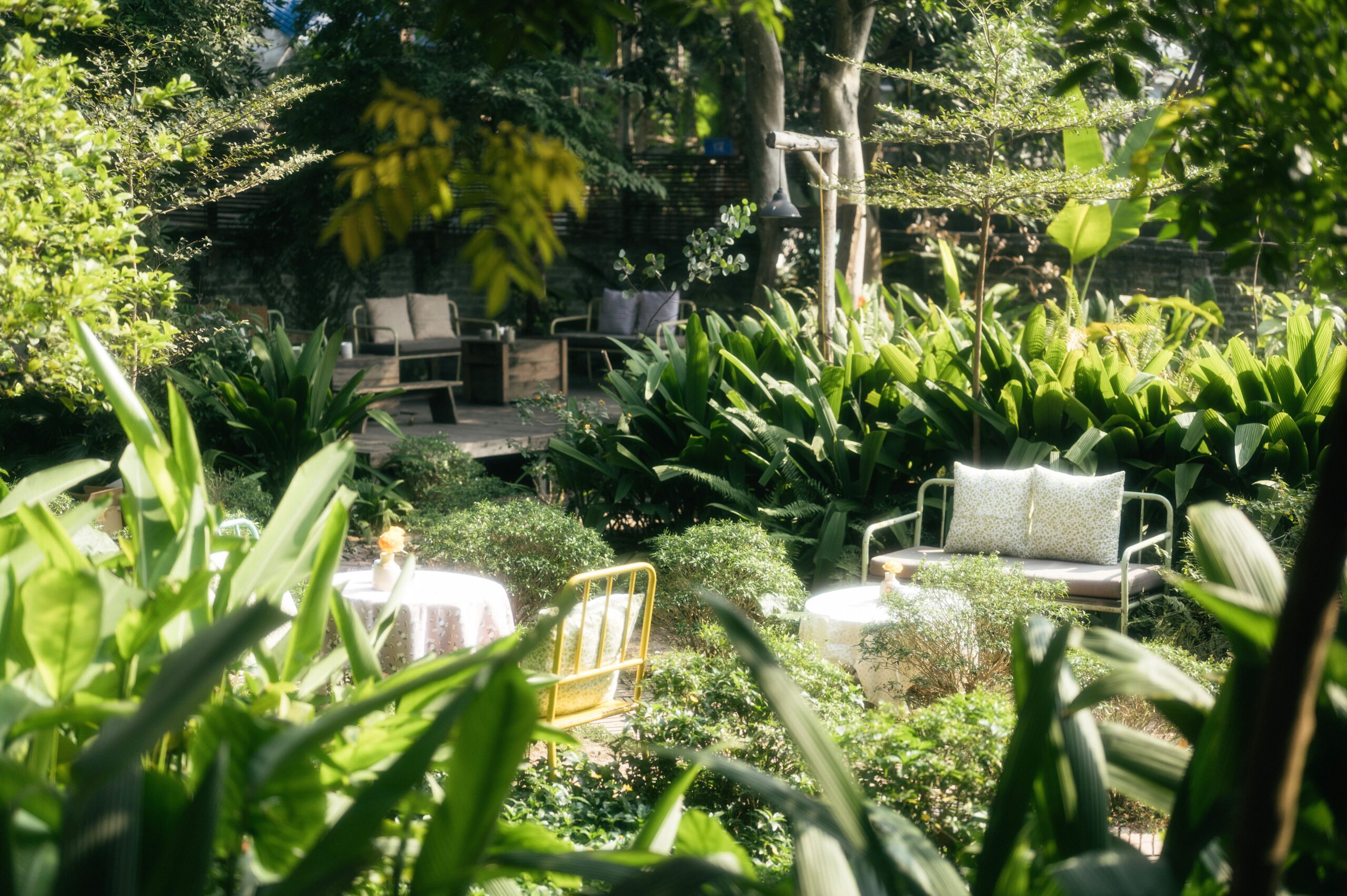
Read more: The End of Perfect Homes: Designing Spaces That Actually Support You
Why Biodiversity Matters
One of the primary goals of rewilding is increasing biodiversity, which is a fancy way of describing the variety of life within an ecosystem.
And while biodiversity can sound like one of those terms reserved for science textbooks and nature documentaries, it affects the health of ecosystems in surprisingly practical ways.
Research suggests that more biodiverse ecosystems tend to be more resilient, productive, and better able to adapt to environmental changes.
In other words, diversity isn’t just good for nature. It’s part of what helps ecosystems function.
Think of it like a neighborhood.
A healthy community isn’t made up of a single type of person doing a single type of job. It’s a network of different people playing different roles.
Ecosystems work in a similar way.
Plants support pollinators. Pollinators support flowering plants. Birds help control insect populations. Healthy soil supports everything above it.
When biodiversity declines, those relationships can become weaker. When biodiversity increases, ecosystems often become more stable and better equipped to support both wildlife and environmental health.
This is one reason native plants have become such a central part of the rewilding movement.
Over thousands of years, local plants, insects, birds, and other wildlife evolved alongside one another, creating relationships that are often highly specialized and interconnected.
A flower isn’t just a flower; it might be a food source for a particular bee. Or a host plant for a butterfly.
These things are part of a much larger network that we rarely notice until it’s gone. And that’s what I find so fascinating about rewilding.
What can look like a small landscaping decision can actually create opportunities for dozens of species to return.
Suddenly the yard isn’t just something you’re maintaining. It’s something that’s participating in a larger ecosystem.
Why Rewilding Is Having a Moment
Part of me wonders whether rewilding is becoming popular for reasons that have very little to do with lawns.
Because if you zoom out, we’re living through a moment where a lot of people seem to be rethinking the idea that everything needs to be optimized.
Perfect homes. Perfect schedules. Perfect productivity systems.
Perfect landscaping.
For decades, the ideal yard reflected that mindset. Nature was something to be managed, controlled, and kept neatly within its assigned boundaries.
But rewilding asks us to loosen our grip a little.
Organizations focused on rewilding often describe it as a shift away from intensive management and toward supporting natural processes and ecosystem recovery.
That doesn’t mean doing nothing. It means recognizing that nature is often capable of solving problems when given the opportunity.
A healthy ecosystem isn’t carefully choreographed from above.
It’s the result of thousands of interactions happening simultaneously between plants, insects, animals, soil, water, and climate. Many of which can and will continue functioning without constant human oversight when ecosystems are given the chance.
Rewilding efforts are increasingly being explored as a way to improve ecosystem resilience and help landscapes adapt to environmental change.
And maybe that’s part of what resonates with people.
Not just the environmental benefits, but the philosophy itself.
The idea that healthy systems don’t always come from tighter control. Sometimes they come from creating the conditions for life to flourish and do its own thing.
I think that’s why so many rewilded spaces feel different when you walk through them.
They’re not trying to look perfect; they’re trying to be alive.
Bringing a Little Rewilding Home
And here’s some good news: You don’t need to rip up your entire yard to incorporate a little rewilding.
You don’t even need to memorize native plant guides or transform your outdoor space into a wildlife sanctuary overnight.
Most people start much smaller. A patch of native flowers, a pollinator-friendly container garden; these are accessible changes almost anyone with a patch of outdoor space can incorporate.
Allowing part of a yard to grow a little more naturally and choosing plants that belong where they live.
Rewilding organizations often emphasize that even relatively small actions can contribute to habitat restoration and biodiversity when enough people participate.
And maybe that’s part of what makes this movement feel so hopeful.
For a really long time, environmental conversations have often centered on what we’re losing, whether it’s species loss, habitat loss, or climate change.
These conversations matter. But rewilding offers a different perspective.
Rather than simply protecting what’s left, rewilding focuses on restoring ecological processes and creating opportunities for nature to recover.
It’s an approach built around possibility. The possibility that ecosystems can rebound.
The possibility that wildlife can return.
And honestly, I think that’s what I find most compelling about it.
Lawns may not always be at the forefront of my mind, but I am thinking about the kinds of environments that make people feel good.
The parks people gather in, the community gardens tucked between buildings, the tree-lined streets that somehow feel cooler and calmer than the blocks around them.
Places that truly feel alive.
And maybe that’s ultimately what rewilding is trying to create. Not mess for the sake of mess.
Just a little more room for nature to participate.
And in a world where we’re constantly trying to control, optimize, and manage everything around us, there may be something surprisingly radical about letting a landscape be a little wild.
Read more: How One Company Made Lawn Care Ethical
Have feedback on our story? Email [email protected] to let us know what you think!

Shop Pillows
The Essential Organic Pillow Collection
Gentle, breathable, non-toxic support.