



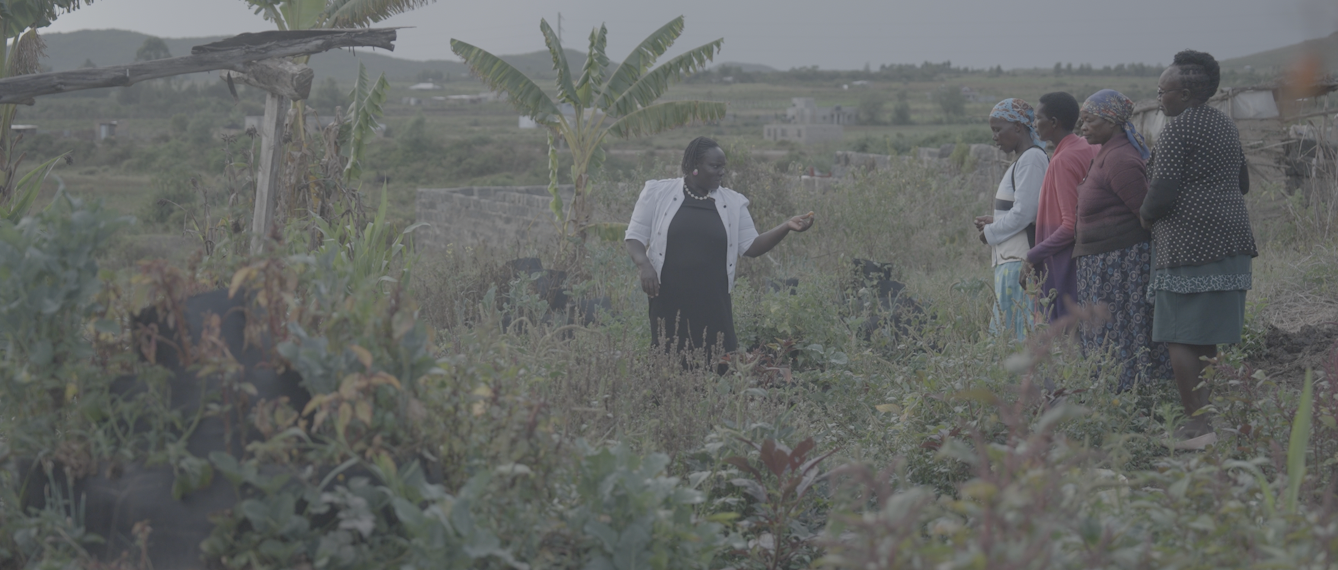



Imagine driving past miles of farmland planted with a single crop stretching as far as the eye can see. That’s what modern agriculture often looks like: vast monocultures designed to maximize production of one type of food.
A food forest offers a different approach. Rooted in the patterns of natural forests, food forests are a form of regenerative agriculture that grow many species together — fruit and nut trees, shrubs, vegetables, herbs, and groundcover plants — all supporting one another. Instead of relying on constant upkeep, these systems are designed to become more self-sustaining while continuing to produce abundant food.
That principle of interconnectedness is at the heart of Food Forest Collab, a women-led nonprofit working at the intersection of regenerative agriculture, economic opportunity, and community resilience. Through partnerships with local leaders and farming collectives, the organization supports women farmers in building sustainable livelihoods while restoring the ecosystems they depend on.
As part of our work with 1% for the Planet, we’re proud to highlight Food Forest Collab’s impact and growing vision for community-led change.
“At Avocado, we believe sustainability has to extend beyond the products we make to the communities and ecosystems connected to them,” says Vy Nguyen, CEO. “Food Forest Collab’s work is especially powerful because it invests in women as leaders of regenerative agriculture, economic opportunity, and environmental restoration. We’re proud to support a model that helps strengthen local food systems, expand opportunity, and create lasting impact for both people and the planet.”
We sat down with Co-Founder Hillary Peterson, founder of True Botanicals, and Executive Director and Co-Founder Megan Downey to explore the power of women-led collaboration, the connection between environmental restoration and economic empowerment, and why investing in women may be one of the most effective ways to cultivate lasting change.
Read more: A Mattress’s Life: How It’s Made, Used, and Reused
What first drew you to this intersection of food, community, and environmental restoration?
Hillary: This began with a group of women wondering how we could make a meaningful difference. We each had access to resources, networks, and experiences that had helped shape our own lives, and we wanted to find a way to extend those opportunities to women we might never meet — women who, given the right support, could become powerful leaders in their own communities.
The idea of regenerative agriculture entered the picture through Paul Hawken’s book Drawdown. I was struck by the data showing that if farms around the world adopted regenerative practices, agriculture could become one of the most powerful climate solutions available. At the same time, at True Botanicals, we were trying to source regeneratively grown ingredients and realizing just how difficult they were to find. That disconnect felt like an opportunity.
That became the foundation of our work: supporting women entrepreneurs in regenerative agriculture, creating economic stability while restoring ecosystems. We began exploring farming collectives and community-based models that could be replicated globally. In places like Kenya, where women often face significant barriers to land ownership and in some cases aren’t permitted to own trees, the opportunity to create both environmental and economic change felt especially powerful.
While our mission has expanded over time, the core idea remains the same. We’re still focused on investing in women as leaders and changemakers. What has evolved is our understanding of how deeply connected climate resilience, food systems, economic opportunity, and community well-being really are. Regenerative agriculture became the vehicle because it allows us to address all of those challenges at once.
In your experience, what do people tend to misunderstand about the connection between food security and agricultural diversity?
Megan: Many people assume food security is simply about producing more food. But food security is also about resilience, nutrition, and ensuring communities have control over what they grow and eat. One of the challenges we see is the rise of contract farming systems that encourage farmers to focus on a single cash crop. On the surface, those arrangements can be very appealing. Farmers are often provided seeds, have a guaranteed buyer, and don’t need as much upfront capital or access to markets. For women farmers especially, that can feel like a rare economic opportunity.
But the reality can be much more complicated. These contracts can restrict what farmers are allowed to grow due to concerns about cross-contamination, gradually pushing them toward a single commodity crop and leaving less space for the diverse foods that nourish their families and communities. When harvests fall short or market conditions shift, farmers can become financially vulnerable or even indebted. Over time, monocropping can also degrade soil health, reducing the land’s long-term productivity and resilience.
Agricultural diversity is about more than biodiversity — it’s about nutrition, economic independence, and community resilience. When farmers can grow a variety of crops, they’re better able to feed their families, adapt to change, and build sustainable livelihoods. That’s a core part of our work: creating income opportunities for women farmers that don’t require them to sacrifice either the health of their land or the food security of their communities.
One of your first on-the-ground projects is a solar-powered refrigeration system in Kenya. Why did this feel like an important place to start?
Megan: We chose this project because it addresses a very immediate challenge while also serving a much larger vision. The region where we’re working is one of the areas most impacted by climate change, and we believed that if we could help women farmers solve a pressing economic problem, they would have greater capacity to invest in long-term regenerative solutions for their land and communities.
One of the biggest challenges farmers face in Kenya is that much of what they grow is highly perishable. Without access to cold storage, they’re often forced to sell quickly, sometimes at whatever price a buyer is willing to offer. That creates a cycle where farmers have very little negotiating power and a significant amount of food can be lost before it ever reaches the market.
The refrigeration project is designed to change that dynamic. By extending the life of harvested produce, farmers gain more flexibility, reduce waste, and improve their ability to negotiate fair prices. It’s a practical intervention, but one that can have a meaningful impact on income, food security, and community resilience.
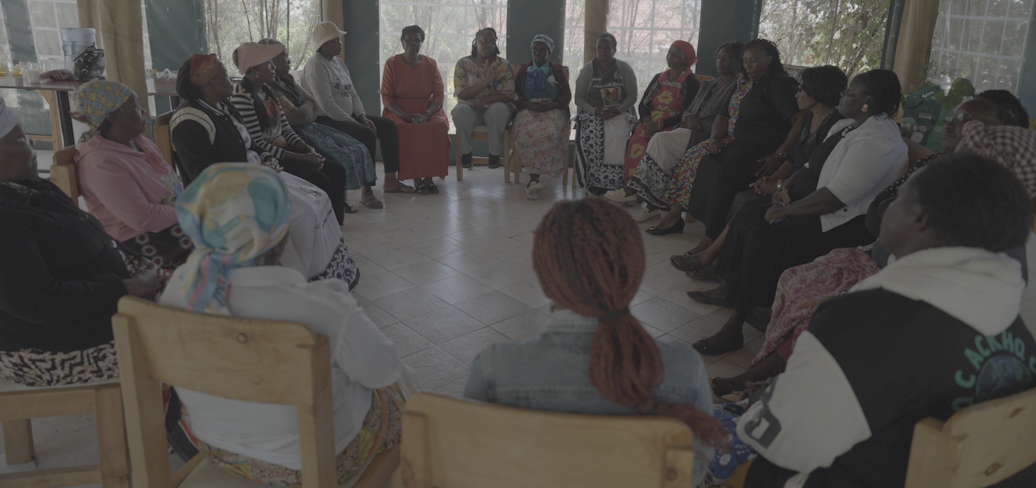
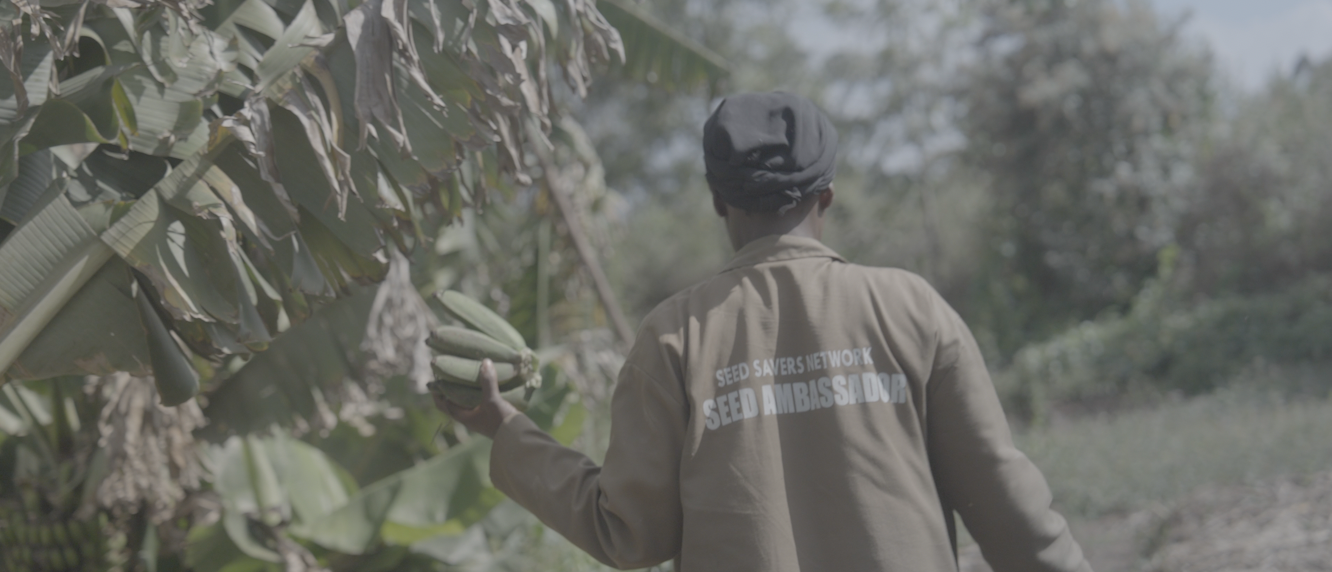
Hillary: This is our first physical project on the ground, which makes it especially exciting. We’ve partnered with Seed Savers Network because they have decades of experience supporting farmers and deep trust within communities. Together, we established a farming collective made up of women farmers they had already been working alongside, and those women elected their own leadership team.
The first unit has recently been completed and is now being tested in the field. A second unit is planned, and later this year there will be in-person training to support farmers and local leaders in maximizing its impact. Because Seed Savers works with farming communities across Kenya and hosts agricultural leaders from several other African countries, there’s already interest in how this model could be adapted and expanded elsewhere.
“In Kenya right now, the cost of living is quite high and many families are struggling to afford three meals a day. In that context, household farming becomes very important. It is one of the most sustainable ways for families to put food on the table — not just any food, but diverse, nutritious food.
So much of this responsibility has been placed on women. They are the caregivers, but they are also the farmers, the planners, the seed keepers, the food providers, and often the people with the clearest vision for what their families and communities need to survive and thrive.” – Mercy Ambani, Seed Savers
Read more: Dream of Better: Our 2024 Impact Report
Why does local leadership matter so much in this work?
Megan: Local leadership is the absolute foundation of everything we do. There is so much research showing that the most effective and sustainable community development efforts are the ones led by people who live there, understand the culture, and have deep relationships within the community. For us, it’s not just a best practice, it’s a non-negotiable.
Beyond that, it’s about respect. Communities know their own challenges and opportunities far better than outsiders ever could. There’s also a broader history of extractive relationships in development work that we don’t want to recreate. Our approach isn’t to arrive with answers. It’s to listen, support, and invest in leaders who are already doing the work.
When the cooperative came back with its initial leadership slate, all of the leadership positions had gone to men. That wasn’t surprising — it reflected the norms of the community. We had a conversation with our partners about whether the women themselves had truly been given the opportunity to lead. They went back to the group, the men stepped aside graciously and encouraged the women to take on those leadership roles.
It quickly became clear that, while we had brought ideas and tools to support the initiative, the leadership and vision were already present within these women. Our role was to help create the conditions for that leadership to thrive.
“External funding support is important. But over time, we see ownership coming from within the community. The women also contribute. They give their labor, their knowledge, their savings, their leadership, and their commitment. That is what makes it a success.
These women are not only beneficiaries – they are visionaries. They are the ones seeing what is needed in the household, on the land, and in the wider community. When they are supported to organize, farm, save, market, and lead together, they are able to transform not only their own families, but the future of the whole community.” – Mercy Ambani, Seed Savers
Hillary: Meeting with the leadership team six months later was such a powerful moment. There was no hesitation or timidity. These women weren’t waiting for direction, they were driving the vision. They were already asking the big questions: How do we protect our future? How do we ensure our children inherit healthy land? How can regenerative farming strengthen our community?
As we grow, the model will remain the same. We’ll work with trusted on-the-ground partners, invest in local leadership, and build from the knowledge and expertise that already exist within communities.
Can you share a story that captures the tangible impact Food Forest Collab has had in the communities you serve?
Hillary: Before joining the cooperative, many women were selling produce individually. One farmer described how a buyer would come through the village, see that her harvest was perishable, and offer a low price because she had only a few days to sell it before it spoiled. Today, through the cooperative, the women are able to negotiate collectively, and with access to refrigeration, they have more time and flexibility in when and how they sell their produce. It’s a practical change, but it’s also a profound shift in confidence and agency. They’re no longer negotiating from a position of urgency and vulnerability.
That impact extends beyond individual incomes. The cooperative has committed 20% of its profits to a community reinvestment fund that the members themselves will direct. The women will decide how those resources are used, whether that’s supporting education, women’s health, food security, or other community priorities.
For me, that’s the real story. It’s not simply about economic independence. It’s about women having both the authority and the resources to shape the future of their communities. Once that happens, the ripple effects are extraordinary.
“The cooperative model also helps women learn from one another. As we introduce the food forest concept, the initial stages require a lot of labor. There is work involved in preparing the land, planting, gathering seeds, and establishing the system. They can share seeds. They can exchange knowledge. They can help with labor on one farm, then move together to another farm and help establish the next food forest.
When these women come together and support one another, they become more than individual farmers. They become a network of knowledge, of leadership, and of vision. They become a force for community resilience.” – Mercy Ambani, Seed Savers
How does a women-led collaborative model differ from more traditional approaches to leadership and philanthropy?
Hillary: One of the things that continues to amaze me is how naturally the women in our Founders’ Circle operate as connectors. They’re the kind of people who hear about a challenge and immediately start thinking about who they know that could help solve it. Many of these women have succeeded in environments that can be very individualistic and competitive, yet they aren’t motivated by a zero-sum mindset. They genuinely believe that when one woman succeeds, opportunities expand for everyone.
In many ways, that’s the same dynamic we’re seeing in Kenya. When women come together around a shared purpose, they often think beyond immediate needs and toward future generations. Conversations quickly shift from “What can I gain today?” to “What can we build together that will still matter 50 years from now?” That’s where the magic happens.
When you think about the long-term impact of this work, what does success ultimately look like?
Megan: In the short term, success means proving the model. We want to demonstrate that when women are supported with the right combination of resources, leadership opportunities, regenerative farming practices, and practical infrastructure like cold storage, extraordinary things can happen. If we can point to measurable success in these early communities, that’s a powerful foundation.
Ideally, we’ll then see expansion driven by the communities themselves. We hope to see more cooperatives formed, more food forests established, and more partnerships with schools, local organizations, and government agencies. We’re already exploring opportunities to connect with ministries of agriculture that are interested in food storage, youth engagement, and climate resilience. Imagine schools with food forests and tree nurseries that provide both nutrition and hands-on learning. Imagine students, women farmers, and community leaders all working together to build local food systems.
Hillary: Long term, I picture a map of the world filled with thriving farming collectives led by women. Communities connected through shared learning, regenerative agriculture, and market opportunities. Ultimately, success isn’t that Food Forest Collab grows bigger. Success is that communities no longer need us because they have the leadership, resources, and systems in place to continue growing on their own. If we can help create that kind of self-sustaining momentum around the world, we’ll know we’ve succeeded.
Learn more about Food Forest Collab’s work supporting women farmers and regenerative agriculture.
Read more: What Helping Families Thrive Really Looks Like in Rural Guatemala
Have feedback on our story? Email [email protected] to let us know what you think!

Shop Pillows
The Essential Organic Pillow Collection
Gentle, breathable, non-toxic support.