



We all have our version of winding down before bed, but what does it look like when the people who study sleep for a living close their laptops and call it a night?
We asked four sleep and wellness specialists to walk us through their real evening routines: what they do, which trends they skip, and what they swear by. The specifics are, of course, unique to each person, but a few things are consistent across the board: a dark room, a cool temperature, phones put away, and some version of a ritual that signals to the brain that it’s time to rest.
In their own words, here are the wind-down routines of board-certified sleep doctors, nutritionists, and a naturopathic doctor for better sleep.
A Sleep Medicine Physician’s Evening Routine

Dr. Funke Afolabi-Brown is a triple-board certified sleep medicine physician and the best-sellling author of “Beyond Tired: A Sleep Physician’s Guide to Solving Your Child’s Sleep Problems for Good.” Through her practice, The Restful Sleep Place, she helps patients create consistent routines so they can sleep through the night no matter which stage of life they’re in.
- Lights Out: 9:45 p.m.–10 p.m.
- Wake Time: 5:30 a.m.
How Dr. Funke winds down
My wind-down starts at 9:15 p.m. right after family devotion. I head upstairs for a warm shower as this helps trigger the drop in core body temperature that signals the brain it’s time for sleep. From there I brush my teeth and do my skincare routine, then settle into my recliner to read for about 15 minutes. I close with five minutes of gratitude journaling, where I also do a quick mental download: reviewing my to-do list for the next day and writing down any lingering thoughts or worries so they don’t follow me into bed. If I do need to check anything on my phone, I use blue-light-blocking glasses to minimize the impact of blue light on my sleep onset. I also try to avoid social media or consuming any activating content about 30 minutes before bed. By the time I turn off the light, my mind feels clear rather than cluttered.
If she only has 10–15 minutes…
I prioritize the brain-dump over anything else, quickly jotting down tomorrow’s to-dos and any worries circling in my head. If I had even a couple of minutes left, I’d take a few slow, deep breaths to help shift my body out of the day’s stress response.
Sleep advice she skips
“Just try some melatonin.” I am cautious about using melatonin as a sleep fix for all sleep struggles. It can be helpful in certain situations like jet lag and circadian rhythm issues, but is not the cure-all for sleep troubles. I would rather have people figure out the root cause of their sleep issues than default to band-aid solutions.
Her ideal environment
Keeping the bedroom dark is huge for me. Blackout shades, sleep masks, avoiding glowing electronics. Exposure to light, even if minimal, can interfere with melatonin production and sleep quality.
Dr. Funke’s #1 sleep tip
Consistent wake time is the single tip that has made the biggest difference for my patients and for me. Your wake time anchors your circadian rhythm, and when it shifts around, it can impact your sleep onset, sleep quality, and daytime energy.
Read more: Why Sleep May Be the Most Powerful Health Habit
A Naturopathic Doctor’s Evening Routine

Dr. Farhin Rahman is a naturopathic doctor and clinical nutritionist. Through her and her husband’s practice, Sano Wellness, she supports clients by helping them heal their metabolism, hormones, gut, and energy through functional medicine and lifestyle changes.
- Lights Out: 10:30 p.m.
- Wake Time: 6:30 a.m.–7 a.m.
How Dr. Far winds down
I ideally start to wind down at about 9:30 p.m. It can vary though, based on how busy I am in the evening. I brush my teeth, floss, use mouthwash, tongue scrape, and put on my two-step skincare. I’ll take some magnesium glycinate, or spray it on the bottom of my feet or all over the bed. I love using essential oils in my diffuser — my favorite ones are lavender, eucalyptus or even lime. I’ll try to make the room as dark as possible or use a sleep mask, and turn my phone on airplane mode. If I have extra time I’ll put on mouth tape or nasal strips from Zzztape, which helps with oxygen delivery and waking up refreshed. I also have an Alexa, which often plays background sleep music or binaural beats. This allows me to get into a deep REM cycle.
If she only has 10–15 minutes…
Cleaning my face and dental hygiene are non-negotiable for me as a first step. This makes me feel “clean” before bedtime. I would do something relaxing, whether it’s reading something light or journaling. Dim the lights, put some candles on and that’s it!
Sleep advice she skips
I personally don’t do ice baths — they feel too intense for me since I love warmer, more soothing temperatures. At bedtime, I don’t have a 20-step skincare or hair routine. I also find red light therapy or doing the masks a bit cumbersome at night. They’re definitely helpful, but too many nighttime steps can be stimulating too. I keep it simple and minimal.
Her ideal environment
Light is definitely #1 since even the slightest bit of light can keep you awake. The next is temperature. If you feel too hot or too cold this can prevent a comfortable night of sleep. In the colder months, I actually invested in a heated mattress pad and it changed my life! It felt like slipping into a warm cozy womb that I don’t want to leave. I also find that most people don’t know that the type of pillows and bedding — fluffy or flat vs firm — are a game changer as well.
Dr. Far’s #1 sleep tip
I would say it’s the little things, like avoiding caffeine past 12 p.m., not doom scrolling on the phone to prevent dopamine rushes and nervous system stimulation. If we can turn off electronics, or at least turn on airplane mode, 30 minutes before bed, you can focus on relaxing, being mindful, deep breathing, and more. It gives your brain an actual chance at lowering cortisol and producing melatonin.
Read more: Should You Try Magnesium for Sleep?
A Holistic Nutritionist’s Evening Routine

Claire Sorlie is a board certified holistic nutritionist and the founder of Resilient Health & Wellness. She helps clients heal their gut and hormone issues through bloodwork analysis and a root-cause, food-first approach to functional nutrition.
- Lights Out: 10:30 p.m. – 11 p.m.
- Wake Time: 7 a.m.–7:30 a.m.
How Claire winds down
It starts at 9 p.m., typically by turning off the TV because I’m usually watching some kind of reality TV show, which is my guilty pleasure. If I haven’t completely cleaned my kitchen and put away all dishes and pans, I’ll do that. Then I will change into my pajamas and go into the bathroom to brush my teeth, floss and tongue scrape. I’ll double cleanse my face and do my skincare routine. At this point it’s around 9:45 p.m. so I’ll get into bed, turn out my lights, and turn on my Hatch alarm, which I’ve set a wind-down routine on that lasts two hours. The first hour is red light and ocean sounds. Then for the second hour, the red light turns off, and the ocean sounds turn into rainfall. I’ll do one last look at my phone; sometimes I’ll plan out the next day if it’s gonna be really busy. I will make sure my alarm is set and then turn my phone on airplane mode. I always get a better night’s sleep when I do this. Then I will read a book until the red light turns off and it’s time to go to sleep!
If she only has 10-15 minutes…
My oral and skin care routine and then turn on my Hatch alarm to do my red light wind-down routine.
Sleep advice she skips
Personally I’ve tried mouth taping many different times and I always want it to work and I want to have amazing results but I feel like it just doesn’t really do anything for me. My sleep doesn’t feel deeper. I don’t feel more rested in the morning. If I have a client who loves it then I say go for it but, for me personally, I skip out on the mouth taping trend.
Her ideal environment
Definitely temperature, light and sound. I keep my bedroom at 72 F and the AC is right next to me so it feels very cold. If it’s any hotter than that, I find that I wake up and can’t go back to sleep. And as I’ve already mentioned many times, my Hatch alarm! The red light and white noises are just incredible. I can fall asleep without them, but it just makes my wind-down and sleep routine so much better.
Claire’s #1 sleep tip
I have a few! First is, no caffeine after 3 p.m. Caffeine has a half-life of about five hours, and you can still have traces of it in your body for up to 10 to 12 hours. I also recommend having a balanced meal at dinner, which means having a mix of carbohydrates, healthy fats, and protein. If we have a high-carbohydrate dinner a few hours before bed that can spike our blood sugar, and then in the middle of the night, our blood sugar can drop, and that can wake us up. This also goes in line with my sweet treat recommendation. I’m not against having a sweet treat at night! But if you do, make sure to add either a protein or a fat because those nutrients help stabilize your blood sugar so it won’t spike as high. One of my favorite desserts is dark chocolate with peanut butter!
Read more: Chocolate Peanut Butter Chia Seed Pudding Recipe
A Sleep Specialist’s Evening Routine
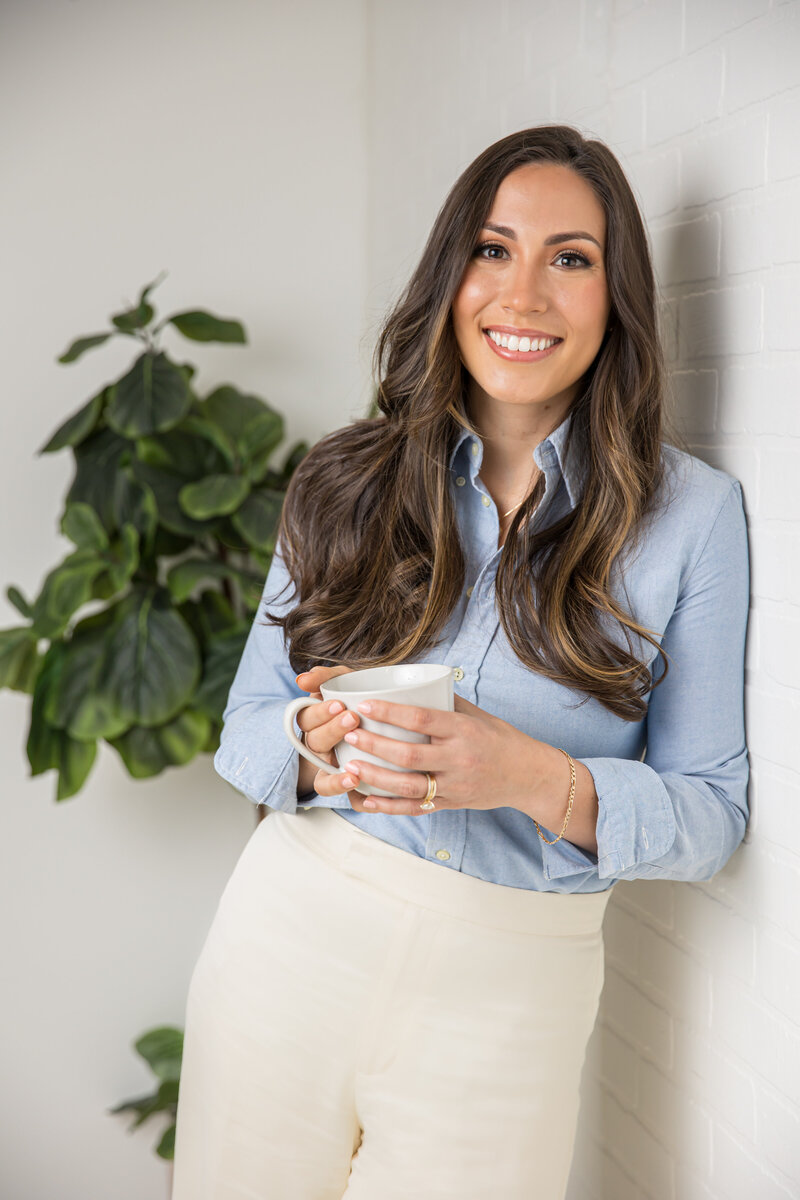
Dr. Daniella Marchetti is a clinical psychologist and board-certified behavioral sleep medicine specialist. She helps clients with busy minds find rest through consultations and teletherapy for sleep disorders.
- Lights Out: 11 p.m.
- Wake Time: 6:45 a.m.–7 a.m.
How Dr. Marchetti winds down
My wind-down routine feels like it starts at 8 p.m., when all of my kids are finally in their beds. I begin to feel like I am “off-duty” at that time, but I still have things I need to do. I will eat dinner with my husband and watch TV together from 8 p.m–9 p.m. This is our time to catch up with each other and relax. From 9 p.m.–10 p.m., I might tie up some loose ends, like fold laundry, do some creative writing, or create content. I try to do some tasks that don’t feel stressful or time intensive, so I can feel productive without overdoing it. At 10 p.m., my phone is on airplane mode and the TV is off. I brush my teeth so I feel ready for bed and I try not to drink any more fluid for the rest of the night. I grab my kindle, which signals to me that I am officially in the “buffer zone.” At this point, any reading that I do is for fun and not for work. I feel relaxed while I read, and it usually makes my eyes tired. When I feel like I am having a hard time keeping my eyes open or following the story, I get into bed and go to sleep.
If she only has 10-15 minutes…
I would opt for a Progressive Muscle Relaxation exercise. This allows me to slow my breaths and release any tension. The point of a wind-down routine for me is to signal that it’s “safe” to go to sleep. If I am carrying stress in my body then my nervous system might have a hard time downshifting when I want it to. This exercise gets me the most bang for my buck.
Sleep advice she skips
I usually skip the sleepy girl mocktail trend. I do enjoy tart cherry juice, which can be supportive of high quality sleep. However, if you are doing the right things with your behavior — like time in bed, lifestyle habits, managing stress — you don’t need a magic elixir to prompt sleep. It’s not something I would go out of my way to create.
Her ideal environment
I am particular about temperature. I prefer sleeping in a cool room (70-72 F) with a blanket appropriate to the season. If it’s summer, I like a thinner comforter because it can get hot in Miami. This can sometimes become a tug-of-war, since my husband prefers a warmer room because he is Italian and is used to sleeping without AC.
Dr. Marchetti’s #1 sleep tip
The best thing you can do is stay out of bed when you’re not actually sleeping. For me, that has meant compartmentalizing my work and living spaces and finding a place to relax during the day that is not my bed, like the couch. This has been especially helpful information for my patients that are retired, students, or remote workers. We want the bed to be strongly associated with sleep, and the bed loses that association if you do other things in bed, like eating, working, watching TV, or worrying.
Read more: Rebranding the “Sleep Divorce”
Have feedback on our story? Email [email protected] to let us know what you think!
Shop Pillows
The Essential Organic Pillow Collection
Gentle, breathable, non-toxic support.