



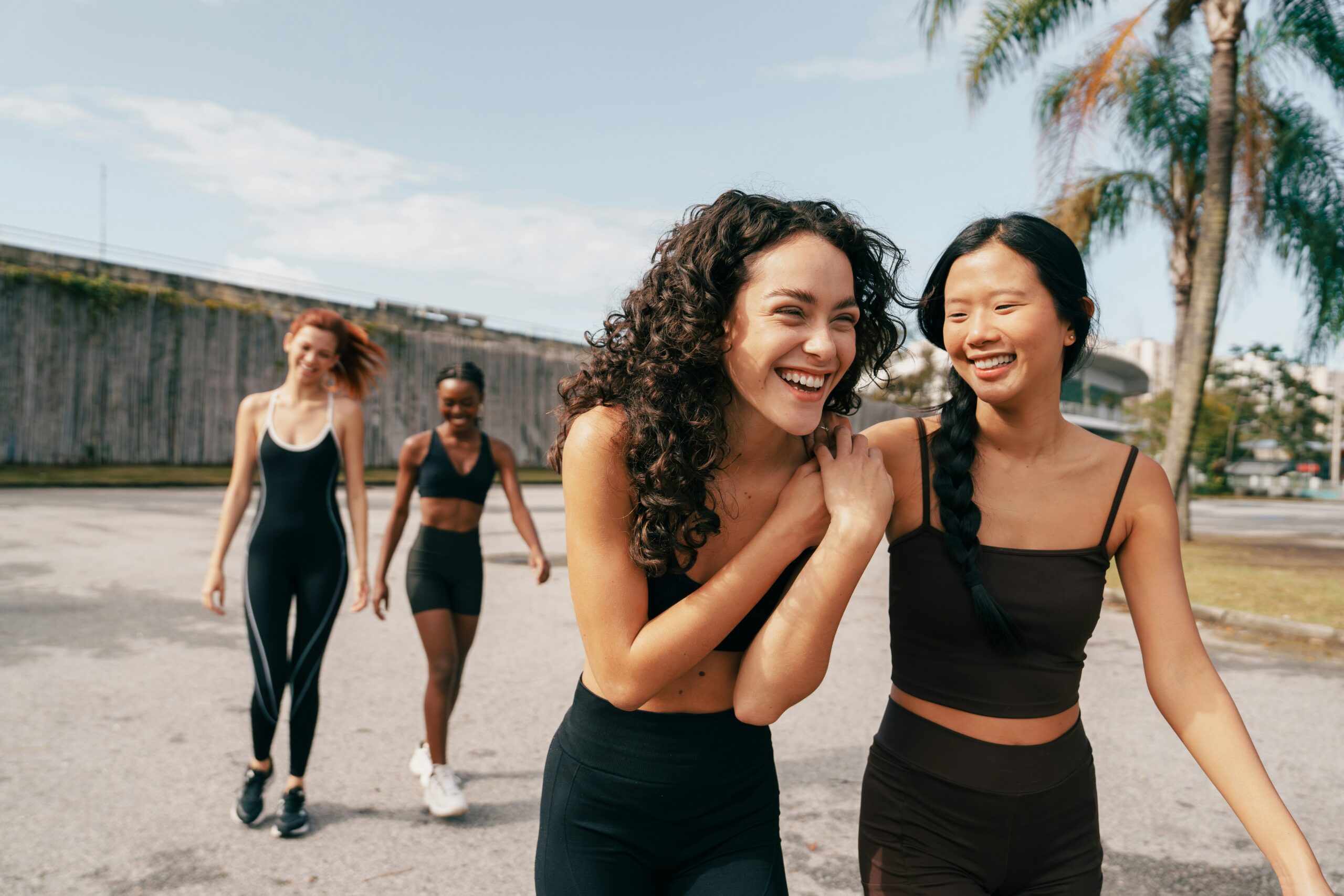



From remote work to one-click shopping and food dropped at our doors, modern life is built for maximum convenience. We can do our jobs, shop, and eat without ever leaving home or speaking to another human being face-to-face. But as our lives come with more ease, they’re also getting more isolating, leaving many of us craving something we didn’t realize we needed: connection.
It’s no coincidence that the World Health Organization has declared loneliness a “global public health concern,” warning that chronic isolation increases the risk of premature death by 30 percent. Enter the rise of social wellness. Run clubs, communal saunas, sober dance parties, book clubs, and social wellness clubs, to name a few, are becoming the new nightlife. These so-called “fourth spaces” are stepping in as stand-ins for bars and nightclubs, ushering in a new wave of togetherness that’s reshaping our social lives. Showing up in real life has become the ultimate form of self-care. I turned to experts to unpack why social wellness is having a moment and why connection is no longer optional when it comes to our well-being.
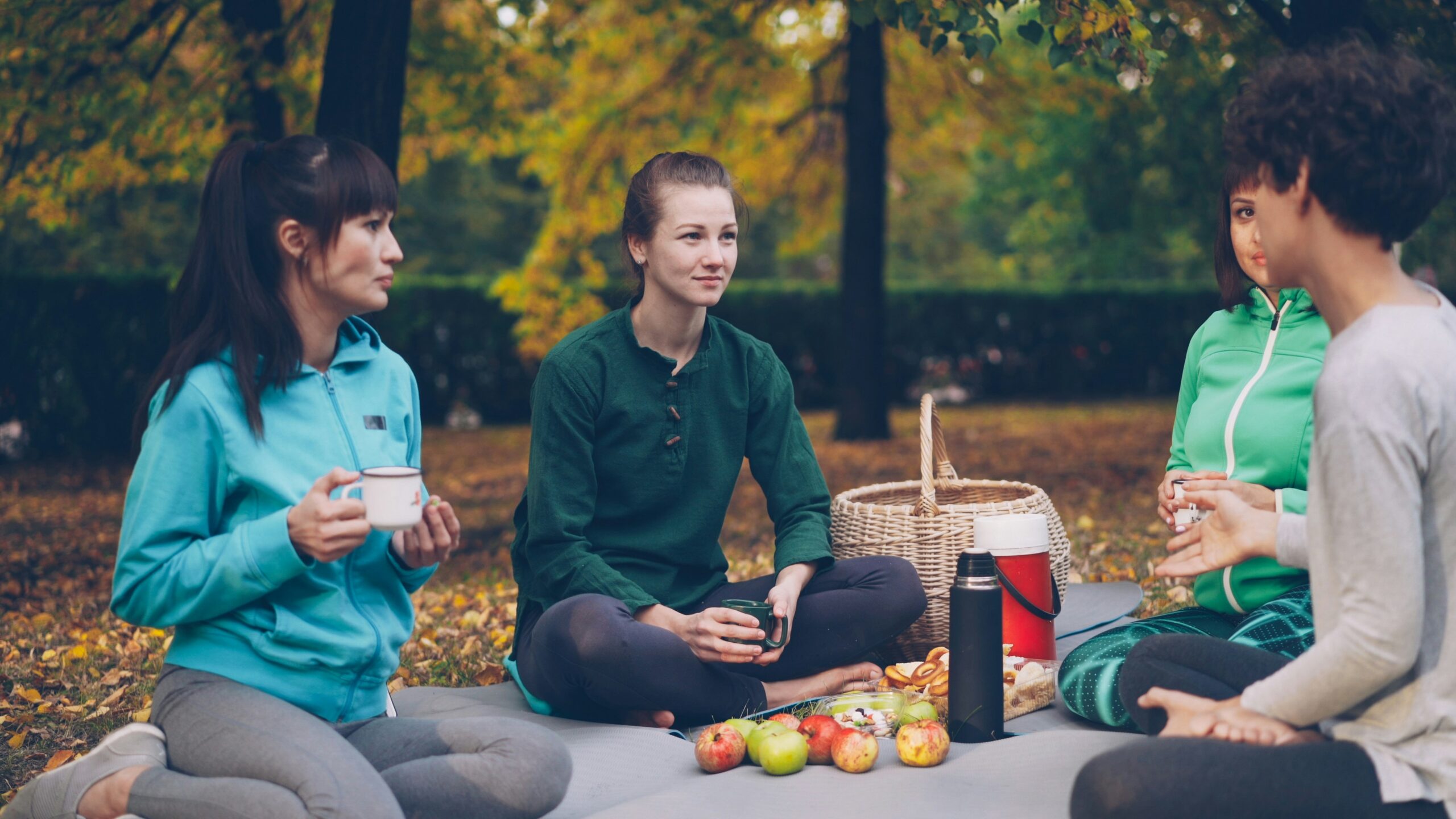
Read more: How Mindful Drinking Is Redefining Wellness and Social Culture
What “Social Wellness” Really Means—and Why We’re Turning to It Now
For years, hyper-individualism told us that self-care and self-improvement required going it alone. Wellness used to be a solo mission to optimize yourself—headphones in, head down, routines set and tracked. But people aren’t treating wellness as a one-person sport anymore, and social wellness reflects that shift.
“Social wellness is about feeling connected to other people while doing something that’s good for your body,” describes Salar Shahini, founder and CEO of Sweatpals, a social fitness app built around community-driven movement. Dr. Suzanne Wallach, LMFT (PsyD), founder of SoCal DBT, adds that social wellness also taps into a deeper sense of belonging that comes from community, mutual values, and alignment with others.
At its core, social wellness is choosing to show up together, building relationships through a shared purpose: connection. “[Social wellness] is resonating right now because people are craving real connection and healthier ways to socialize,” Shahini says. “Fewer adults are drinking, the wellness economy is growing rapidly, and yet loneliness is at an all-time high, especially among Gen Z and Millennials. Many people spend hours a day online, but still feel disconnected.”
Younger generations are redefining what it means to go out and socialize, swapping happy hours for spaces that support a healthier, more intentional lifestyle. The numbers tell the story, Shahini says: Alcohol consumption is declining (only 54 percent of U.S. adults drink alcohol), while the $2 trillion wellness economy has far outpaced nightlife spending ($36 billion in 2023). “At the same time, Gen Z spends up to eight hours a day on their phones, yet one in four report regular loneliness and isolation,” she said. “They’re seeking social rituals that actually get them offline but don’t always know where to find them.” Social wellness fills that need. By combining things people already want—purpose-driven experiences, structure, and belonging—it gives people a way to feel energized, grounded, and part of something bigger.
How Social Media, Remote Work, and Hyper-Individualism Are Rewriting Connection
Our digital-first world has made how we work, communicate, and optimize our lives easier, but it has also taken away opportunities to cultivate relationships. “Social media, remote work, and hyper-individualism have created a connection paradox,” Shahini says. “People are more digitally connected than ever, yet emotionally, they’ve never been more isolated.” Social media, she explains, often gives us the illusion of community without the depth of real connection. Remote work ideally allows us more flexibility to spend time with family at home, enjoy hobbies, and rest, but at the same time, it removes the casual, everyday social interactions that naturally foster friendships. The result is a new normal of anti-connectedness that may be more efficient, but leaves us feeling more emotionally drained and lonelier than ever.
Gen Z and Millennials are once again leading the charge to change that. Shahini notes that 95 percent of them want to turn their online interests into real-world interactions. “They’re cutting back on screen time and prioritizing spending time with others,” she says. “Because of this, we’re seeing a shift in how people use technology to connect.” Rather than being a replacement for real connection, digital platforms can help spark it by helping people find groups and events, plan meet-ups, and discover mutual passions. Platforms like Sweatpals are catching on because they cut through the usual roadblocks to meeting people in real life.
Here’s the catch: Even though we’re technically more connected than ever, Dr. Wallach calls out that we as a society have lost practice in the basics of social life: being present with others, repairing conflicts, showing up and being vulnerable, and being generous with our time. “Our culture right now is very much about ‘protecting your peace’ and setting boundaries, so while we crave having people around us, committing to social plans can feel really burdensome,” she says. Commitment can feel intimidating (we’ve all said, “Yeah, I might be free Friday…”), but Dr. Wallach stresses the importance of creating social rituals that genuinely meet our connection needs. That could mean taking a group fitness class, attending a monthly book club, or having a standing weekly coffee date with a friend. These regular activities make connecting feel more natural, helping meaningful bonds last.
Why “Fourth Spaces” Are Filling a New Gap
Once upon a time, coffee shops, gyms, and bars doubled as our go-to social hubs, places to meet friends, make new ones, or unwind. But as Shahini highlights, many of those spaces have either disappeared or no longer serve the same purpose: “You can sit in a coffee shop for hours without ever speaking to someone, and bars center socializing around alcohol, which doesn’t align with how younger generations want to live,” she says.
Cue “fourth spaces.” Designed to bridge digital communities with offline interaction, Shahini says these settings are rooted in shared values and activities, especially wellness. Unlike third spaces, they meet the need for structured yet low-stakes opportunities to build relationships. “People are desperately seeking fourth spaces right now to find a place of belonging in an increasingly fragmented world,” Shahini emphasizes.
Take Remedy Place, dubbed “the world’s first Social Wellness Club®,” with locations in New York, Boston, and Los Angeles. Where self-care is made social, it offers everything from ice baths and saunas to red light therapy, vitamin IV drips, and breathwork classes. Sweatpals is creating fourth spaces through fitness, where collective movement naturally breaks down social barriers. “When you’re sweating together, working toward the same goal, the pretense falls away and allows for authentic connection to form,” Shanini explains.
“Fourth spaces like these trendy intentional social wellness clubs can meet our deeper social needs,” Dr. Wallach says. “They create opportunities for belonging without asking you to plan the when, where, and how you’ll see others. These spaces are there for you but offer more scaffolding and structure than a gym or coffee shop might.” In a world where connection often feels either transactional or exhausting, fourth spaces give us something unique: a place to belong, return to, and feel at home in everyday life.

Read more: The Future of Wellness: The Biggest Health Trends Shaping 2026
Community as the Ultimate Form of Self-Care
Self-care isn’t reserved for quiet moments alone—it can happen in places buzzing with people too. While massages, baths, and skincare routines still have their place, some of the most fulfilling and restorative forms of TLC can come from being in community. “Community building functions as self-care because it provides shared joy and a sense of belonging that you can’t achieve alone,” Shahini says. Dr. Wallach agrees, adding that the community element of social wellness proves that self-care doesn’t have to be hyper-individual. She notes that much of the self-care narrative focuses on boundaries—sometimes isolating ones—while community self-care can look like so many different things.
Whether you join a run or walking club, attend a wellness workshop, or show up for sauna-and-cold-plunge socials, you’re investing in connections that make wellness feel communal, motivating, and sustainable. Dr. Wallach says this gives us structure, purpose, and accountability as we show up for ourselves and others. There’s also a biological reason why being part of a community feels so grounding: human beings are wired for connection. “We are social animals just like other primates, so being with others can regulate your nervous system through lowering the stress hormone cortisol,” she continues. Social connection isn’t just emotionally supportive; it’s physiologically calming.
“In a world that can feel increasingly isolating, choosing community is a powerful act of self-care—because feeling supported, seen, and connected is just as essential to our wellbeing as rest and recovery,” Shahini says.
Why Social Fitness Could Be the Secret to a Longer, Happier Life
According to the world’s longest-running study on happiness—The Harvard Study of Adult Development—it’s not our physical or mental well-being that matters most; it’s the quality of our social connections. Social fitness, or the ability to develop and maintain strong, healthy relationships, has been shown to be the greatest predictor of a long and happy life, more than genes, social class, or IQ.
“Social connection is the fabric of longevity,” Shahini says. “Research has found that people who have strong social ties tend to live longer, healthier lives. But currently, one in four Americans report regular loneliness, which the Surgeon General has declared a public health crisis on par with smoking 15 cigarettes daily.”
That’s where social fitness comes in. By nurturing meaningful relationships and a sense of belonging, we not only combat loneliness but also boost our physical and mental well-being. Dr. Wallach points out that being connected and supported by others can help keep stress in check and reduce the inflammation, immune dysfunction, and risk of heart disease tied to chronic stress. “Lonelier people tend to die earlier, which is important to call out in the middle of the loneliness epidemic,” she says. “People with intentional relationships and a sense of purpose in midlife and beyond are less likely to experience cognitive decline.” Authentic social bonds can also better sleep, mood, and emotional regulation, giving us resilience through life’s challenges. Nourishing connections feed us mentally, emotionally, and physically—making social fitness one of the most powerful, evidence-backed tools for a longer, happier life.
How to Find Meaningful Connection in Everyday Life
Even when you go about your normal daily routine, there are countless ways to feel more connected. Shahini and Dr. Wallach share some simple, realistic tips to strengthen your social fitness.
- Be a regular somewhere. “Familiarity breeds connection,” Shahini says. Hitting the same workout class, walking or subwaying the same route to work, or visiting the same coffee shop each week creates natural openings for conversation without forcing it.
- Join a group or club around a hobby. Whether it’s a dance class, soccer league, social wellness club, or pottery studio, common interests make it easier to bond.
- Find a fourth space that speaks to you. “If you feel socially awkward or have social anxiety, sometimes just being out and about can rip the bandaid off,” Dr. Wallach says. “You might not feel social right away, but you will gain confidence over time.” Think a climbing gym, a community garden, a group art class, or a wellness studio—places where people naturally gather around shared interests without pressure.
- Follow the three-encounter rule. Shahini suggests that if you see the same person three times—whether at the gym, your favorite lunch spot, or a co-working space—make the first move and introduce yourself.
- Lower the bar for initiation. You don’t need a clever opener. “A simple ‘How long have you been coming here?’ or ‘That workout was brutal’ is enough,” Shahini says. “Most people are just waiting for someone else to start.”
- Use tech intentionally. Think of tech as a bridge to real-world experiences, not a replacement, Shahini reminds us. Make the most of online platforms to meet like-minded people, but the goal is always to take those interactions in person.
- Say “yes” a little more often. Accept the impromptu post-workout coffee, a quick stretch circle, or a casual invite to take a walk even when you’re tempted to head home. “Stay for five extra minutes [after the yoga meet-up, book club, or meditation session] and see who you can talk to,” Dr. Wallach advises. “Be curious about where things might go in your conversations.” Shahini adds that many friendships are built in the moments right after the activity.
- Anchor connection to routine. Both experts encourage pairing social interaction with something you already do, like morning walks, Pilates classes, cooking dinner, co-working sessions, or running errands. “When connection is built into habits, it becomes sustainable instead of effortful,” Shahini mentions. Dr. Wallach brings up a growing trend of “admin days,” where friends gather to tackle to-dos together (think scheduling appointments, organizing finances, or paring down your inbox).
- Let relationships build slowly. Meaningful connection doesn’t have to happen instantly. “Seeing the same people over weeks and months builds trust in a way that one-off interactions never can,” Shahini says.
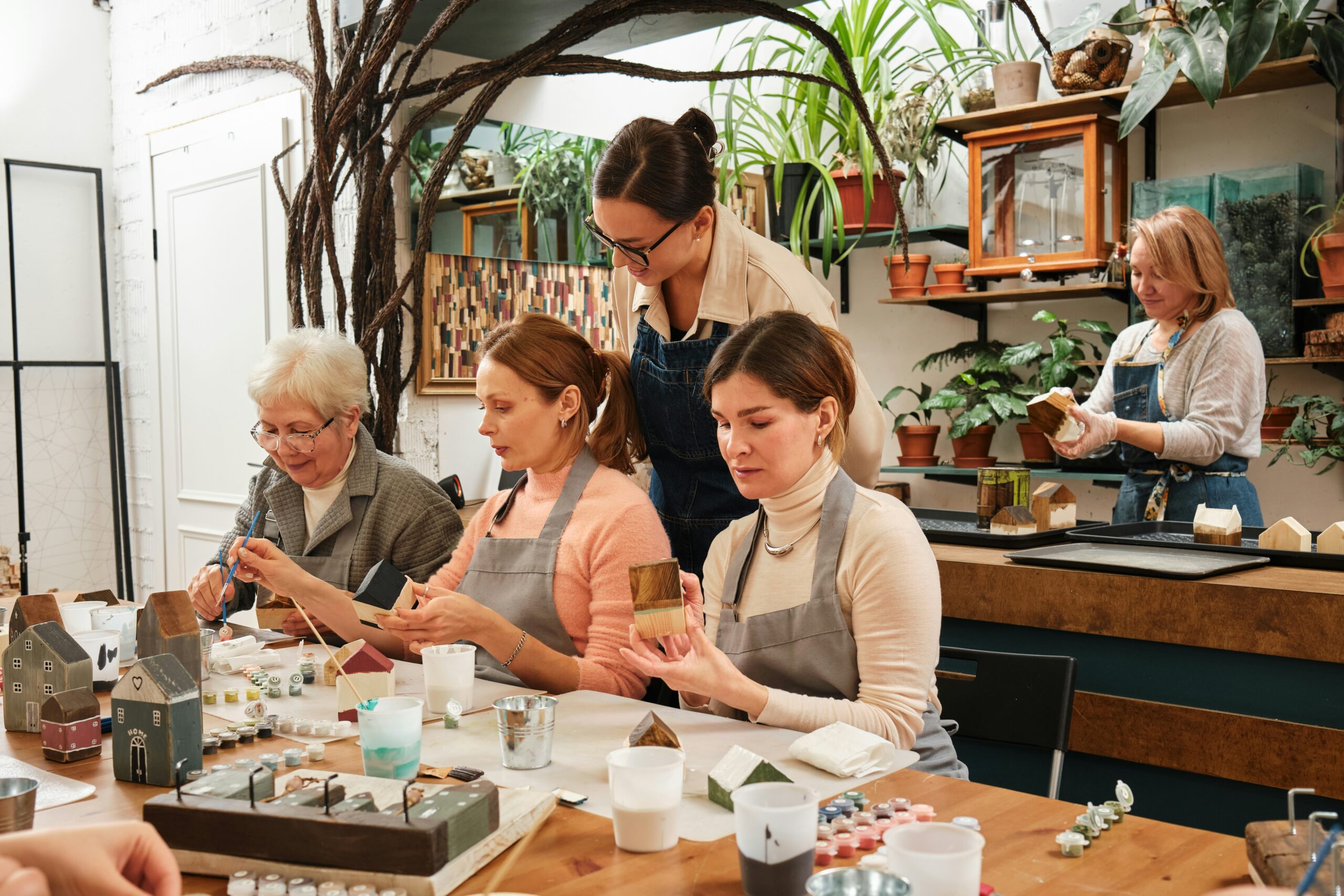
Read more: Bedtime Mocktail Series: Dreamy Berry Elixir
Have feedback on our story? Email [email protected] to let us know what you think!

Shop Pillows
The Essential Organic Pillow Collection
Gentle, breathable, non-toxic support.