






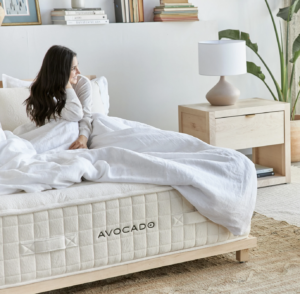
Somewhere along the way, bedtime stopped being a routine and started becoming a production.
I don’t have kids of my own, but many of my friends do. One of my closest friends has a baby turning one next month. Which means I’ve had a front-row seat to the beautiful, exhausting, deeply researched world of modern bedtime.
As her daughter has grown, my social media feed has shifted, too. Where there were once apartment decor ideas and recipe videos, there are now reels about wake windows, toddler circadian rhythms, and the “right” way to structure a 7:12 p.m. lights-out. Clearly my phone thinks I’m the mom in this equation.
There are magnesium gummies shaped like dinosaurs. Red-light lamps. Blue-light-blocking glasses for toddlers. White noise machines with app-controlled settings. Entire TikTok threads devoted to the perfect wind-down sequence.
Not to age myself back to prehistoric times, but I remember when bedtime consisted of a story, a kiss, and the lights off. Maybe a glass of water if you were lucky. No app. No supplement. No circadian lighting strategy.
From the outside looking in, it can feel like sleep hygiene has shifted from gentle guidance to quiet performance. The underlying message seems to be: if your child isn’t sleeping well, there must be something more you could be doing.
But what does pediatric sleep science actually support?
What “Sleep Hygiene” Actually Means
As someone observing this culture shift rather than living inside it, I’ve found myself wondering what sleep hygiene originally meant before it became a hashtag.
And what I’ve found is that when you strip away the marketing language, pediatric guidance is surprisingly straightforward.
Sleep hygiene refers to the habits and environmental cues that support healthy sleep. Consistent bedtimes and wake times. A calming wind-down routine. A room that is cool, dark, and relatively quiet. Limited screen stimulation before bed.
Organizations like CHOC Children’s Hospital and Nationwide Children’s Hospital outline these same foundations again and again: predictability, environment, rhythm.
They also emphasize the importance of consistency and emotional security. A calm wind-down routine. Age-appropriate bedtimes. Reassurance when needed. The basics are not flashy, but they are foundational.
Pediatric sleep science does not read like a product catalog. It reads like rhythm.
When Normal Starts to Feel Like a Problem
From the outside, what surprises me most isn’t the products. It’s the pressure.
My feed is filled with urgent questions: Why is my toddler still waking at night? Is this a regression? Are we missing a wake window? Should we be doing more?
In parenting spaces online, completely developmentally normal behaviors can start to sound like symptoms. Night waking becomes a problem to solve. Bedtime resistance becomes a failure of routine. A missed nap feels like a derailment.
Resources like KidsHealth acknowledge that children wake during the night. Those routines take time to establish. That separation anxiety, growth spurts, and developmental shifts can temporarily disrupt sleep. The emphasis is less on eliminating every wake-up and more on building steady habits that support regulation over time.
That distinction matters.
There is a difference between supporting sleep and controlling it.
Children’s sleep is developmental. It is rarely linear. And developmental processes do not respond well to rigid optimization.
From here, what marketing sometimes overlooks is that not every disruption requires intervention. Some phases require patience. Some nights require reassurance. Some seasons are uneven.
That doesn’t mean something is broken. It means a child is growing.
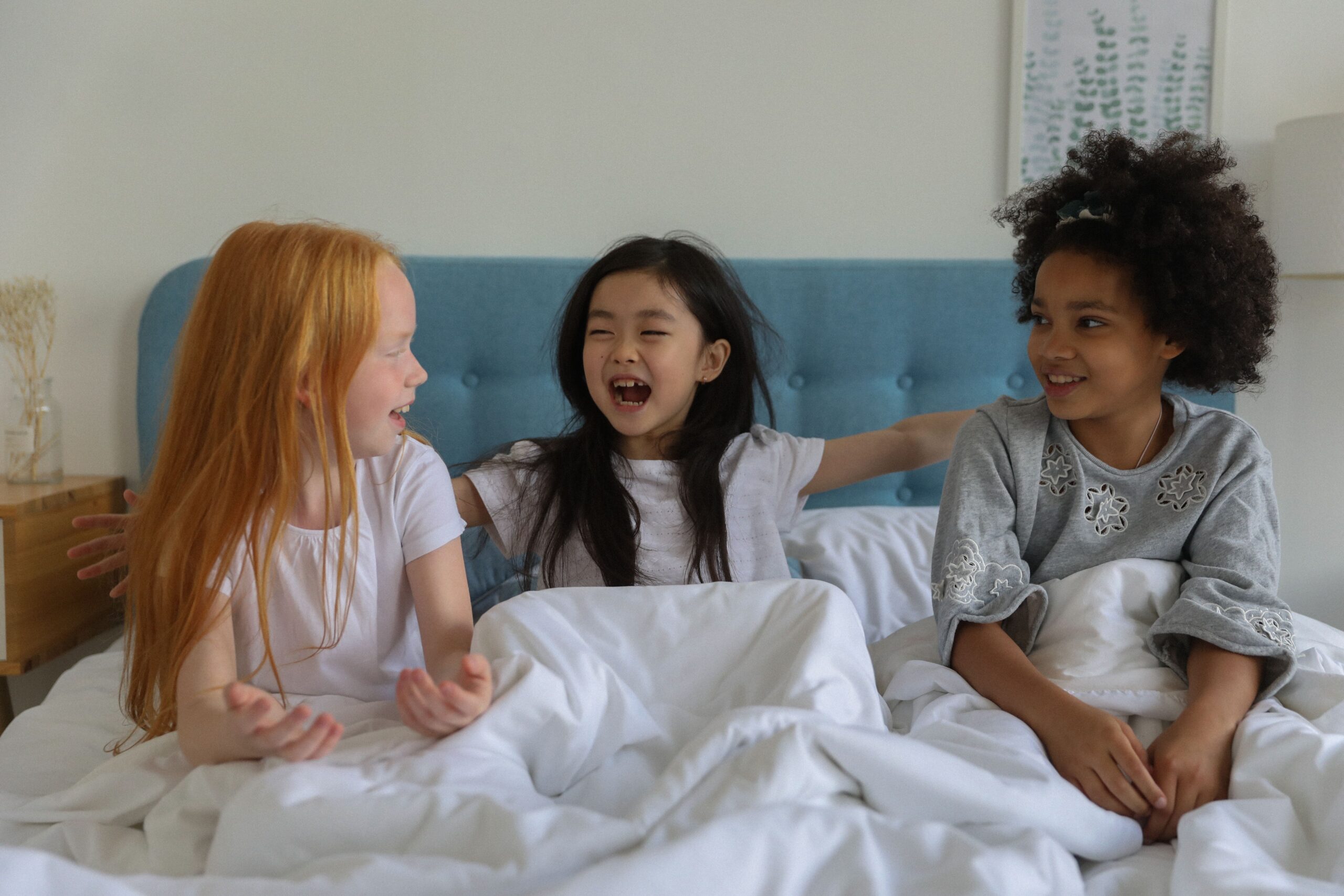
Read more: Why Natural Materials Sleep Cooler Than Synthetics
Rethinking Bedtime as an Ecosystem
If there’s one idea that feels grounding amid the noise, it’s this: sleep isn’t a hack. It’s a habitat.
Instead of treating sleep hygiene as a checklist, it may be more helpful to think of it as an ecosystem.
A child’s sleep is shaped by an interplay of cues working together. Light exposure during the day and darkness at night. A room cool enough to support the body’s natural temperature drop. Familiar sounds. Comfortable, breathable materials. And perhaps most importantly, emotional safety.
Pediatric guidance consistently emphasizes routine, not because children require rigidity, but because predictability supports regulation. A familiar sequence, bath, pajamas, story, dim lights, becomes a signal to the nervous system that rest is coming.
The Sleep Foundation notes the importance of reducing evening light and increasing morning light exposure in supporting circadian rhythms. They recommend a sleep space that is cool, quiet, and comfortable.
None of this is particularly flashy.
But it is interconnected.
When light, temperature, sound, and emotional reassurance reinforce one another, sleep becomes less about enforcement and more about environment.
From the outside, what feels most compelling is not the perfect routine, but the steady one. Not the optimized bedroom, but the consistent one. Not the elimination of every wake-up, but the creation of a space that feels safe enough to settle.
Children do not need a biohacking protocol. They need rhythm. Comfort. Co-regulation. An ecosystem that their bodies can learn to trust.
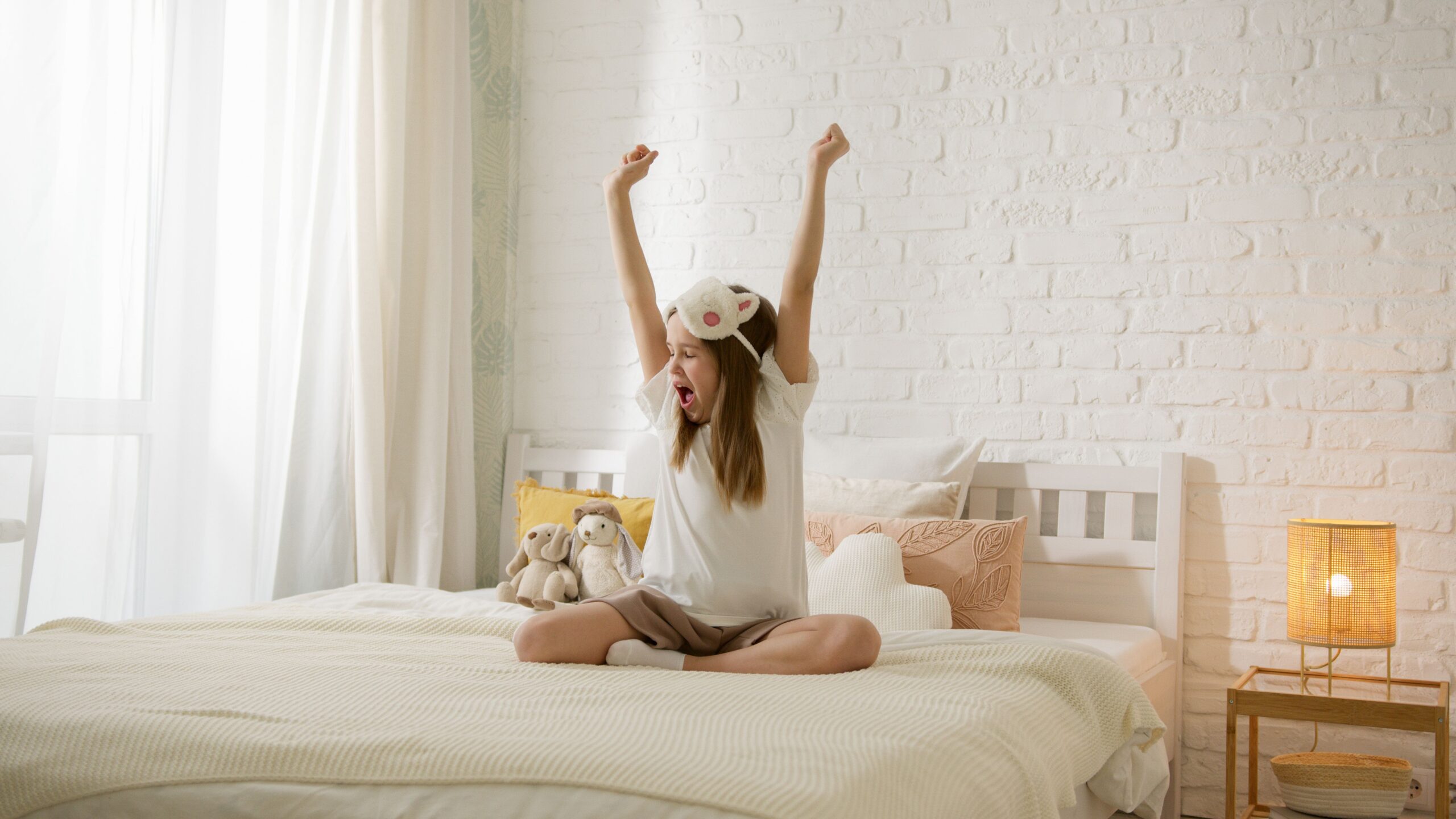
Read more: Clear Space, Clear Mind: The Case for Visual Rest
What Actually Matters: A Practical Reset
When you step back from the marketing language and social media pressure, a few themes consistently rise to the top.
Consistency over complexity.
Regular bedtimes and wake times matter more than elaborate routines. The body responds to rhythm.
Environment over optimization.
A sleep space that is dark enough, cool enough, and comfortable enough often does more than adding another tool. Light and temperature regulation support circadian health in ways gadgets cannot replace.
Co-regulation over control.
Children rely on caregivers to help regulate their nervous systems. Emotional reassurance at bedtime is not indulgent. It is developmental.
Habits over hacks.
Behavioral patterns shape sleep over time. Tools may have a role, but they are not the foundation.
Part of that foundation is physical. Breathable bedding. Materials that don’t trap heat or irritate sensitive skin. A mattress that supports a growing body rather than sagging beneath it. These details are rarely viral, but they matter.
Comfort and temperature regulation are environmental cues. Choosing well-made, low-toxicity materials also carries a longer-term benefit: fewer unnecessary replacements, fewer synthetic inputs, and a sleep space that supports both a child’s development and the broader environment they’re growing up in.
Sleep hygiene, at its core, is not a performance metric.
It is the maintenance of habitat.
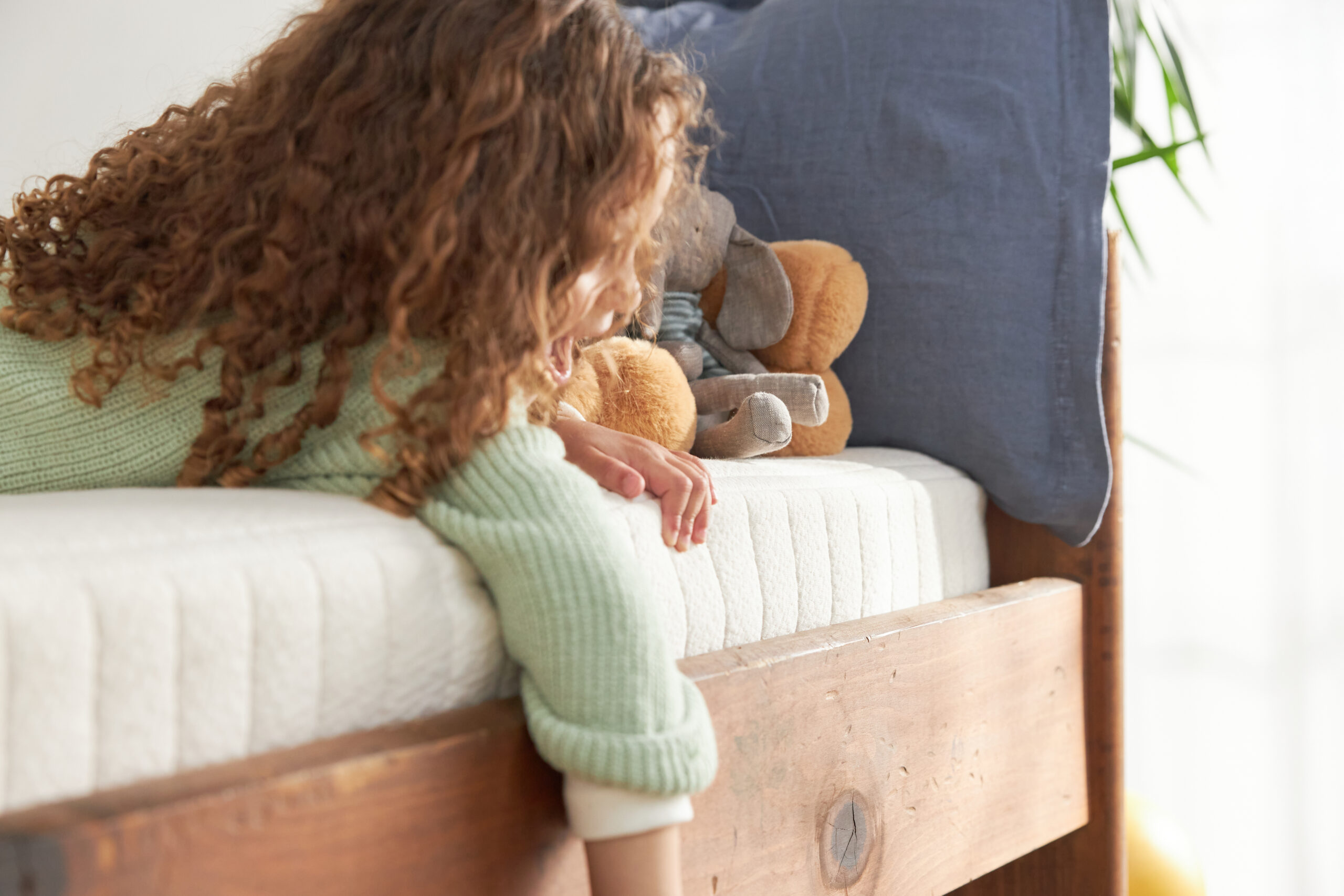
Read more: Tread Lighter, Live Fuller: How to Raise Eco-Conscious Kids
One Year In
In a few weeks, my friend’s baby will turn one.
Over the past year, I’ve watched her navigate regressions, growth spurts, trial-and-error routines, and advice from every corner of the internet. Some nights have been smooth. Others have not. None of it has followed a straight line.
From the outside, what stands out isn’t whether there are tools. It’s how consistently children’s sleep responds to steadiness.
A predictable rhythm. A room that feels safe and calm. Light that dims in the evening. Air that feels clean. Materials that support comfort. A caregiver who returns reliably.
Sleep hygiene was never meant to be a brand category. It was intended to describe the conditions that enable rest.
Children’s sleep does not require constant upgrading. It requires an environment that supports development rather than perfection.
And often, the most effective intervention is not another product, but a more mindful ecosystem.
Read more: Is NAD+ the Answer to Improved Sleep Quality?
Have feedback on our story? Email [email protected] to let us know what you think!

Shop Pillows
The Essential Organic Pillow Collection
Gentle, breathable, non-toxic support.