



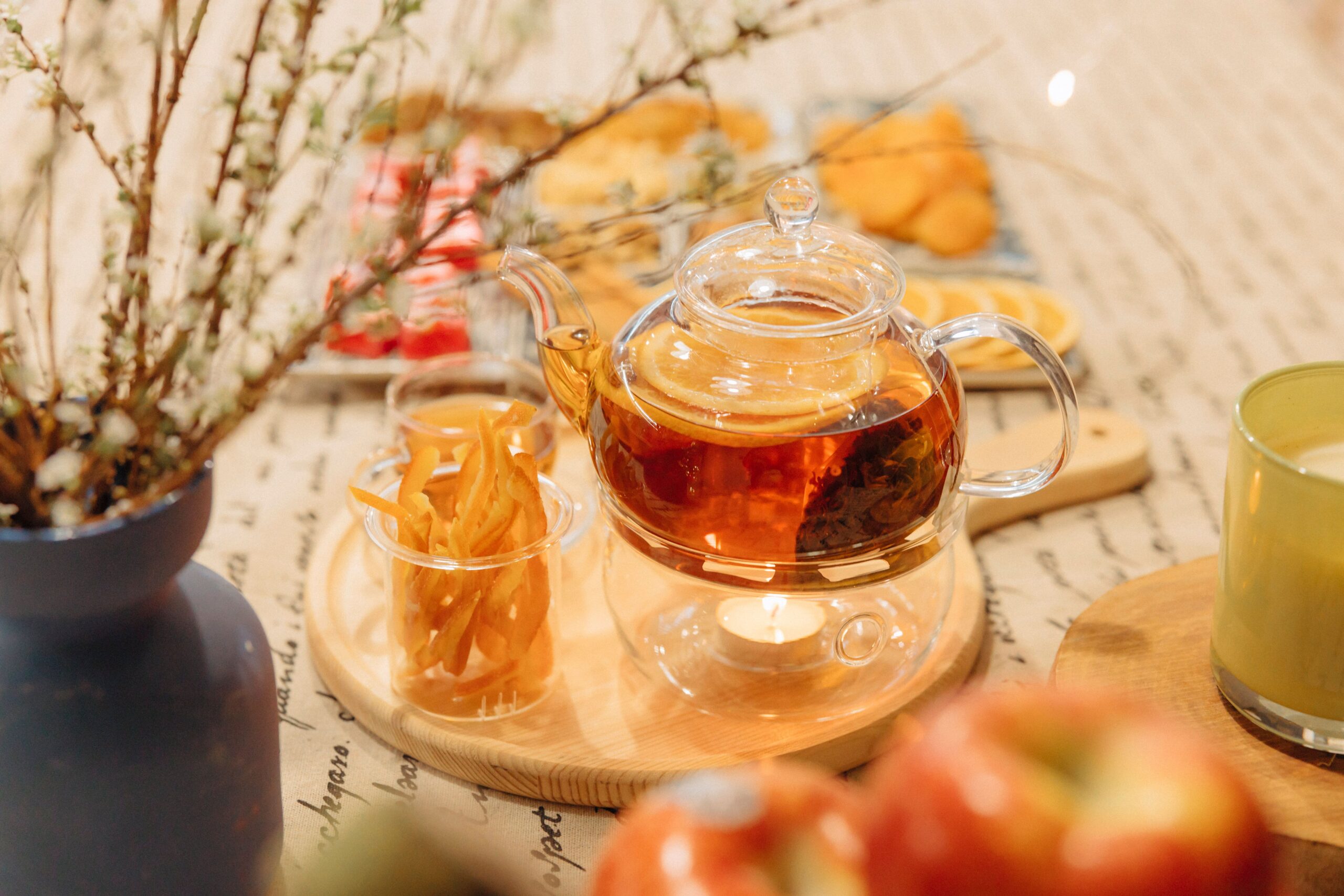



Looking for herbal teas for sleep that work and taste good? A certified tea specialist, tea blender, and founder of Asheville Tea Company shares her favorite great-tasting herbs for sleep, plus tips on how to create your own nighttime tea ritual.
Next to a warm glass of milk, herbal teas are one of the most enduring folk remedies for promoting relaxation and a good night’s rest.
But with so many teas to choose from, it can be hard to know which will work well and taste good enough to become a nightly ritual.
Because, let’s be honest, no one wants to drink a cup of tea that tastes like bitter, unwashed spinach, even if it helps you sleep.
For advice, we turned to Jesse Dean, a certified tea specialist and founder of Asheville Tea Company.
Since 2016, Dean and her team have been expertly blending fun and functional farm-to-teacup teas using locally sourced herbs from the Appalachian Mountains. Here, she shares her favorite herbs for sleep, flavor, and benefits, along with tips for brewing the perfect cup and creating your own nighttime tea ritual.
Read more: How To Hit Reset On You (And Your Kids’) Sleep Schedule
The Best Herbal Teas For Sleep
There are many evidence-based traditional herbs that can help with sleep, but not all of them taste great.
This may not matter if you’re taking an herbal capsule or tincture, but if tea is your jam, you want something sweet, soothing, and floral, not overly bitter or earthy.
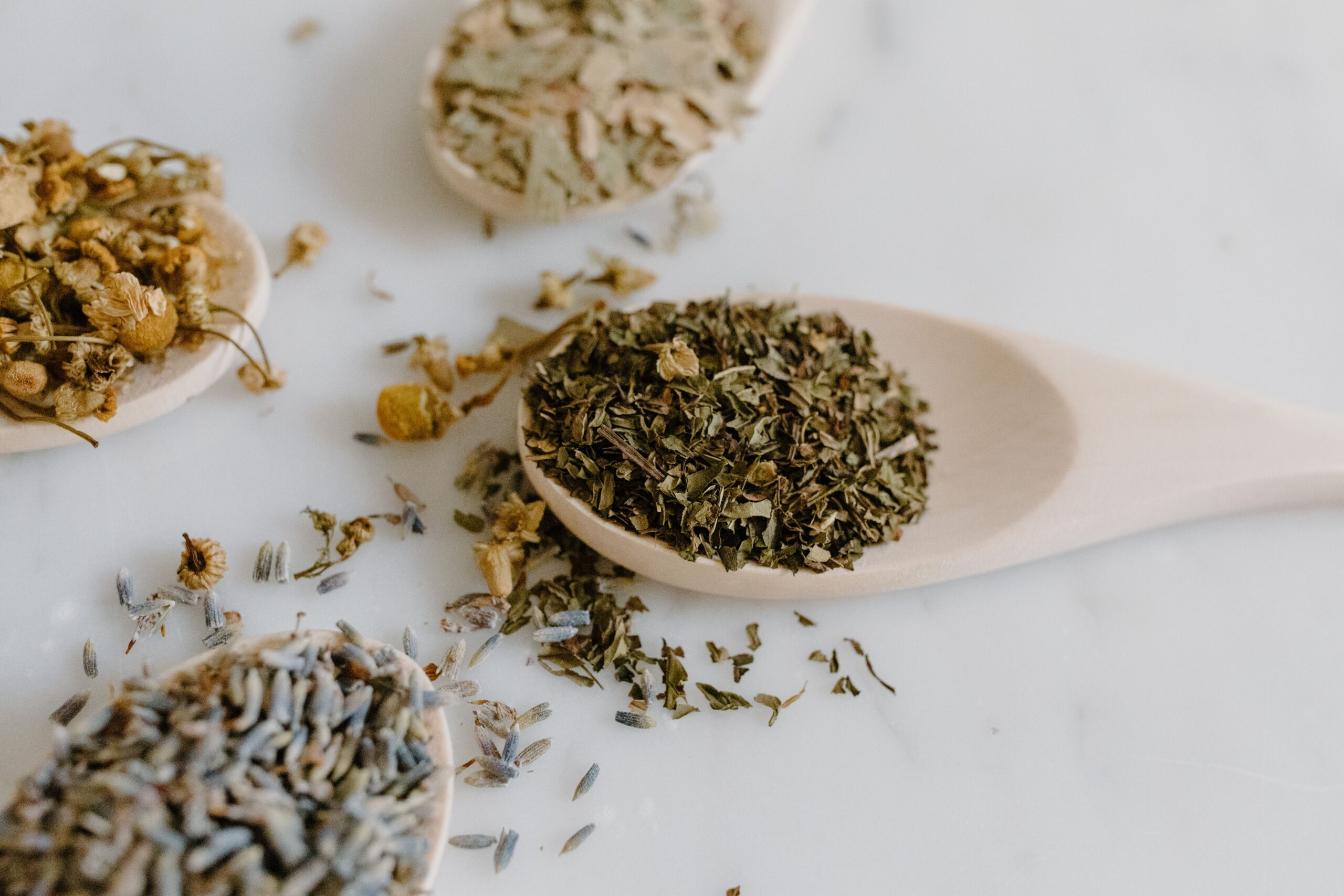
Says Dean, “Some of the herbs we blend with that are supportive of your body’s creation of a sense of calm, slowing down, and preparing for a good night’s rest are chamomile, lavender, and tulsi. These three herbs are so sweet and refreshing, and not difficult to drink, and we feature these in the Chamomile Lavender blend and Turndown Tea.
“Valerian, skullcap, and passionflower are herbs that folks often use for calming and bedtime routines, but they can be really bitter. We use passionflower in our Turndown Tea, but it’s balanced with sweeter herbs.”
Tea-blending tip: Balance bitter, earthy herbs with sweet flavors for a pleasurable, effective nightly brew.
All the herbs Dean mentioned have been traditionally used and studied for their beneficial effects on sleep. Here’s a quick breakdown.
The Sweet Herbs
Chamomile: Multiple studies suggest the active plant compound in chamomile, known as apigenin, acts as a sedative, helping promote calmness, relaxation, and a good night’s rest.
Lavender: Research suggests lavender may offer a range of benefits for sleep, including supporting the body’s natural production of melatonin (your master sleep hormone), promoting relaxation, and reducing stress and anxiety.
Tulsi: Also known as Holy Basil, this Ayurvedic herb is considered an adaptogen, a type of plant known to help increase the body’s resilience to stress. It’s also been shown to improve sleep quality, and Tulsi tea is revered in Ayurveda for enhancing relaxation and mindfulness.
The Bitters
Valerian: This herbal root is revered in traditional herbalism for its sedative and nervous-system supportive benefits. It’s also one of the most studied herbs for sleep, with numerous high-quality studies showing that valerian can improve sleep quality, promote relaxation, and reduce stress and anxiety through its effects on the calming neurotransmitters GABA and serotonin.
Skullcap: Best-known for its effects on nervous system function, skullcap is widely used in herbalism to promote a healthy sleep-wake cycle, calm the nerves, and support cognitive function.
Research also suggests it can help support the sleep-wake cycle and reduce stress and tension.
Passionflower: This flowering vine is common in the Eastern United States and has a rich history of use for supporting sleep, relaxation, and nervous system complaints.
Research suggests its GABA-supportive properties may be responsible for its relaxation benefits.
Read more: Deep Sleep Meditation
Create Your Nighttime Ritual: How To Brew The Perfect Cup Of Herbal Tea Before Bed
Despite the trend toward elaborate tea rituals and accessories, Dean says it’s really hard to mess up a cup of herbal tea.
“In my opinion, any cup of tea anyone decides to make at any point in the day is a perfect cup of tea! I think we can get really caught up in trying to manage all the temperature and steep times and all these things, which is interesting, but sometimes it can make it seem a little difficult to get into drinking tea.
“Picking a flavor note you enjoy is the best thing you can do, because it’s something you can enjoy no matter how you brew it.”
Dean also points out that herbal teas are very forgiving and, since they don’t contain tannins like green or black teas, don’t require as specific temperatures or steep times.
Here’s how she recommends brewing the perfect cup of herbal tea for sleep:
- Boil water, and let it rest for a moment so you don’t scorch the herbs.
- Add the hot water to the herbs and steep for 4-5 minutes, or longer.*
- Option: Cover the tea with a plate or lid while it steeps to retain heat.
*“A lot of times, the longer it steeps, the more functional benefits you’ll get, so there’s a lot of flexibility.” Says Dean.
The takeaway: Create a cozy, relaxed-versus-rigid ritual around brewing your herbal tea. It’s hard to mess it up, and the longer it steeps, the richer the flavor and benefits.
How To Choose High-Quality Herbal Tea For Sleep & Beyond
People generally think of herbal teas as clean and natural, which is often true. However, just like with foods, not all herbal teas are created equal.
Dean recommends the following criteria for choosing high-quality teas and herbal teas:
Look for transparency in sourcing, supply chain, and metrics
Dean says a huge part of their mission at Asheville Tea, which some other brands share, is to provide transparent information about how they source their herbs, including their growers and processors.
“That’s one way you can feel really confident and connected about what you’re putting into your body, knowing it’s coming from a supplier who’s regenerative.”
She also suggests looking for brands that talk about their impact metrics and what’s important to them.
Avoid teabags made from nylon.
Reports and research have shown nylon teabags can release billions of microplastic particles into your tea, especially when used with boiling water.
The simple fix is to look for loose-leaf teas or those packaged in biodegradable tea bags made from nylon and plastic-free materials.
Dean notes that this doesn’t necessarily mean avoiding shiny or pyramid tea bags, as these can be made from biodegradable materials such as sugarcane or cornstarch. “Most companies will tell you this on their packaging.”
When in doubt, opt for loose-leaf tea, plastic-free options, or, if you’re stuck, just empty the contents of the tea bag into a reusable strainer before brewing.
Avoid teas made with natural or artificial flavors
Traditional herbal teas don’t contain anything but herbs for flavoring.
However, today, many tea brands add natural and artificial flavorings to enhance the flavor of their tea blends.
So, what’s wrong with natural flavors? In some cases, nothing, but it depends on what’s in the natural flavor formula.
Something like Bergamot essential oil, which is added to Earl Grey tea, for example, is truly natural, traceable, and nothing to worry about.
However, other natural flavors may come from various plant, animal, or mineral sources that are manipulated in a lab using additional ingredients, like chemicals and solvents, to draw out or create specific flavor notes.
Says Dean, “At Asheville Tea, we’re not using natural or artificial flavor in our teas for many reasons. The main one is we really want the herbs to speak for themselves. We’re so focused on working directly with farmers and sourcing directly from farmers where we can participate in value chains, where the farmers are paid well, and you have this really fresh and potent blend of herbs coming from your cup.
“From my perspective, I want that to be enjoyed and experienced in a way that’s not coated with a fake flavoring. Plus, companies are not required to list flavoring ingredients on labels.”
Final Thoughts on Creating Your Herbal Tea Ritual for Sleep
Herbal teas offer one of the gentlest, most traditional, affordable, and enjoyable ways to enhance relaxation and get a better night’s rest.
It may seem like a simple thing, but, as Dean describes, the downstream effects of a nighttime tea ritual can be profound:
“The most important thing, above all, is taking the time to do something that’s calming for yourself, and a cup of tea can be a great medium for that.
“It’s about the herbs, it’s about the flavor, and about the functionality, but also it’s about taking that time for yourself, and that alchemy, all those things combined, can be most restful and beneficial. It’s such a cozy thing.”
Ready to Start a New Nighttime Sleep Ritual?
Drinking herbal tea for sleep is one of many ways you can create an enjoyable nighttime routine that promotes easier, more restful sleep.
Read more: Should You Try Magnesium For Sleep?
Have feedback on our story? Email [email protected] to let us know what you think!

Shop Pillows
The Essential Organic Pillow Collection
Gentle, breathable, non-toxic support.