

Inside Kara Duval’s Range, where movement becomes a way of reconnecting with our bodies, nature, and community at a time when many are reexamining what it means to be well.
As the parent of a toddler who one could generously describe as “extremely two,” in a world that often feels entirely overwhelming, I came to Range searching for nervous system regulation. For the first time in years, I felt grounded in my body again. What I didn’t expect was for the practice to offer a kind of refuge—a space to inhabit that body differently at a moment when wellness culture is increasingly dominated by the pursuit (and promise) of optimization.
Just as importantly, it gave me an opportunity to model that relationship for my daughter. I noticed she would pause her playing to watch, then attempt her own version beside me. Now, on many mornings, it’s the first thing we do together, with my husband — and often our dog — joining in. (Our golden retriever has developed what can only be described as a parasocial relationship with River, Duval’s Irish setter, who frequently wanders into frame during classes.)
The more time I spent with the practice, the more curious I became about how it came to be.
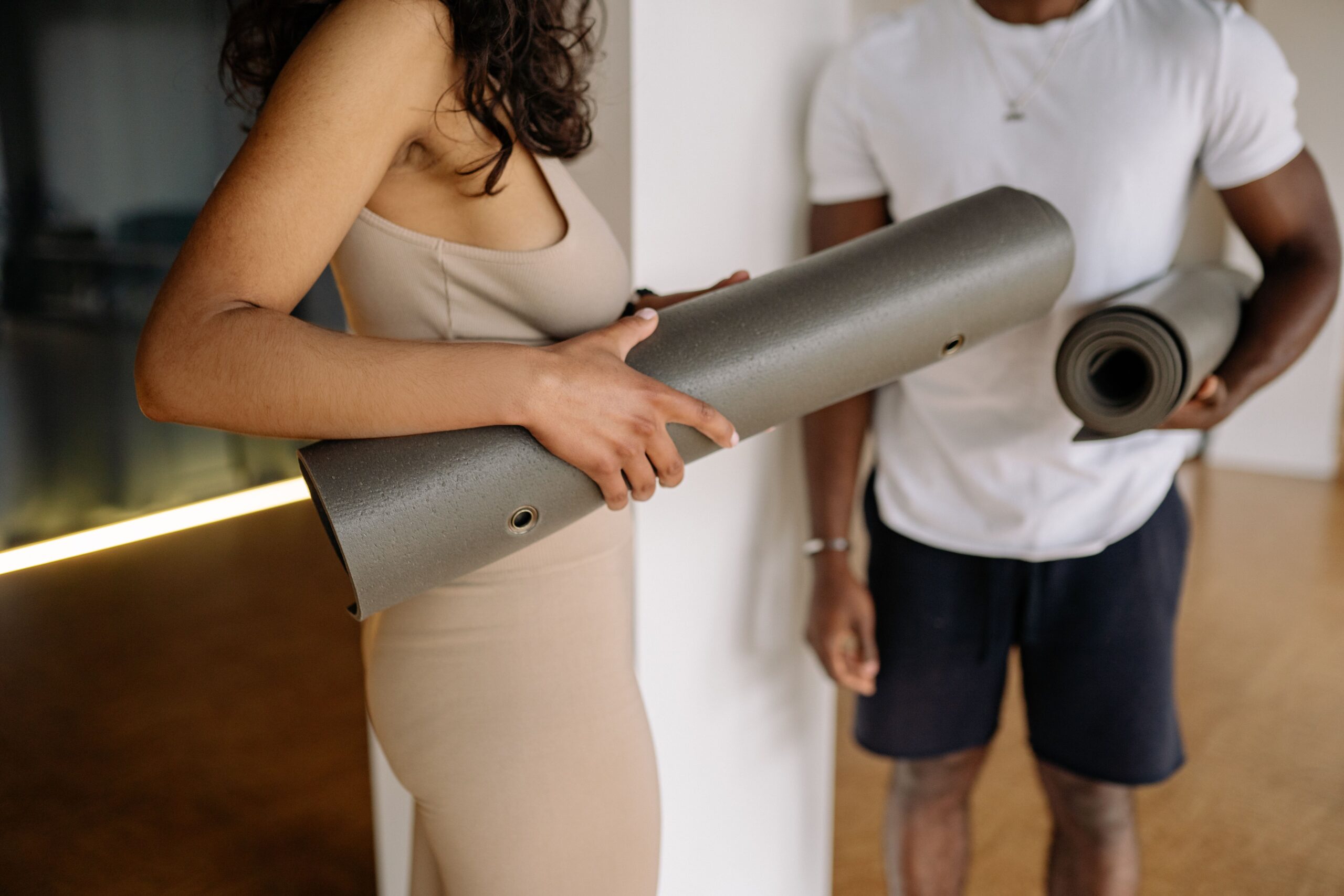
In March 2020, as the world contracted into screens and uncertainty, Kara Duval stepped in front of a camera to teach movement classes live from home. What began as a short-term way to support the community she had built through studios in and around Boston became a gathering space for people seeking grounding and connection. Today, that offering has evolved into Range, a global movement practice with members that join Duval from all around the world.
A former ballet dancer, whose work now spans the worlds of Pilates, mobility, strength training, Qigong and perinatal movement, Duval has spent years questioning many of the assumptions that underpin modern fitness culture. That inquiry ultimately shaped Range’s philosophy: an approach to movement rooted less in optimization than in relationship. Teaching from her home in Woodstock, Vermont, she guides a community drawn to a distinctly different way of thinking about movement. In a culture that often reduces wellness to metrics, outcomes, and personal responsibility, Range offers something increasingly rare: a form of movement that is communal, sustainable, and grounded in the understanding that bodies, like ecosystems, thrive through connection.
In our conversation, Duval reflects on what it means to build a movement practice that can evolve alongside the realities of being human. Rather than centering transformation, correction, or performance, her approach is rooted in relationship — how we move through changing states and how we remain connected to ourselves over time. We talked about helping adults reconnect with curiosity and a sense of play, and why modeling care, pleasure, and self-trust may be one of the most powerful gifts we can offer one another.
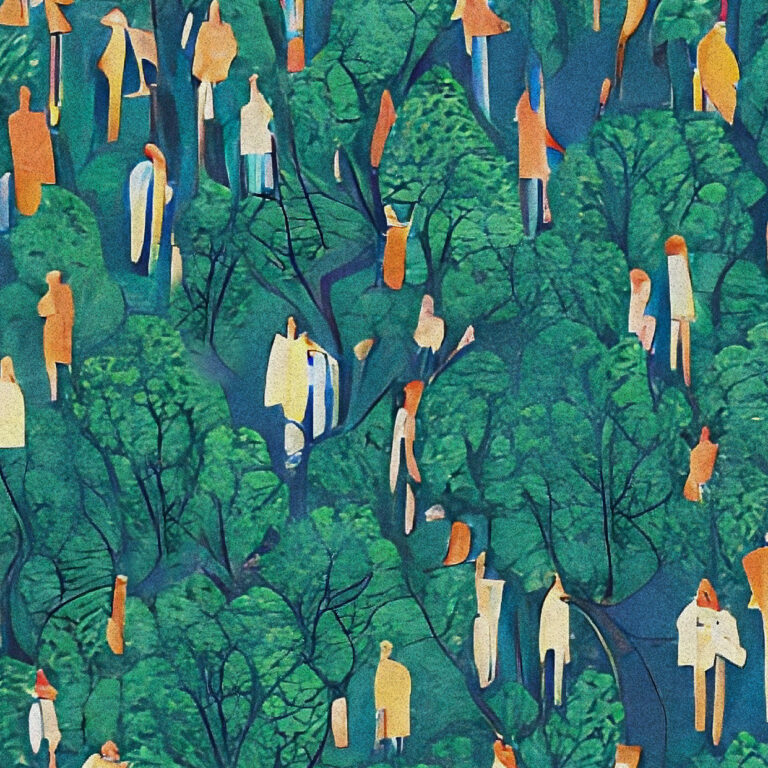
“I often imagine Range members as trees in a forest. Each one is different, but beneath the surface our roots are connected, sharing information, support, and energy. What began as an online movement practice has become a living, breathing community.”
Read more: Fascia: The Missing Link in Holistic Wellness That Shapes How We Move, Heal, and Feel
What do you think is missing from the way movement and wellness are often framed today, and how does Range respond to that?
We’re all products of the narratives we’ve inherited. The fitness and wellness industries of the 1980s and ’90s fed us a very specific story about movement, one rooted in discipline, optimization, and constant self-improvement. Many women before us spent years distancing themselves from their own agency, learning to view their bodies through the lens of correction rather than connection.
The modern movement industry often treats the body as a machine made up of mechanical systems. While there is brilliance in understanding the body through science, separating movement from our humanity makes it easier to fit people into boxes, easier to control them, and easier to profit from their insecurities. We’re constantly being asked to transform ourselves to fit the next trend, and it’s exhausting. But I think we’re witnessing a beautiful transition. More people are reclaiming autonomy and asking what it feels like to simply be in relationship with themselves rather than endlessly trying to improve themselves.
Range was built around this very idea. Instead of asking people to compartmentalize, suppress, distract, or push through discomfort, I wanted to create a space that allows people to move through the full breadth of their experiences. Movement becomes a nourishing conversation with yourself. It makes room for joy, grief, frustration, pleasure, energy, and rest — all of it.
This kind of work can be challenging because our culture and the concept of slowing down are like oil and water. Practices like breathwork and meditation often stir up discomfort precisely because they ask us to sit with ourselves. But there’s something powerful about learning to exist with the reality of what you’re feeling rather than constantly trying to escape it.
What does it look like to create a movement practice that honors the realities of being human?
I often receive photos from members showing their children squatting effortlessly, dancing theatrically through the living room, climbing, hanging upside down, and inventing movement games. There’s almost an envy adults feel when they witness that freedom.
What I think we’re really responding to isn’t just the movement itself, it’s the absence of self-consciousness. Children move because they’re curious, expressive, playful, or simply responding to the world around them. Somewhere along the way, many of us learn that movement must have a purpose. We become focused on being ‘good” at everything, or chasing an ever-evolving goal. Through sports, fitness culture, and performance-based environments, movement often becomes tied to outcome as opposed to experience. I do think many people are longing to recover a sense of trust in their own experience — to move from curiosity rather than correction, and from relationship rather than performance.
Many of the people who are drawn to Range have reached a point of exhaustion with constantly chasing moving goalposts. Some are former athletes or lifelong exercisers experiencing burnout. Others have felt excluded from movement spaces because of injury, chronic illness, body size, or socioeconomic barriers. Many arrive from completely different backgrounds, but they share a common desire: they want movement that nourishes both body and soul. When I talk about nourishment, I don’t mean something merely beneficial — I mean something pleasurable, sensory, life-giving, and sustaining.
Most people eventually reach a moment where they reevaluate their relationship with their bodies. Unfortunately, many don’t do that until injury, illness, or burnout forces the conversation. Part of what Range offers is a kind of prehabilitation — a way of building resilience, capacity, and sensitivity before the body has to demand our attention.
Read more: Rest Is a Skill: Why So Many of Us Don’t Know How to Truly Power Down
How does Range translate that philosophy into a lived practice?
The language and movement philosophy of Range are intentionally biomorphic. They’re rooted in our relationship with nature and in the understanding that humans are not separate from nature — we are nature. We move through seasons, through cycles, through moments of fire, water, wind, expansion, contraction, devastation, celebration, loss, and rebirth.
In some ways, that’s what children seem to understand instinctively. They don’t separate movement from living. Running, resting, climbing, imagining, exploring, they’re all part of the same experience. As adults, we often learn to compartmentalize movement into something we should do. Range is an invitation to experience it as something we get to live.
And as I grow older, I’m increasingly interested in movement that honors the realities of being human. Bodies change. We shift. We experience grief, joy, aging, illness, recovery, and transformation. We are not simply muscles, bones, and mechanical systems. We are living, feeling beings. Range is an invitation to move from that place, to embrace the things that jiggle, to move your tissues, to embrace the reality of living in a human form.
What do you think helps people build a lasting relationship with movement?
For me, a lasting movement practice is an ongoing dance and not about chasing an outcome. It’s about cultivating a relationship with yourself that can evolve over time. The body changes. Life changes. The question becomes whether your relationship with movement can adapt alongside those changes and continue to support you through them.
I’ve devoted my life to the study of movement science. I love science, and Range is deeply informed by it. We’re still squatting, hinging, pushing, pulling, and lifting. But one thing I’ve learned over the years is that the human body doesn’t fit neatly inside a box and exists as organic matter, not machinery! We understand a lot, but there’s still so much mystery. What often gets overlooked is that movement isn’t just mechanical. It’s also creative, emotional, relational, and deeply human. At Range, we’re interested in placing movement within that larger context. The physical benefits matter, but so does imagination, self-expression, and our relationship with the natural world.
People learn about movement not only through instruction, but through what they witness. Whether it’s a child watching an adult or one adult observing another, there’s something powerful about seeing someone engage with their body in a way that’s joyful, curious, and compassionate.
In my experience, lasting relationships with movement aren’t built through pressure or perfection. They’re built through connection with self. They develop when movement feels supportive rather than punitive, when it becomes something that adds to your life rather than another obligation to manage.
Editor’s Note: This interview was conducted as an open conversation rather than a structured Q&A. We’ve lightly edited for clarity, flow, and length while preserving the substance and spirit of the discussion.
Read more: The Joy Of Doing Nothing: Reclaiming Rest in A Productivity-focused World
Have feedback on our story? Email [email protected] to let us know what you think!
Shop Pillows
The Essential Organic Pillow Collection
Gentle, breathable, non-toxic support.