






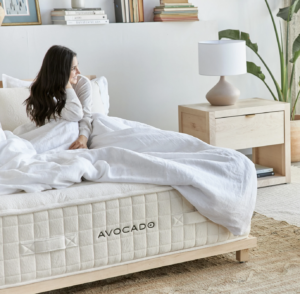
I’d convinced myself I was done with the annual compulsion to emerge from January as a newer, slightly improved version of myself. Then I became a parent.
The first year was a blur, but by year two I was back at it, this time with expectations that veered from ambitious to a little unhinged. I imagined a version of myself who would meal prep every Sunday, have infinite patience in the face of meltdowns, and curate a Reading Rainbow-worthy book list to teach my toddler empathy, inclusion, and whatever else she might need to navigate the increasingly complicated world she’s growing up in.
It turns out I’m not alone in this reflex to equate good parenting with doing it all perfectly. Dr. Feliza Guidero, a Washington-based psychologist who works closely with parents in various stages of transition, gently suggests a different goal: not perfection, but grounding. She encourages parents to loosen their grip on impossible standards, and instead put their energy towards being emotionally resourced enough to keep showing up for their kids, and to repair when need be. In this sense, grounding isn’t about getting every moment right, but about staying steady enough in your own body and emotions to respond with intention instead of reactivity.
“Parents hold so much, between work, raising kids, and all the other responsibilities of daily life,” says Dr. Guidero. “With the impact of technology, lack of a community mindset around parenting, plus the addition of current events, there’s just a lot of stress bearing down on parents right now. While we can’t control what’s happening in the world, we can focus on what’s within our control — our choices, how we resource ourselves — to give us, and our kids, more stability.”
We talked with Dr. Guidero about nervous system regulation, letting go of unrealistic expectations, setting boundaries, and reconnecting with joy in the midst of the everyday demands of parenting. Here’s what we learned.
Read more: How To Clean A Crib Mattress Naturally, Complete Guide
How does nervous system regulation connect to more grounded parenting?
Our nervous system acts as a communication center, and one of its primary jobs is to sound the alarm when there’s danger. It responds to anything we perceive as a threat to our internal balance, and there’s a lot in this world that can feel threatening. Ideally, our nervous systems spend most of their time in a calmer state. But many of us are more activated more often, responding to the hustle of parenting life: inadequate sleep, constant decision-making, work deadlines, endless events. When our nervous systems are activated, even when small alarm bells are ringing, we’re less likely to show up as grounded parents.
It’s also important to distinguish between a calm nervous system and a regulated one. A sense of calm relates to feeling safe, secure, and relaxed. Regulation, though, is about flexibility — the ability to move in and out of alarm mode and return to calm. Both matter. The key is not getting stuck in alarm mode. Simple strategies can help shift us: singing or humming, crying or laughing, getting warm, looking at pictures of baby animals (really), gentle movement, lowering sensory input, or physical touch (this doesn’t have to be from someone else — try making a V-shape with your palms and resting your face there).
What does staying grounded actually require from parents?
It starts with understanding your own nervous system. The things you find stressful or draining aren’t the same for the next person. Some people are recharged by time away from others, while others feel restored through connection. The key is exploring and identifying what actually supports your nervous system.
Second, it’s helpful to think in terms of boundaries and permission—two concepts I see as central to well-being. Boundaries help you set limits around your time and energy so you can protect your physical, emotional, and mental health. Permission is about prioritizing your needs, whatever they may be.
An example I often share is walking through the grocery store and seeing someone drop a bunch of lettuce on the floor. I was short on time and needed to get home to meet my family’s needs, but I immediately felt the urge to help. I call this “Got It Mode,” when we see a need and move to meet it, sometimes before we’ve been asked or before we’ve paused to consider whether it’s ours to meet.
As parents, we’re often in “Got It Mode,” but I’m a big supporter of practicing “Not It.” This mindset encourages you to set boundaries and conserve your energy — to be intentional about where it goes and not automatically take on every real or perceived need.
On the flip side is permission: giving yourself space to prioritize self-care (you can’t pour from an empty cup) and to engage in real rest. The framework of the Seven Types of Rest can be a helpful starting point for understanding what kind of restoration you actually need.
Read more: What Infant Sleep Can Teach Us About Human Rest
What about when, inevitably, we don’t get it right?
We won’t get it right all the time. We can’t. In fact, it’s important to show up as a real human, impacted by whining, endless tasks, or hours of chauffeuring, and to let your kids see that you have real feelings.
What matters most is that you keep showing up. You keep trying. The words “I’m sorry”— accompanied by hugs — go a long way, for both you and your kids. Children learn far more from how you live, how you talk to others, how you give yourself grace, and how you repair than from finding the exact right thing to say in a tense moment.
When you apologize, try again, and extend grace to yourself, you’re modeling resilience. Your continued effort is the lesson.
What are some common unrealistic parenting expectations — and how can parents start to let them go?
I hear parents say they should have infinite patience. That they can do it all. That they need to have a calm nervous system all of the time. That they can protect their children from all risks. That they should be endlessly productive, without a break.
When we put our energy toward meeting these impossible expectations, several things happen. First, we devalue all the hard work and truly great parenting we’re already doing. Second, we have less energy and focus left for ourselves and our kids. Third, we model a standard that isn’t attainable—one that creates stress and exhaustion.
Letting go starts with recognizing that these expectations exist and identifying which ones you may be striving toward — sometimes we don’t even realize we’re doing it. I also invite parents to consider the benefits and the costs of striving toward any one expectation.
From there, I encourage experimenting with loosening your grip, with curiosity. Try not filling every moment with productivity one afternoon, and then notice what that was like. How did it feel?
How can parents protect or reconnect with joy in their own lives while navigating the demands of parenting?
Joy has to be on the priority list. I like to offer suggestions that don’t take a lot of time or energy, because parents’ lives are often lacking in both. Listen to your favorite song, have a quick dance party in the kitchen — joy is contagious, and when a parent is joyful, kids tend to join in. (And just for a day, if you can, let go of that perfectly packed lunch, arriving on time all the time, and the fight over your kid wanting to wear the same thing every day.)
Another low-barrier approach is starting with your senses: What is a smell you love? A view? A song? A favorite piece of clothing? An inside joke with a friend? It doesn’t need more than a minute, but noticing that joy-inducing thing can set you up for more flexibility, smoother operations in your day, and increased resilience.
If you do have the time, try connecting with a friend — either in person or just reaching out to say hello.
Lastly, there are two key phrases I encourage parents to keep in mind to support boundaries and permission for self-care are:
- If it’s a maybe, it’s a no.
- If it makes you smile or gives you a sigh of relief, keep doing that thing.
Based in Washington state, Dr. Guidero earned her doctorate in clinical psychology from the University of Denver’s Graduate School of Professional Psychology. Over the course of her career, she has worked across school, outpatient, inpatient, community mental health, and university counseling settings — most recently serving as Associate Director of Seattle University’s Counseling and Psychological Services. In her private practice, she provides individual, couple, and group therapy for young adults and adults, with particular expertise in supporting parents, people of color, women, neurodivergent individuals, and those navigating trauma and grief.
Read more: What Makes a Sleep Space Safe For Babies?
Have feedback on our story? Email [email protected] to let us know what you think!

Shop Pillows
The Essential Organic Pillow Collection
Gentle, breathable, non-toxic support.