





Each January, millions around the world commit to Dry January: 30 days without alcohol. It’s often looked at as a cultural reset after the indulgent holiday season. But, what began as a short-term challenge in the early 2010s has, in 2026, blossomed into something far bigger—a sober-curious movement that’s reshaping not just how we drink, but how we live, connect, and prioritize wellbeing.
Originally popularized by the UK’s Charity Alcohol Change UK, Dry January’s explicit aim is simple: abstain from alcohol for one month and see what happens. Yet its ripple effects have extended far beyond a single month.
In 2026, Dry January isn’t just a calendar marker anymore. It’s a mindset. It’s become a stepping stone to year-round mindful drinking, wellness-based socializing, and a cultural reexamination of alcohol’s role in our lives.
Rather than a challenge to endure, it’s increasingly seen as a moment of information gathering: How does alcohol actually affect me? How do I feel without it? What do I want more of in my everyday life?
For many, the answers don’t lead back to old habits.

Read More: How Alcohol Affects Sleep
The Rise of Sober Curiosity
The sober-curious movement has reshaped how people think about alcohol, not as something to reject outright, but as something worth questioning. Coined to describe a more flexible, non-dogmatic approach to drinking, sober curiosity asks people to notice their relationship with alcohol without shame or strict rules.
This mindset has gained traction alongside growing awareness of how alcohol affects sleep quality, stress levels, emotional regulation, and long-term health. Research consistently shows that even moderate drinking can disrupt sleep cycles and leave people feeling less rested the next day—a tradeoff many are no longer willing to make.
At the same time, cultural narratives around wellness have matured. Instead of extreme detoxes or rigid self-discipline, the focus has shifted toward sustainability: habits that support feeling well most days, not just temporarily.
Sober curiosity fits neatly into that evolution. It offers permission to drink less, or not at all, without labels, guilt, or explanation.
Shifting Cultural Values
Younger generations, especially Gen Z and millennials, are less interested in alcohol as a social lubricant and more focused on connection, fitness, and emotional presence. Alcohol has shifted from expectation to option, one increasingly evaluated by a simple question: Does this help me feel better, or make an already demanding day harder? Just as importantly, choosing not to drink has become socially acceptable in ways it wasn’t a decade ago. Saying “no” no longer comes with fear of being ostracized.
In a world defined by constant notifications, economic pressure, and collective uncertainty, feeling good has taken on a new meaning. It’s no longer about optimization or peak performance. It’s about maintenance. Protecting energy. Avoiding unnecessary physical discomfort. Choosing experiences that don’t compromise tomorrow.
For many, reducing alcohol isn’t a moral stance…it’s simply a practical one.
From Temporary Reset to Lasting Habit
What makes Dry January so impactful isn’t the abstinence itself, but what people learn during it. After a few weeks without alcohol, many report deeper sleep, steadier moods, improved digestion, and clearer mornings. These changes often feel immediate and surprisingly difficult to give up.
As a result, Dry January has become a testing ground for longer-term change. Some people continue alcohol-free for months. Others adopt a more flexible approach: drinking only on certain occasions, alternating alcoholic and non-alcoholic drinks, or reserving alcohol for moments that truly feel worth it.
This “dry-ish” middle ground reflects a broader cultural rejection of all-or-nothing thinking. The goal isn’t perfection—it’s alignment. Many people notice that one of the most immediate changes is in their sleep—falling asleep faster, waking less throughout the night, and feeling more rested in the morning. Supporting that shift can be as simple as reinforcing an evening wind-down routine, whether that’s limiting screens, stretching, or creating a sleep environment that actually invites rest.

Read More: 9 Zero- & Low-Alcohol Spirits for Buzz-Free Imbibing
Social Innovation: Rethinking How We Gather
Social life is changing alongside drinking habits and not just in bars or nightlife spaces.
While thoughtfully designed non-alcoholic drink menus have become more common, the bigger shift may be happening closer to home. In states where recreational cannabis is legal, it has become a widely accepted alternative to alcohol. And, at the same time, many people are opting for quieter, more comfortable ways of spending time together.
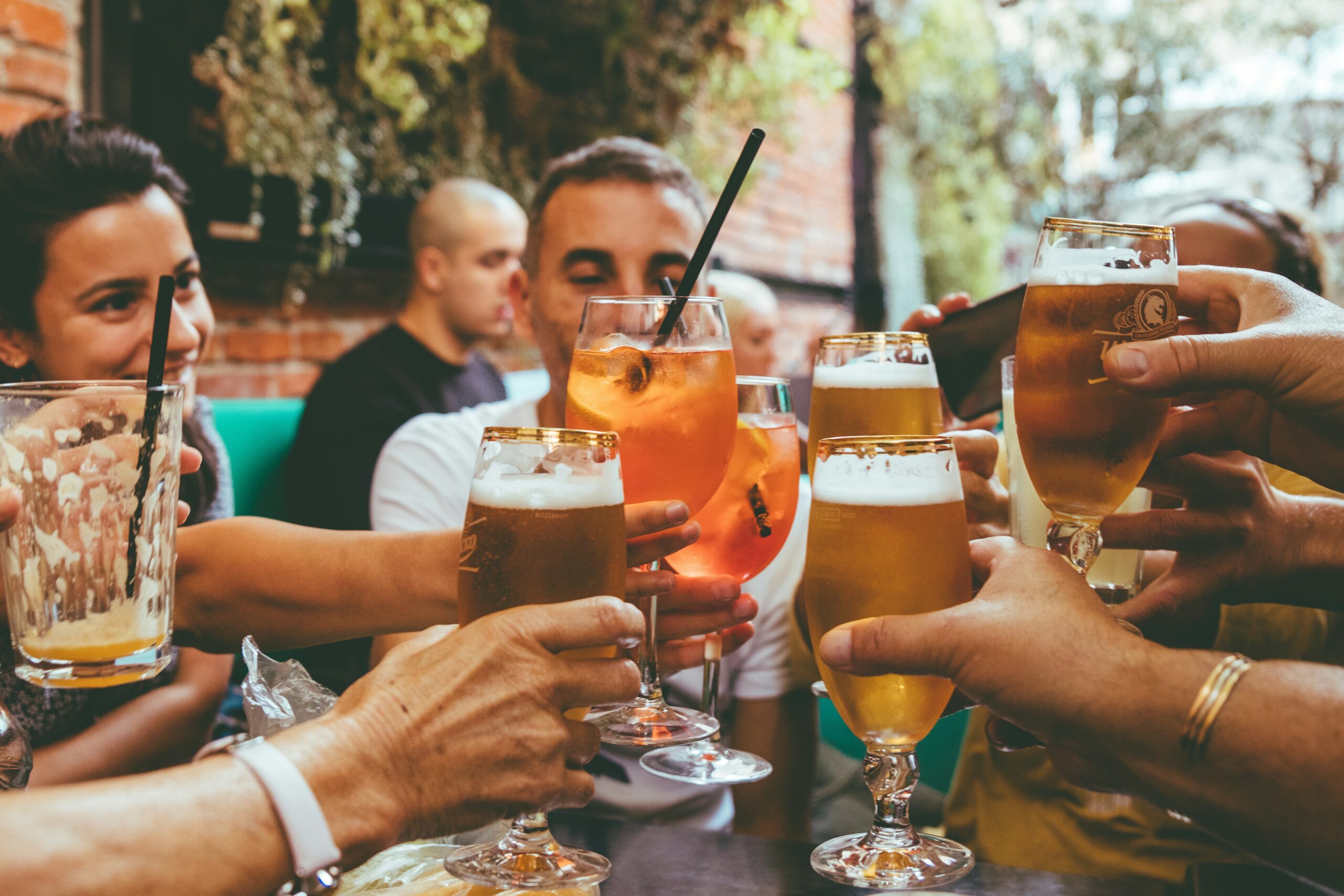
Game nights. Shared dinners. Long conversations over tea, seltzer waters, or nothing at all.
These gatherings prioritize familiarity and ease over stimulation. Alcohol is no longer required to set the tone, because the connection itself is enough.
Increasingly, meaningful social moments happen in spaces that feel calm and welcoming. When comfort and presence lead the way, people are freer to connect without relying on alcohol to create ease. Plus, in these settings, opting out of alcohol doesn’t disrupt the vibe; it’s simply another choice among many, one that no longer carries social friction.
This reflects a deeper confidence: the belief that being fully yourself (sober or not) is enough.
Mindful Drinking Meets Wellness Culture
Dry January’s evolution mirrors a broader shift in wellness culture, where sleep, stress, metabolic health, and emotional balance are increasingly top of mind. Supported by tools like wearable health tech and a collective move toward intentional living, mindful drinking has become less about restriction and more about care.
Rather than asking people to push harder or do more, this approach asks a gentler question: What helps me feel well enough to show up at my best every day?
Reducing alcohol aligns naturally with that goal. For many, it supports better rest, steadier energy, improved emotional regulation, and fewer physical lows, all of which matter in a world that already asks a lot.
Looking Ahead: Feeling Good as a Cultural Priority
Dry January’s staying power isn’t about willpower. It’s about relevance.
As stressors multiply and the pace of life continues to accelerate, people are increasingly protective of what helps them feel okay physically, mentally, and emotionally. Mindful drinking fits into that reality not as a trend, but as a tool.
Ultimately, the rise of sober curiosity isn’t about giving something up. It’s about making space for rest, for connection, for mornings that don’t feel like recovery missions.
When wellness becomes about support rather than self-control, feeling good stops being a luxury and starts becoming something sustainable.

Read More: Is There a Healthy Way to Drink Alcohol?
Have feedback on our story? Email [email protected] to let us know what you think!

Shop Pillows
The Essential Organic Pillow Collection
Gentle, breathable, non-toxic support.