






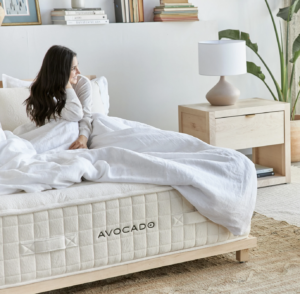
Back pain can be a real… pain. It interferes with work, with the activities you actually want to be doing, and with the kind of rest that makes everything else possible. And if you’re waking up with it morning after morning, one of the first places to look is the eight hours you just spent lying down.
A mattress that’s too old, too soft, or just not right for your body can cause back pain — or quietly make a problem you already have worse. The good news is that of all the things that can cause back pain, a mattress is one of the easier ones to diagnose and fix.
Here’s how to work out whether yours is part of the problem.
What’s Actually Causing Your Back Pain?
Back pain has a lot of possible sources, and your mattress is only one of them. Before you replace anything, it’s worth ruling some of the others in or out:
- An old mattress, or one that isn’t the right firmness for you
- Stress, anxiety, or depression
- Poor posture, or long hours sitting at a desk
- Muscle strain or overuse
- Sleep disorders
- Spinal conditions like scoliosis
- Other medical issues you’d want a professional to diagnose
If your back pain is persistent, severe, or getting worse, talk to a doctor first. A mattress can be part of the solution, but it isn’t a substitute for finding out what’s actually wrong. Keeping a simple sleep-and-pain journal for a week or two, on how you slept, where it hurt in the morning, and how long the pain lasted, can also help you and your doctor spot patterns.
Signs Your Mattress Might Be the Culprit
A few questions worth asking yourself:
- Do you sleep better when you’re away from home — at a hotel, a friend’s place, anywhere that isn’t your own bed?
- Are there visible lumps, dips, or sags in your mattress?
- Is your mattress more than seven to ten years old?
- Does it feel noticeably softer in the spots where you sleep most?
If you answered yes to most of these, your mattress is probably at least part of the story. And if it’s the whole story, the fix is genuinely simple: get a better one.
Support and Firmness Are Not the Same Thing
This is the thing most people get wrong when they’re shopping for a mattress to help with back pain, so it’s worth slowing down on.
A mattress’s support is what keeps your spine aligned. It’s what stops your hips from sinking into the bed and pulling your lower back out of its natural curve. A supportive mattress holds you in a neutral position all night, whatever way you sleep.
Firmness is how the surface feels when you press into it — soft, medium, firm. It’s mostly a matter of comfort and preference.
Here’s the part that trips people up: a soft mattress and a firm mattress can both be equally supportive. Firm doesn’t automatically mean “better for your back.” What matters is whether the mattress keeps your spine in alignment, and that depends as much on your body and your sleep position as it does on the firmness rating.
A few rough guidelines to start from:
- Most people with back pain do best on something in the medium to medium-firm range — supportive enough to keep the spine neutral, soft enough to cushion pressure points.
- Lighter sleepers often prefer something softer, because a firm mattress doesn’t compress enough for their weight to engage the support layers.
- Heavier sleepers generally need something firmer, because softer mattresses can let them sink too far and pull the spine out of alignment.
- Side sleepers who already have hip pain may find a too-firm mattress pushes up against the hip and makes things worse — something plusher gives the hip and shoulder room to settle in.
If you want a model-by-model breakdown of which Avocado fits which kind of back pain, we’ve put together a guide to the best organic mattress for back pain that walks through the options.
Don’t Forget Your Pillow
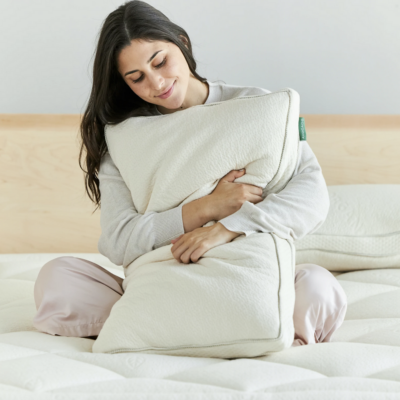
If you’re troubleshooting back pain, your pillow matters almost as much as your mattress. A pillow that’s too thick, too thin, or too worn out can keep your neck and upper spine out of alignment for eight hours a night, and that adds up quickly. If your mattress is newish but your neck and upper back still hurt in the morning, start there.
What You’re Sleeping On Matters Too
Most conventional mattresses are built with petroleum-based foams, synthetic adhesives, and added flame retardants. These aren’t the cause of back pain, but if you’re investing in better sleep, it’s worth knowing what’s in the bed you’re spending a third of your life on.
Avocado mattresses are made from GOLS-certified organic Dunlop latex, GOTS-certified organic cotton and wool, and individually wrapped coils with no polyurethane foam, no chemical flame retardants, and no added fiberglass. Every finished mattress is independently certified against five additional non-toxic standards: OEKO-TEX Standard 100 Class I, EWG Verified, MADE SAFE, GREENGUARD Gold, and UL Formaldehyde-Free.
Try Before You Commit
A new mattress is an investment, and the only way to really know whether one works for your back is to sleep on it for more than a night or two. Look for companies that offer a long in-home trial — a few weeks isn’t enough to actually tell. Avocado mattresses come with a one-year sleep trial and a 25-year limited warranty, so there’s no pressure to make up your mind quickly.
Shop Pillows
The Essential Organic Pillow Collection
Gentle, breathable, non-toxic support.