



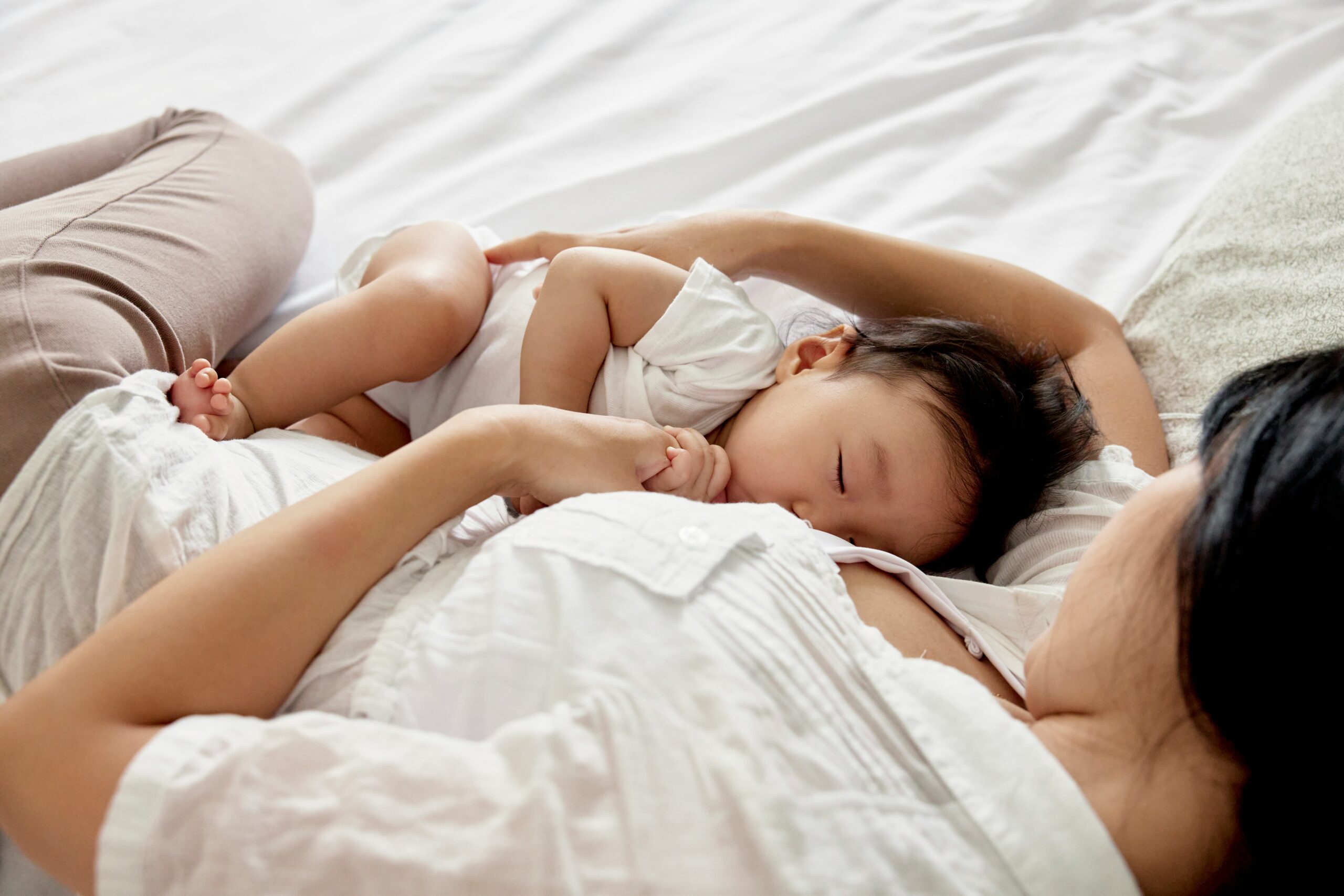


Few topics come with as much advice (and as much pressure) as baby sleep.
From wake windows and white noise machines to rigid schedules and miracle methods, new parents are quickly introduced to the idea that sleep is something to optimize. Perfect. Control. Master.
But the reality is quieter, messier, and far more human.
Babies are learning how to sleep. Parents are relearning how to rest. And both are doing so while navigating enormous physical, emotional, and neurological change.
When we strip away the noise, what babies and the adults truly need for rest is surprisingly simple: safety, consistency, and environments that support regulation rather than overstimulation.
This topic has felt especially close to home lately. My sister recently had her first baby, and sleep has become a near-daily thread in our conversations. Some days it’s about night wakings; other days it’s about exhaustion, doubt, or the constant question of whether what they’re experiencing is normal. Being alongside her during this season has been a reminder that infant sleep isn’t just a baby issue — it shapes the emotional rhythm of the entire household.
This article isn’t a sleep-training guide. It’s not a list of hacks. And it’s not a promise that anyone will be sleeping through the night anytime soon. Instead, it’s a science-backed look at how rest actually works in early parenthood, and how to support it with a little more clarity and a lot more compassion.
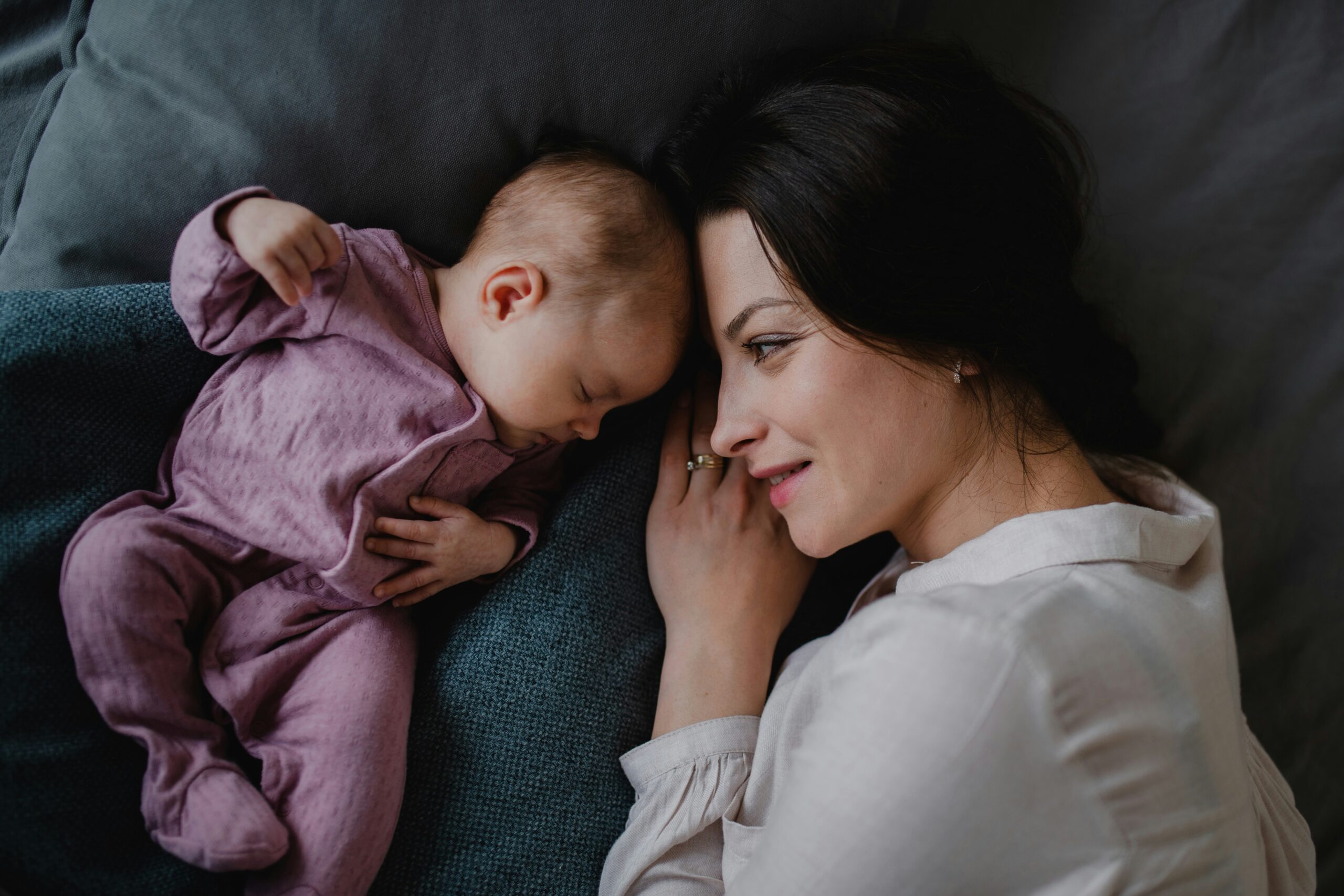
Read More: Sleep Tips from Founder of Hey, Sleepy Baby, Rachael Shepard-Ohta
Infant Sleep: What the Science Actually Says
Okay, let’s start with the basics.
According to the American Academy of Pediatrics (AAP), infants should always be placed on their backs to sleep, on a firm, flat surface, free from loose bedding, pillows, or soft objects. This guidance is rooted in decades of research aimed at reducing the risk of Sudden Infant Death Syndrome (SIDS) and other sleep-related deaths.
The Centers for Disease Control and Prevention (CDC) reinforces these recommendations, emphasizing that a safe sleep environment (not a specific product or routine) is the most critical factor in infant sleep health.
In the age of social media nurseries and aspirational parenting content, it’s easy to confuse aesthetic with safety.
But safe sleep environments are intentionally minimal.
A firm mattress. A fitted sheet. That’s it.
The AAP explicitly recommends room-sharing, but not bed-sharing, for at least the first six months, as it’s associated with a lower risk of SIDS. This proximity also supports easier nighttime feeding and parental responsiveness, both of which are important for infant regulation and parental rest.
Minimalism, in this context, isn’t about design. It’s about reducing variables and creating predictability, something both babies and exhausted adults rely on.
What’s notable here is what isn’t emphasized in the research: perfect schedules, a 20-step wind-down routine, or sleeping through the night.Newborns wake often because they’re meant to. Period.
Their circadian rhythms are still developing. Their stomachs are small. Their nervous systems are immature. Waking is not a failure on anyone’s part; it’s simply biology.
The Myth of “Fixing” Baby Sleep
Western parenting culture often frames baby sleep as a problem to solve.
But babies aren’t wired to sleep in long stretches right away; waking is part of how their bodies and brains develop.
According to a study published in the journal Pediatrics, frequent waking in infancy supports feeding, growth, and neurological development. Long stretches of consolidated sleep typically emerge gradually…not through force, but through maturation.
When we treat normal infant behavior as something broken, we inadvertently create stress for both parent and child.
A calmer approach asks different questions:
- Is the baby safe?
- Is the environment supportive?
- Are caregivers getting enough rest to function?
If the answer to those is yes, you’re doing more than enough.
And it’s also worth saying this out loud: you can accept the biology of infant sleep and still desperately want more rest. Both things can be true. Understanding why babies wake doesn’t magically make exhaustion easier; it just removes the blame, and sometimes that allows for a (much-needed) big exhale.
Why the Sleep Environment Matters More Than You Think
Beyond safety, the materials surrounding a sleeping infant matter. Not in a trendy way, but in a long-term health way.
Babies spend most of their early lives sleeping. Their skin is thinner. Their respiratory systems are still developing. They breathe more air per pound of body weight than adults do.
This is where organic, low-tox materials quietly matter.
Not because they promise better sleep overnight, but because they reduce the background stressors the body has to process while resting.
Choosing breathable, organic fabrics and thoughtfully sourced materials for your baby’s sleep environment isn’t about fear. It’s about creating a sleep environment that supports developing systems instead of challenging them.
No home is toxin-free. And trying to eliminate every possible exposure is neither realistic nor necessary. Just aiming to reduce exposure where babies spend the most time can meaningfully lower the overall burden on developing bodies.
These choices don’t require a total overhaul, just some intention. And intention is something new parents already bring in abundance.

Read More: Why I’m Not Sleep Training My Baby
Babies Don’t Sleep Alone, and Parents Don’t Either
Here’s the part often left out of infant sleep conversations: parental sleep health directly affects babies.
It’s well known that chronic sleep deprivation is linked to higher levels of anxiety, depression, and impaired cognitive function. And, as parents, all of these symptoms will influence how caregivers respond to their children, especially during nighttime wake-ups.
When parents are overtired, everything feels louder. Harder. More urgent. Small disruptions register as crises. Patience thins, and ultimately, decision-making suffers.
Responsive caregiving, the kind that supports secure attachment and emotional regulation, relies on caregivers having at least some capacity to regulate themselves. This makes rest a necessary tool, not a luxury here.
And no, this doesn’t mean parents need uninterrupted eight-hour stretches of sleep (an unrealistic expectation in early infancy). What it does mean is finding ways to support rest in fragments, wherever possible.
That might look like:
Sharing the load at night.
Whether through alternating nights, splitting early and late-night shifts, or dividing responsibilities (one person feeds, the other settles), shared nighttime care can dramatically reduce burnout. Even knowing you’re “off” for a stretch allows the nervous system to relax more fully.
Reducing unnecessary wake-ups.
Simple environmental adjustments matter more than we realize. Keeping lighting low and warm during night feeds, minimizing noise, and creating an easy-to-navigate sleep setup can help both parents and babies return to sleep faster. The goal isn’t silence or perfection, it’s fewer disruptions that fully wake the body.
Creating a parent sleep zone that actually supports rest.
Parents often focus exclusively on the baby’s sleep environment while ignoring their own. Supportive pillows, breathable bedding, and low-tox materials can help adults settle more quickly during short sleep windows. When rest time is limited, quality matters more than ever.
Letting go of the idea that rest only “counts” at night.
Daytime rest, even for brief periods, can meaningfully buffer sleep deprivation. Naps, earlier bedtimes, and moments of physical stillness all contribute to overall regulation. Rest doesn’t have to look like a full night’s sleep to be restorative.
Lowering expectations, not standards.
There’s a difference between caring less and demanding less of yourself. A messier house. Fewer commitments. Simpler meals. Protecting parental rest often requires removing pressure elsewhere, and that trade-off is not only reasonable but also wise. Ultimately, supporting parental rest isn’t about optimizing schedules or mastering routines. It’s about recognizing that babies don’t sleep in isolation, and neither do the adults who care for them.
What Rest Really Looks Like in the Early Years
Rest, in the context of babies and parents, rarely looks like stillness.
It looks like short stretches of sleep. Daytime naps. Early bedtimes. Letting the house stay messy. Accepting help. Saying no.
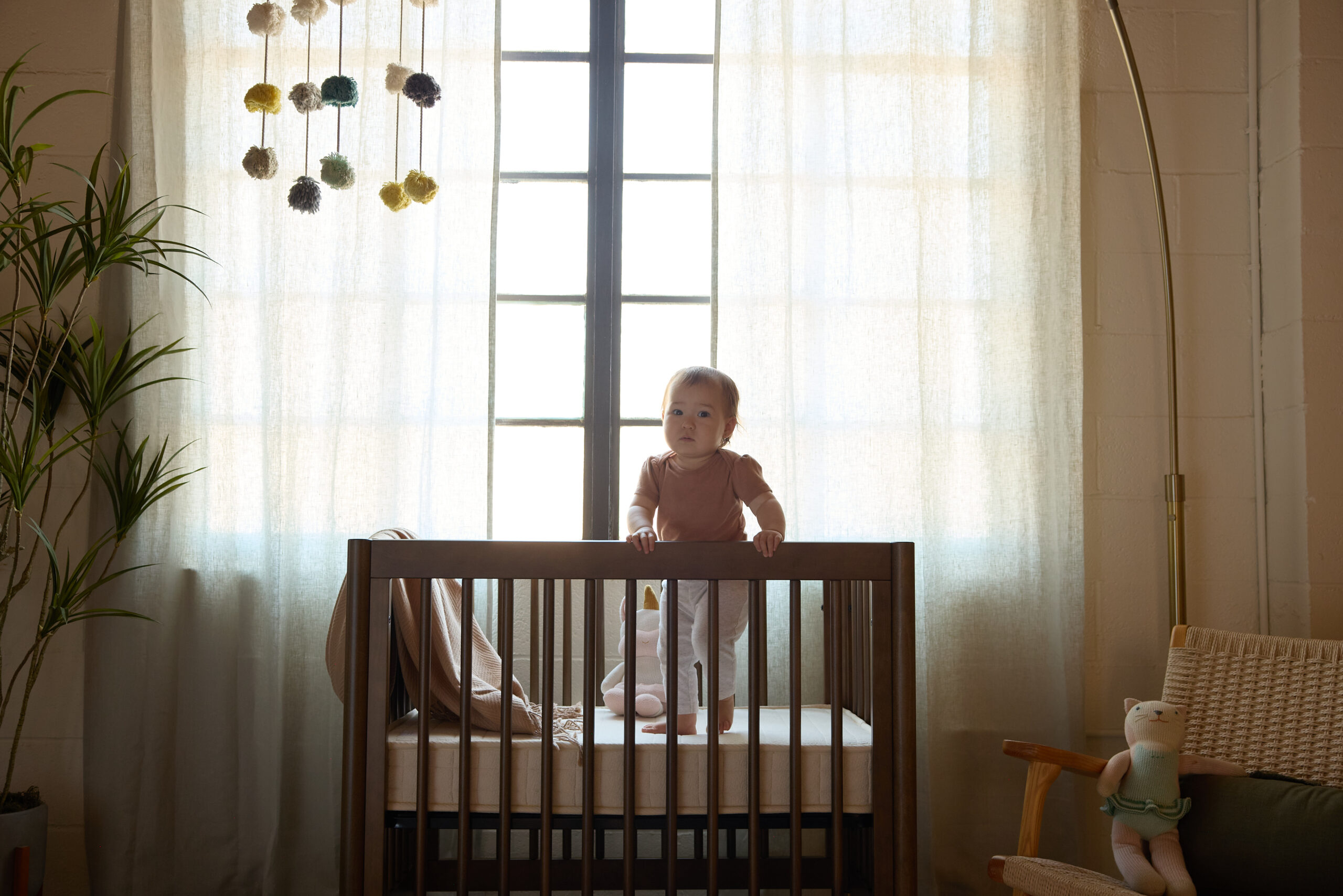
It looks like designing sleep spaces that feel safe, breathable, and calm…not overstimulating or overly complex.
It looks like letting go of the idea that rest must be earned.
And often, it looks like community: partners trading off nights, friends dropping off meals, grandparents holding the baby so someone can nap or shower. Rest is rarely a solo effort, and it was never meant to be.
Babies don’t need perfect sleep routines. Parents don’t need to optimize every night. What both need is support—from the people around them, from the environments they live in, and from expectations that honor biology over performance.
Safe sleep. Simple spaces. Low-tox materials. Gentle routines. Shared responsibility.
Remember…rest isn’t something to chase. It’s something to protect. And when we protect rest for babies and for ourselves, the whole household benefits.
Read More: Why “Matrescence” is a Word You Should Know
Have feedback on our story? Email [email protected] to let us know what you think!

Shop Pillows
The Essential Organic Pillow Collection
Gentle, breathable, non-toxic support.